
Capital Illusion: Why the Stock Exchange of Thailand is Falling Behind its Regional Peers
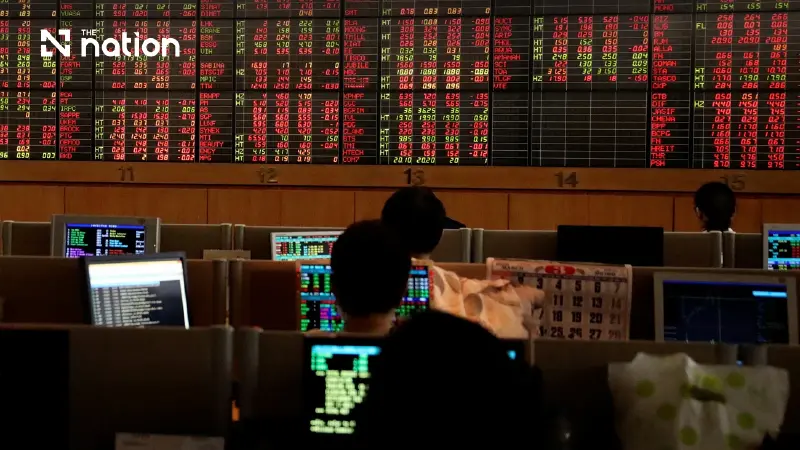


A 30% rally fuelled by commodity profits masks deep structural flaws as Thailand’s bourse faces a critical regulatory review on its long road to the OECD
- The exchange is structurally flawed, being heavily dominated by "old economy" sectors like banking and commodities, while lacking the high-growth technology listings that attract modern global capital.
- It suffers from inadequate and slow regulatory enforcement, which has created a market driven by short-term speculation and corporate scandals, deterring long-term institutional investors.
- While regional peers like Singapore and Japan have successfully modernized with governance reforms and sophisticated offerings, the SET has stagnated and is losing its competitive edge to more aggressive neighbors like Vietnam and Malaysia.
- Thailand's bid to join the OECD is highlighting these deep-seated issues, as the organization demands significant reforms in regulatory independence and corporate transparency that the SET currently lacks.
A 30% rally fuelled by commodity profits masks deep structural flaws as Thailand’s bourse faces a critical regulatory review on its long road to the OECD.
Speaking at the Nikkei Asia Forum APAC 2026 in Bangkok, Asadej Kongsiri, president of the Stock Exchange of Thailand (SET) since late 2024, struck a decidedly triumphalist tone. He eagerly pointed to a 30 per cent surge in the benchmark index this year, heavily backstopped by a net foreign fund inflow approaching $2 billion USD.
To Asadej, the catalyst was clear: a sudden wave of political optimism following the election, which signalled a stable, pro-business coalition.
This political stability was further supercharged by tangible domestic tailwinds, including a massive 25 per cent year-on-year rebound in listed corporate net profits, easing global crude oil pressures that lowered local energy costs, and a sudden wave of speculative digital infrastructure investment.
"Action speaks louder than words," Asadej declared, arguing that global investors are finally witnessing the activation of long-delayed state economic policies.
Yet, for seasoned financial analysts and economists watching from the sidelines, Asadej’s commitments feel less like a sustainable economic awakening and more like a carefully manicured public relations exercise. Look past the immediate euphoria of hot money flowing into Bangkok, and a far more troubling reality emerges.
The SET, once a dominant regional powerhouse, is quietly suffocating under the weight of systemic structural deficiencies, inadequate regulatory enforcement, and a culture that prioritises short-term speculation over long-term value investing.
As Thailand aggressively pushes its formal bid to join the Organisation for Economic Co-operation and Development (OECD), the structural vulnerabilities of its capital market are being dragged into the harsh light of global scrutiny. If Bangkok truly wishes to sit at the table of developed nations, the SET cannot simply rely on speculative rallies; it requires a radical, painful institutional overhaul.
From Regional Pioneer to Stagnant Bourse
The decline of the Thai capital market is best understood through a comparative regional lens. In the wake of the 1997 Asian Financial Crisis, Thailand undertook massive institutional adjustments, seemingly positioning the SET to become mainland Southeast Asia’s premier financial hub. For a time, it succeeded.
However, over the last decade, Thailand has been decisively overtaken by Hong Kong, Singapore, and South Korea, while leaner, more aggressive neighbours like Vietnam and Malaysia are rapidly eroding the SET's remaining competitive edge.
While the Singapore Exchange (SGX) has successfully transformed into a sophisticated, multi-asset global gateway, and Tokyo has successfully used corporate governance reforms to unlock trillions in stagnant domestic cash, Thailand remains stubbornly trapped in a time warp.
The core of the problem is the SET’s composition. It remains heavily weighted toward "old economy" corporate behemoths—traditional banking, heavy industrial manufacturing, energy, and commodities. Asadej himself conceded this structural flaw during the panel, acknowledging that the bourse lacks the "sexy," high-growth, AI-driven technology listings that capture modern global capital.
To remedy this, the SET has heavily promoted its "Board of Investment (BOI) to IPO" framework, attempting to lure foreign direct investment in semiconductors, data centres, and electric vehicles to use the Thai market for secondary funding.
In a bid to lower barriers, the SET and the Securities and Exchange Commission (SEC) are actively considering relaxing market capitalisation and profitability requirements for tech IPOs, alongside pushing for dual-class share structures to alleviate founders' fears of losing voting control.
Yet, critics warn that compromising listing standards and introducing unequal voting rights risk diluting corporate transparency—running directly counter to the stringent governance benchmarks demanded by global capital.
Historically, global tech conglomerates prefer total ownership of their subsidiaries to optimise global supply chains, rendering secondary listings on a volatile domestic exchange highly unattractive.
|
Exchange |
Market Catalyst / Strength |
Structural Vulnerability |
|
SET (Thailand) |
Temporary political optimism; high retail liquidity. |
Heavy old-economy weighting; sluggish scandal regulation. |
|
SGX (Singapore) |
Advanced global gateway; sophisticated multi-asset hub. |
Low domestic retail volume; reliance on cross-border listings. |
|
JPX (Japan) |
Sweeping corporate governance reforms; massive domestic cash activation. |
Ageing demographics and historical resistance to rapid institutional change. |
|
VSE / KLSE (Regional) |
Aggressive "new economy" manufacturing attraction (Vietnam/Malaysia). |
Higher frontier-market volatility; developing regulatory frameworks. |
The Speculation Trap and Inadequate Regulation
While daily market fluctuations yield shifting peaks and troughs, the underlying mechanics of the SET's trading volume are undeniable: active trading on the Thai bourse is driven overwhelmingly by speculative churn rather than fundamental value investing.
Over the past few years, the SET and the SEC have introduced a myriad of advanced financial tools and products, most notably an expansive Depository Receipt (DR) program boasting over 400 listed underlying foreign securities to allow domestic retail investors to trade global equities.
Yet, the introduction of these sophisticated instruments has acted as a double-edged sword, drawing liquidity away from domestic equities while doing little to deepen the market's long-term maturity.
The SET's recent defence—that it has restricted High-Frequency Trading (HFT) and short-selling exclusively to the highly liquid SET100 index—inadvertently exposes the structural fragility of the broader bourse, which remains unequipped to handle modern algorithmic trading volumes without destabilising retail investors.
The fundamental issue lies in the inadequate and sluggish regulation of the wider exchange. The Thai market has been repeatedly rocked by corporate scandals, accounting irregularities, and allegations of unchecked naked short-selling and algorithmic manipulation that disproportionately penalise retail investors.
When a market's regulatory framework is perceived as slow to enforce punishments or protect minority shareholders, institutional value investors flee.
What remains is a speculative playground where high-frequency trading and domestic retail gamblers drive the volume, detaching stock valuations from the actual health of the underlying macroeconomy.
This extreme volatility has historically bled back into the real economy. When the stock market suffers sudden, sentiment-driven crashes, it severely impairs corporate capital-raising capabilities, depresses household wealth, and freezes domestic consumption.
The OECD Litmus Test
This brings Thailand’s capital market to its ultimate crossroads. The country's overarching geopolitical goal is complete accession into the OECD by 2030.
To be clear, the capital market is merely one piece of a vast, multi-sector integration puzzle that spans labour laws, environmental guidelines, and trade frameworks.
However, the bourse represents a vital litmus test for corporate transparency, and the OECD’s strict codes of liberalisation do not tolerate structural opacity or compromised regulatory independence.
The OECD’s benchmark Capital Market Review of Thailand has explicitly laid out the terms of surrender for the old way of doing business. It demands a clean, structural separation between the SET’s commercial operations and its regulatory functions to eliminate glaring conflicts of interest.
Furthermore, it demands that the SEC be granted absolute, swift, and independent prosecutorial powers to clean up market misconduct—a requirement that directly challenges the entrenched network of corporate elites who have long dominated the Thai establishment.
Even the SET’s celebrated recent net foreign inflows—heavily concentrated in Non-Voting Depository Receipts (NVDRs) within large-cap stocks—reveal a telling paradox.
While the bourse frames this heavy NVDR purchasing as a sign of medium-to-long-term commitment, foreign capital's reliance on non-voting instruments underscores a desire to capture legacy corporate dividends while entirely steering clear of Thailand’s opaque corporate governance systems.
During the summit, Michael Syn, president of the SGX Group, observed that capital markets are highly advanced societal mechanisms designed to convert self-interested capital into permanent public goods. Masanori Yoshida of the Japan Exchange Group similarly emphasised that long-term market resilience depends entirely on continuous, painful corporate transparency and reciprocal international trust.
Asadej may take comfort in this year's 30 per cent index bump and the fleeting return of foreign fund flows. But a rising tide does not repair a leaky hull.
If the SET cannot move past its structural inertia, reform its inadequate regulatory apparatus, and suppress its toxic dependence on speculative trading, Thailand’s ambitions of building a prominent, world-class capital market will remain a distant dream. Accession to the OECD requires structural maturity across the board, not just a temporary run of good luck on the trading floor.
