
China suspends chicken feet imports from five Thai plants amid origin fraud probe
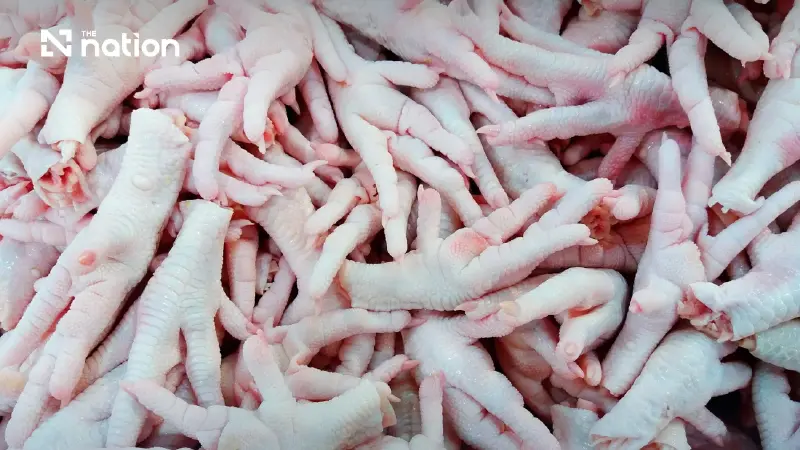


Thailand is investigating suspected export fraud after chicken feet bound for China were allegedly declared as coconuts or frozen bananas, as Beijing suspends imports from five Thai plants.
Thailand’s Department of Livestock Development is investigating suspected country-of-origin fraud involving chicken feet exported to China, after customs officials discovered shipments allegedly misdeclared as other products.
The inquiry comes as Chinese customs authorities have suspended chicken feet imports from five Thai processing plants while seeking further clarification from the Thai authorities.
Concerns have been raised that chicken feet originating in other countries may have been repackaged and falsely presented as Thai products before being shipped to China.
Chicken feet allegedly declared as fruit
Department director-general Somchuan Rattanamangkhalanon said the agency had received information from the Customs Department confirming the discovery of containers suspected of being used in fraudulent export operations.
Documents reportedly declared the contents as other products, including coconuts and frozen bananas. However, inspections found that the containers held chicken feet apparently being prepared for export to China.
Allegations have also emerged that cold-storage facilities may have been used to replace the original packaging before the containers were secured with seals carrying the Department of Livestock Development’s mark.
The seals were allegedly used in connection with export documentation, including animal health certificates and electronic certificates required for shipments to China.
The claims remain under investigation, and authorities have yet to announce whether any companies or officials will face charges.
Questions raised over certification controls
People’s Party MP Narongdet Ularakul raised the issue during a meeting of the House extraordinary committee scrutinising the fiscal 2027 budget.
He questioned whether the Department of Livestock Development and the National Bureau of Agricultural Commodity and Food Standards had applied sufficiently strict controls when issuing permits and supervising exports.
Narongdet also warned that fraudulent claims of Thai origin could damage Thailand’s chicken feet export industry, particularly as China intensifies inspections of imported food products.
Questions have been raised over whether private companies, business groups or state officials may have assisted the alleged operation. Investigators have not yet established whether such collaboration took place.
Department promises action over any wrongdoing
Somchuan said the department was conducting an in-depth investigation and would take decisive legal action if it uncovered weaknesses in the certification system or evidence implicating government officials.
He said the department had not ignored the allegations and was examining the export process, relevant documentation and the origins of the affected products.
Should the investigation find that Thailand’s certification and inspection systems operated correctly, the department will submit the findings to the Chinese authorities in an effort to clarify the case and restore confidence in Thai standards.
Thai officials prepare explanation for China
The department will work with the Thai Broiler Processing Exporters Association, the Office of Agricultural Affairs at the Royal Thai Embassy in Beijing and the National Bureau of Agricultural Commodity and Food Standards to trace the shipments back to their production sources.
Officials are preparing further information in response to questions from Chinese customs authorities, although several issues still require additional investigation.
Somchuan is expected to travel to China to explain the findings and Thailand’s inspection procedures directly to Chinese officials.
He stressed that Thailand’s poultry factory inspection system was recognised by 52 trading partners, including the European Union, the United Kingdom, Japan and South Korea.
