
Royal Orchid Sheraton buyback failure tests investor safeguards after ROH misses Bt4.87bn deadline
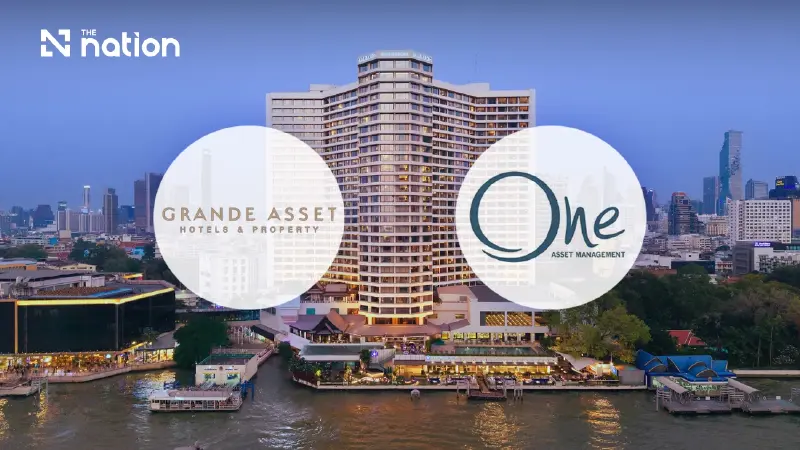


ROH’s failure to complete a Bt4.87-billion Royal Orchid Sheraton buyback has hit GROREIT units, disrupted debt repayments and tested safeguards for Thai REIT investors.
- Royal Orchid Hotel (Thailand) Plc (ROH) failed to meet a July 14 deadline to repurchase the Royal Orchid Sheraton Hotel for Bt4.873 billion from the GROREIT real estate trust.
- ROH claims the failure was due to a dispute over the payment method, but its and its parent company's poor financial performance have raised doubts about its ability to fund the transaction.
- The missed deadline has forced the trust manager to activate investor protection measures, including taking over hotel management, issuing a 30-day compliance notice to ROH, and preparing for a potential sale of the property to a new owner.
- This event is now a major test of investor safeguards in Thailand's REIT market, scrutinizing the effectiveness of compulsory buyback agreements in protecting unitholders' capital.
A failed Bt4.873-billion buyback of Bangkok’s Royal Orchid Sheraton Hotel & Towers has emerged as a major test of investor protection in Thailand’s REIT market, after former owner Royal Orchid Hotel (Thailand) Plc missed the contractual transfer deadline and units in GROREIT fell by almost 15%.
The transaction was intended to provide the Grand Royal Orchid Hospitality Real Estate Investment Trust with Buy-Back Condition, or GROREIT, with the funds needed to repay its bank borrowing, return capital and benefits to unit holders, and wind up the trust.
Instead, the missed July 14 deadline has forced the trust manager and trustee to activate contingency measures covering hotel operations, bank debt and a possible sale of the property to a new owner.
ROH insists it remains willing and financially able to repurchase the hotel. It says the transaction could not be completed because MFC Asset Management, the trustee, proposed a payment method that did not comply with the original agreement.
That explanation has not ended market scrutiny, particularly given the continuing losses and heavy liabilities reported by both ROH and its 97% shareholder, Grand Asset Hotels and Property Plc, or GRAND.
Missed transfer disrupts planned REIT exit
ONE Asset Management, acting as GROREIT’s manager, informed the Stock Exchange of Thailand that July 14 marked the end of the fifth year of the hotel’s lease under the property sale and purchase agreement.
Under the agreement, ROH, as the former owner, was required to repurchase the Royal Orchid Sheraton property and accept the transfer of ownership at the Land Office.
However, ROH did not complete the repurchase or accept the ownership transfer by the deadline.
The agreed repurchase price was Bt4.873 billion, excluding value-added tax. GROREIT was expected to use the proceeds to repay its bank loan and return funds to unit holders before terminating the trust.
The missed payment has disrupted both the planned repayment to the Government Savings Bank and the trust’s timetable for returning money to investors.
ROH managing director Witthawat Wipakul said the company intended to comply with the buyback agreement and was not facing a funding obstacle.
He said the transaction could not proceed because the payment method communicated by MFC Asset Management did not match the terms originally agreed. ROH had asked for the instructions to be corrected, but the issue remained unresolved.
The dispute therefore centres on whether ROH has failed to fulfil its contractual obligation or whether the trustee’s proposed payment procedure prevented the transaction from being completed.
Weak balance sheets deepen financing concerns
Although ROH maintains that it has no financial difficulty, its financial statements have raised questions about its capacity to fund the repurchase.
Stock Exchange data show that ROH recorded a net loss of Bt957.72 million in 2025 and a further loss of Bt269.67 million in the first quarter of 2026.
Its shareholders’ equity had fallen to Bt1.771 billion, meaning the Bt4.873-billion repurchase price was about 2.7 times the company’s equity. Total liabilities had risen to Bt6.36 billion.
Trading in ROH shares has also been suspended with an SP sign.
The company’s financial capacity is closely linked to GRAND, which owns 97% of ROH. That has prompted questions over whether the hotel buyback depends on financial support from the parent company or an outside funding partner.
GRAND is itself facing continuing losses and a substantial debt burden.
The property developer reported a net loss of Bt1.543 billion in 2024 and another loss of Bt230.15 million in the first quarter of 2026.
Its shareholders’ equity fell from Bt3.805 billion in 2021 to only Bt398.47 million in the first quarter of this year, while total liabilities stood at Bt11.555 billion.
The weak financial positions of both companies have intensified scrutiny of ROH’s claim that the delay is solely the result of a disagreement over payment procedures.
Trust manager activates protection measures
ONE Asset Management and MFC Asset Management activated a contingency plan on July 15, one day after the buyback deadline was missed.
Poj Harinsut, chief executive officer of ONE Asset Management, said the structure of the trust meant that rights over the property remained with GROREIT following a contractual default, helping preserve the asset for the benefit of unit holders.
The trust manager and trustee have issued a formal notice requiring ROH to fulfil its obligations within 30 days. Should no resolution be reached, the trust is prepared to begin legal proceedings.
They have also issued a notice ending ROH’s lease and moved to appoint Starwood Hotels & Resorts Worldwide to manage the Royal Orchid Sheraton directly on a temporary basis.
The management change is intended to ensure that the hotel continues operating and generating income while the ownership dispute is resolved.
ONE Asset Management and MFC have also contacted the Government Savings Bank, GROREIT’s lender, to request an extension of the debt-repayment period and relief from certain loan conditions.
The request was necessary because the trust did not receive the lump-sum payment expected from the property buyback.
ONE Asset Management said the parties concerned had not been notified at the last minute. MFC had issued a formal notice more than three months before the deadline, it said.
Trustee prepares for possible asset sale
Should ROH fail to complete the repurchase within the 30-day period, MFC Asset Management does not intend to operate the hotel itself.
Instead, the trustee would arrange a bidding process for prospective new owners, with GROREIT unit holders voting on the proposed transaction.
The trust manager believes a buyer could be found within three months. It said several investment groups had already expressed interest in the property.
Despite difficult economic conditions, management believes the sale of a major Bangkok hotel valued at close to Bt4.9 billion should attract potential buyers.
The Royal Orchid Sheraton property has been appraised at between Bt4 billion and Bt5 billion.
ONE Asset Management believes unit holders would avoid a loss of principal provided the asset could be sold for more than Bt3 billion. That assessment remains dependent on the sale price, the trust’s liabilities and the expenses associated with resolving the dispute.
GROREIT also established a reserve equivalent to 3% as part of the safeguards prepared when the trust was created five years ago.
With unit holders normally receiving an annual return of around 6%, the reserve is expected to support distributions for approximately six months while the trust deals with the property.
Government Savings Bank says exposure is manageable
Government Savings Bank director Songpol Chevapanyaroj said the bank was not overly concerned about the dispute because it held substantial security against its loan to the trust.
He described the case as a matter involving a trust, creditor and debtor that would have to proceed under the relevant contractual and legal processes.
The value of the bank’s loan is considerably lower than the value of the hotel pledged as collateral, while the property is mortgaged to the bank.
Under the trust structure, the bank, as a secured creditor, also has priority over unit holders when receiving repayment.
Songpol said these protections meant the bank’s exposure remained at a manageable level.
The bank would follow the required creditor procedures should GROREIT be unable to meet its repayment obligations on schedule.
He added that the hotel sector had continued to recover over the past two years, with occupancy rates improving in both Bangkok and the provinces compared with the Covid-19 period.
The broader recovery in tourism has also contributed to an improvement in debt repayments among hotel borrowers, although the bank continues to monitor individual cases closely.
Grand Asset says US$187m funding has been arranged
Witthawat, who also serves as GRAND’s chief executive for the property business and as an executive director, said the group had no policy to sell the Royal Orchid Sheraton.
He maintained that the group intended to complete the buyback and that there was no financial obstacle to taking ownership of the hotel.
According to Witthawat, the company has secured financial backing totalling US$187 million, or approximately Bt5.7 billion, from a private fund in Singapore and a German bank.
He said the funding was sufficient to support the transaction and expected the dispute to be resolved within 30 days following talks with ONE Asset Management and MFC Asset Management.
“The company has no liquidity problem. Its operating performance remains satisfactory, and arrangements for the funding have already been completed,” he said.
However, Witthawat separately acknowledged that GRAND was experiencing tight cash flow as Thailand’s economic slowdown weighed on the property market.
Potential homebuyers were taking longer to make purchasing decisions, delaying property transfers and causing revenue recognition to fall behind the company’s plans.
The liquidity pressure was a major factor behind GRAND’s decision to extend the maturity of its debentures by another two years.
Project sales planned to ease debt pressure
GRAND is also negotiating the sale of two or three property projects to raise money for debenture repayments and strengthen liquidity.
The assets under consideration include Hyde Heritage Thonglor, a luxury residential joint venture with Japan’s Sumitomo Forestry.
The company is also considering a high-end riverside condominium project on an eight-rai plot on Charoen Nakhon Road, another joint venture with Sumitomo Forestry, as well as Amatara Residences in Rayong.
The proposed disposals form part of GRAND’s plan to manage its debt burden and rebuild confidence among debenture holders and investors while the property market recovers gradually.
Next 30 days crucial for REIT confidence
The immediate outcome will depend on whether ROH and the trust’s representatives can resolve the payment dispute and complete the buyback within the 30-day period.
Failure to do so could lead to a major lawsuit, the auction of the hotel and a prolonged delay in returning funds to GROREIT unit holders.
The case also raises wider questions about the risks of REIT structures that rely on a former property owner honouring a compulsory future buyback.
GROREIT was established to provide liquidity during the Covid-19 crisis and is understood to be the only Thai trust structured in this way.
ONE Asset Management indicated that similar buyback-linked trusts might not be established in the future because of the counterparty risk that arises when the party responsible for repurchasing an asset does not perform as agreed.
For investors, the central issue is no longer simply whether ROH eventually completes the purchase. It is whether the safeguards built into GROREIT can preserve income and capital if the original owner fails to honour the buyback obligation.
Source: Bangkokbiznews
