
PTT outlines plan to boost LNG trading to 15 million tonnes a year by 2035
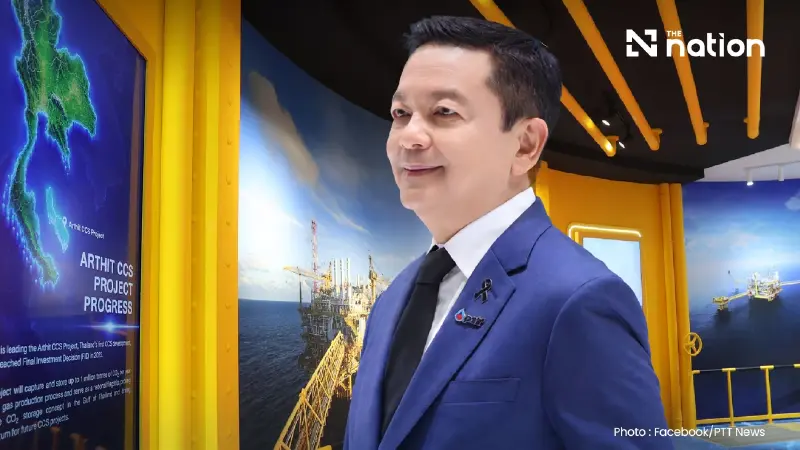


PTT plans to expand its global LNG trading portfolio to 10 million tonnes by 2030 and 15 million tonnes by 2035 while maintaining energy security and advancing carbon reduction.
- PTT plans to expand its global Liquefied Natural Gas (LNG) trading portfolio to 15 million tonnes per year by 2035.
- This represents a significant increase from the current trading volume of 3-4 million tonnes, with an interim goal of reaching 10 million tonnes by 2030.
- The expansion focuses on PTT's global market trading operations, which are separate from the LNG imports managed for Thailand's national energy security.
- This growth is part of a broader strategy based on three pillars: energy security, reasonable prices, and sustainability.
Kongkrapan Intarajang, chief executive officer and president of PTT Public Company Limited (PTT), said at Gastech 2026, a major global natural gas event hosted by Thailand, that tens of thousands of people from leading energy companies, government agencies and energy ministries worldwide were attending the event.
Kongkrapan said the event reflected Thailand’s position on the global natural gas business map and provided PTT with an important opportunity to showcase the group’s capabilities to international partners.

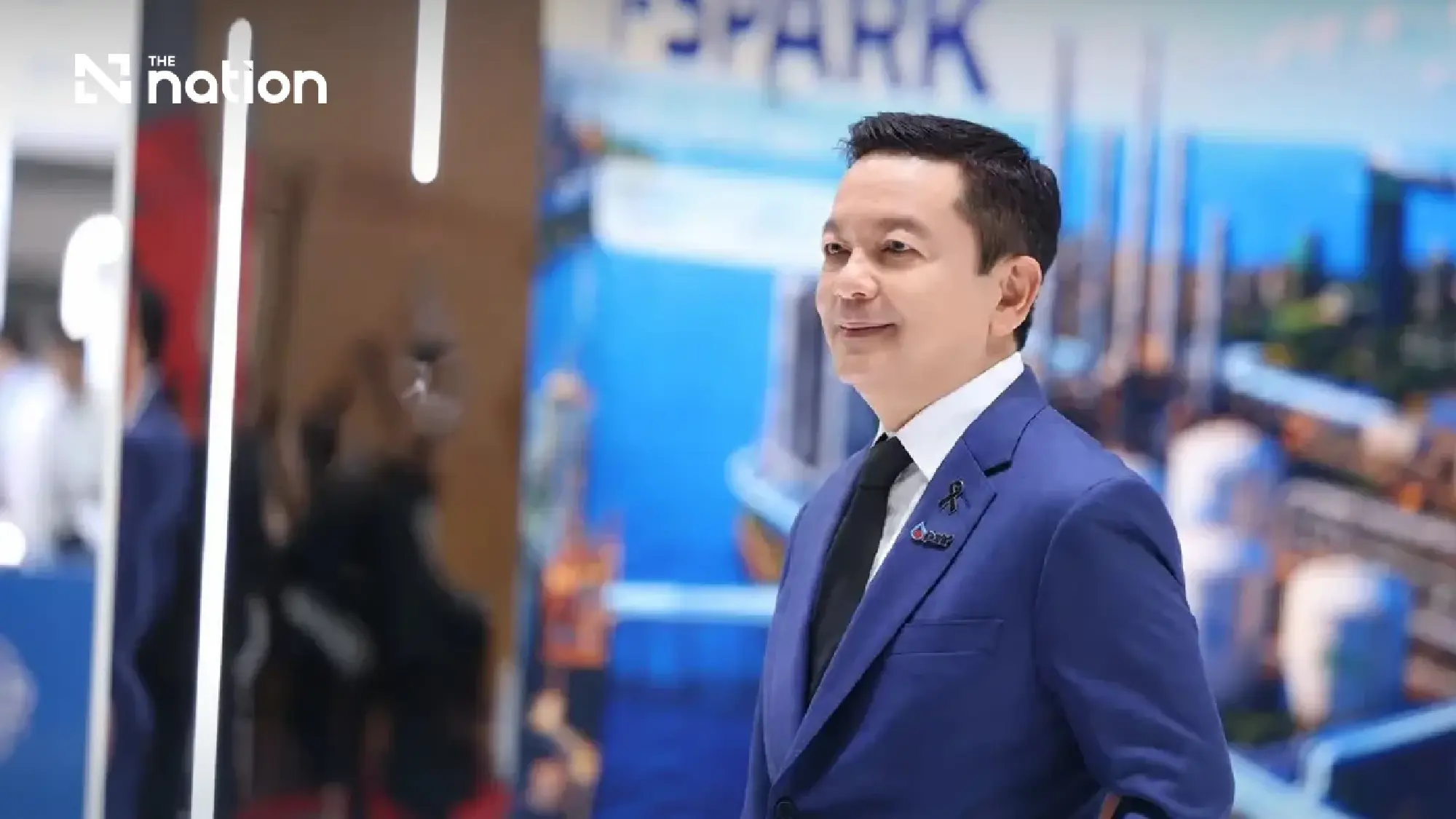

Natural gas and LNG remain pillars of global energy security
Kongkrapan said natural gas, whether delivered through pipelines or as liquefied natural gas (LNG), continued to play an important role in the global energy sector.
It was regarded as a key “Destination Fuel” because it was easy to source, relatively affordable and the cleanest hydrocarbon-based fossil fuel compared with coal and oil.
Thailand currently obtains about 50% of its natural gas from the Gulf of Thailand, imports more than 10% from Myanmar and imports more than 30% as LNG.
Natural gas therefore plays an important role as a fuel for both electricity generation and industry.
“The world will continue to need natural gas for another 20-30 years, but its use must go hand in hand with carbon reduction. Although natural gas is cleaner than other fossil fuels, combustion still emits carbon dioxide (CO2). PTT therefore also places importance on carbon capture and storage (CCS) technology,” Kongkrapan said.
Kongkrapan stressed that, as the country’s energy state enterprise, PTT’s main responsibility was to ensure that Thailand had sufficient energy at reasonable prices.
The company has operated its natural gas business for more than 40 years and will seek to make gas use sustainable over the next 20-30 years through various carbon-reduction measures, alongside the promotion of clean energy such as solar power in line with government policy.


Global operations help PTT diversify energy risks
Turning to PTT’s role in the global market, Kongkrapan said the company had operated exploration and production (E&P), trading and overseas investment businesses for several decades.
As a result, PTT and PTT Group had not faced the risk of oil or natural gas shortages during global energy crises, including conflicts in various regions, because of their extensive investments in overseas energy sources.
PTT also has trading operations in major global energy hubs, including London, Singapore, the United Arab Emirates (UAE) and Houston in the United States.
These operations allow the company to secure alternative energy supplies immediately when an existing source encounters problems.
Thailand once sourced about 70% of its oil imports from the Middle East, but the proportion has now fallen to 30%, helping to diversify risks across energy sources effectively.
PTT plans more than threefold LNG growth within a decade
Kongkrapan said PTT based the expansion of its natural gas and LNG businesses on three pillars: energy security, reasonable prices and sustainability.
It is currently placing particular emphasis on security by investing in the search for new energy sources in the Gulf of Thailand, neighbouring countries and competitive gas and oil resources worldwide.
PTT’s LNG business comprises two main areas.
One involves imports overseen by government regulators to strengthen national energy security, while the other covers LNG trading in the global market, giving PTT access to a wider range of energy sources.
PTT aims to expand its LNG portfolio from a current trading volume of about 3-4 million tonnes a year, excluding imports for national energy security, to 10 million tonnes by 2030 and 15 million tonnes by 2035.
This would represent growth of more than threefold within the next decade.
“Gastech 2026, hosted by Thailand, has brought counterparties and partners from around the world together for active discussions with PTT on investment co-operation, joint efforts to secure energy sources and LNG trading,” Kongkrapan said.
Balancing energy security with shareholder returns
Explaining how PTT balances energy security, flexibility and sustainability as the global energy transition accelerates, Kongkrapan said the company had a dual role as both the national energy state enterprise and a listed company responsible for protecting shareholders’ interests.
During global energy crises, however, PTT prioritises its role as a state enterprise.
Kongkrapan said that during previous crises, including a period in March and April when crude oil shipments through unspecified straits encountered problems, PTT had immediately secured replacement supplies from other sources.
Although the costs were higher, PTT absorbed the difference without passing it on to the public.
He said the company had maintained both national energy security and solid financial performance for shareholders.
Thailand has sufficient energy despite global volatility
Addressing confidence in energy security as global oil prices began to rise again, Kongkrapan said PTT had emergency plans that were regularly rehearsed.
The company had also invested hundreds of billions of baht over the past five years to improve its flexibility in switching raw-material sources.
This allowed it to reduce its previous reliance on Middle Eastern oil and source supplies from other regions, including the United States and West Africa, through trading capabilities developed in advance.
Kongkrapan also discussed the closure of shipping routes in the Red Sea, which required energy shipments to be rerouted.
He said PTT had continued to manage its logistics flexibly.
Energy security was not limited to fuel but extended to downstream industries, including oil refining, which produces diesel, petrol and naphtha.
As naphtha is an important petrochemical feedstock, PTT must manage the entire supply chain to ensure uninterrupted operations.
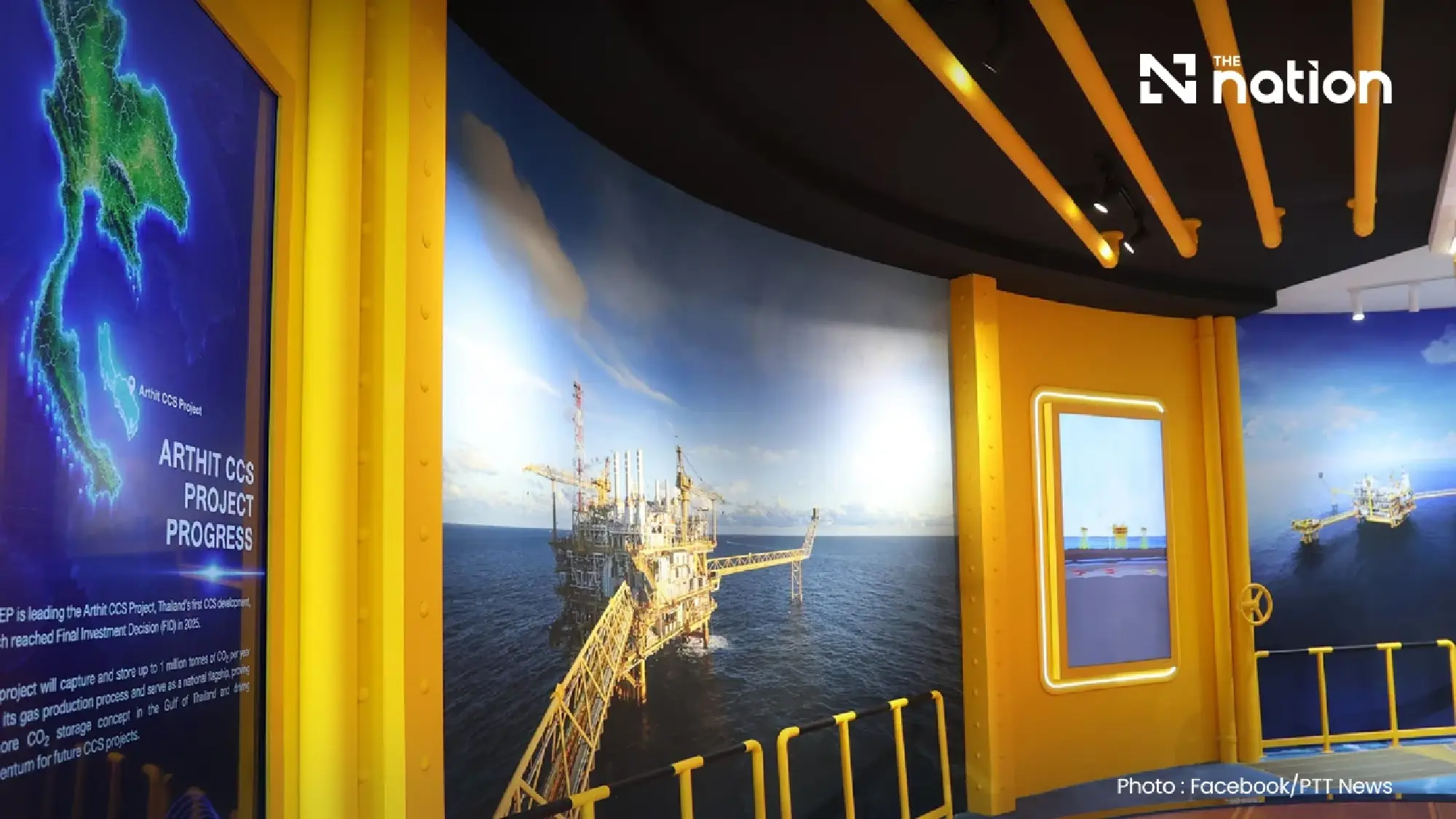
PTT showcases business capabilities and CCS at Gastech
Kongkrapan said PTT was participating in Gastech 2026 as a principal sponsor alongside the Ministry of Energy to reinforce Thailand’s profile and importance on the global natural gas business map.
PTT invited partners and national energy companies from around the world to activities at its stand, which showcased integrated business capabilities ranging from natural gas procurement, attracting investment partners and E&P, to CCS technology.
The display reflected PTT’s emphasis on combining natural gas use with carbon reduction.
Beyond its business activities, PTT’s stand also showcased Thai identity by presenting the use of cold energy recovered from the LNG import process to grow strawberries and tulips in Rayong.
Food activities featuring chefs of Michelin calibre and renowned Thai master chefs were also held over several days, allowing participants to experience energy knowledge, business opportunities and world-class food prepared by Thai chefs.


