
AirAsia outlines refinancing strategy amid fuel cost pressures
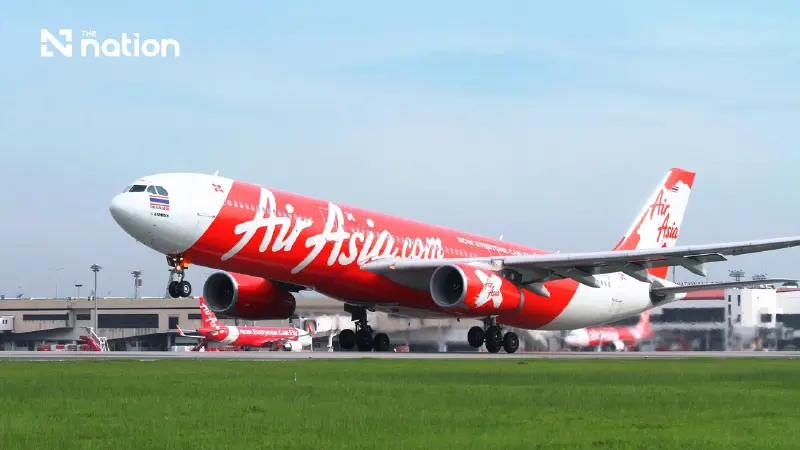


AirAsia outlines refinancing, fleet and growth plans as Bo Lingam and Tony Fernandes address fuel costs, losses and market concerns.
AirAsia Group Berhad has reaffirmed confidence in its business outlook, saying its planned fundraising, fleet optimisation and cost-control measures are aimed at strengthening its long-term financial position as the aviation industry faces higher fuel costs and changing market conditions.
The airline group, formerly known as AirAsia X Berhad, said on Friday (September 18, 2026) that it was maintaining a disciplined approach to operations, financial management and fleet planning amid geopolitical uncertainty, fuel price volatility and rising operating costs.
AirAsia said its low-cost model, fare optimisation measures and growth in ancillary revenue continued to support its ability to manage industry-wide challenges while remaining focused on sustainable growth.
Financial pressure and refinancing plans
The statement followed a Reuters report that AirAsia recorded a net loss of 831 million ringgit, or around THB6.72 billion, in the second quarter of 2026, after fuel costs increased 66% to an average of US$183 per barrel during the period.
As of June 30, 2026, AirAsia had current liabilities of 18.4 billion ringgit, equivalent to around THB150 billion, while cash and bank deposits stood at 954 million ringgit, or about THB7.8 billion.
Reuters noted that it was unable to independently verify all details of AirAsia’s financial position.
The airline is seeking up to US$1 billion from international debt markets, together with 700 million ringgit in domestic credit facilities, with the company saying the fundraising is mainly intended for debt restructuring, refinancing and balance-sheet consolidation.
Reuters also reported that two sources estimated AirAsia could require at least US$3 billion in fresh capital. The airline has also been restructuring its operations by cutting underperforming routes, returning older aircraft to lessors and renegotiating supplier contracts to reduce costs.
The Malaysian government is considering possible options, including potential support measures for external fundraising, although no official details have been announced.
AirAsia maintained that its financing plan is sufficient for its requirements and that operations remain normal.
AirAsia focuses on resilience and business continuity
Bo Lingam, Group CEO of AirAsia Group, said the airline had adopted a disciplined approach to managing the current operating environment by adjusting capacity, controlling costs, engaging with key stakeholders and strengthening resilience.
“We have been through many crises before in our 25-year journey, with Covid-19 being by far the most challenging. What is different today is that people can still fly and travel continues,” Lingam said.
He added that AirAsia remained committed to business continuity and serving passengers despite speculation surrounding the company’s financial position.
“Given the current environment, we are taking a disciplined approach to managing the business - adjusting capacity, controlling costs, having active discussions with key stakeholders and strengthening our resilience,” Lingam said.
AirAsia said its planned fundraising exercises were primarily targeted at refinancing existing obligations, restructuring debt and consolidating its balance sheet to optimise its long-term capital structure rather than solely supporting operations.
The group said it would continue disclosing material developments through official exchange filings and public announcements in accordance with regulatory requirements.

Fernandes says refinancing is aimed at reducing costs
Tony Fernandes, Co-Founder and Adviser to AirAsia Group, said the airline’s planned US$1 billion fundraising exercise was focused on refinancing existing debt taken during the Covid-19 period rather than raising new capital for daily operations.
He rejected reports suggesting AirAsia was seeking US$3 billion, saying the priority was to replace expensive borrowing with lower-cost financing, improve the balance sheet and return to a lower-debt, cash-generating business model.
“We stated we are raising US$1 billion, mostly to refinance expensive loans and clear some creditors. We don’t want more debt. If I can get cheaper debt to replace expensive debt, that is simply good financial sense,” Fernandes said.
Fernandes said some pandemic-era borrowing carried interest rates as high as 17%, while refinancing could reduce those costs to around 8%.
He added that AirAsia currently had more than 1 billion ringgit in cash and had received strong interest from financial institutions in Europe, the United States, local markets and the Middle East.
The group has received a signed term sheet from Middle Eastern investors and banks for 1 billion ringgit, with detailed terms under development, Fernandes said.
He also addressed concerns over AirAsia’s reported liabilities of 18.4 billion ringgit, saying the figure had been misunderstood because a significant portion represented long-term aircraft lease commitments rather than immediate repayment obligations.
“Most of that 18.7 billion represents future aircraft lease commitments over 12 to 18 years, payable monthly. It is not debt due tomorrow,” Fernandes said.
Fernandes added that AirAsia continued to receive support from creditors and lessors, with discussions continuing with financial partners.
Fleet recovery and expansion plans
Fernandes said no AirAsia aircraft had been repossessed or grounded because of payment issues. Instead, the airline voluntarily returned older, less fuel-efficient aircraft as part of a strategy to reduce costs and improve fleet efficiency.
“When oil prices are high, older planes burn more fuel. We took the opportunity to return those planes while we brought back our grounded fleet,” Fernandes said.
He said around 20–25 aircraft were temporarily undergoing major maintenance, with work delayed partly because of the backlog created during the pandemic.
AirAsia currently has 244 aircraft, operating 229 routes to 122 destinations through 15 bases across five countries.
Fernandes said the group’s strategic order book of 500 aircraft, including newer fuel-efficient Airbus A320 family aircraft, remained an important long-term asset.
He said the order book could create additional value for the airline while supporting fleet modernisation in markets including the Philippines and Indonesia.
Adjusting to fuel pressure and rebuilding capacity
Fernandes said AirAsia’s second-quarter performance was affected by the sharp rise in jet fuel prices following geopolitical tensions.
He explained that the airline had sold tickets when fuel prices were lower, creating a temporary gap before higher fares could reflect increased costs.
“The current crisis is fuel and geopolitics. Demand is strong, people are still flying, our load factor is good, and cash is coming in. It’s not like Covid where we couldn’t fly,” Fernandes said.
The airline responded by reducing lower-profit routes, adjusting fares and managing capacity.
Fernandes said 81 routes had been temporarily suspended during the second and third quarters, with 17 routes returning in the third and fourth quarters as conditions improved.
AirAsia also increased fares by around 21%, with the impact expected to become clearer towards the end of the third quarter and during the fourth quarter.
Despite higher ticket prices, Fernandes said travel demand remained resilient. He said AirAsia was on track to carry nearly 70 million passengers in 2026, with on-time performance improving to around 86–88%.
For the fourth quarter, the group expects stronger demand and higher advance bookings after fares were adjusted to reflect increased fuel costs.

ASEAN growth and technology investment
Fernandes said AirAsia remained focused on expanding its ASEAN network, with Malaysia, Thailand, Indonesia, the Philippines and Cambodia continuing to be key markets.
Thailand is working with government agencies and tourism partners to stimulate travel demand, while capacity restoration will continue from the fourth quarter of 2026.
Malaysia plans to increase domestic and regional services, while Indonesia and the Philippines are expected to return to growth after completing network adjustments.Cambodia remains profitable, with plans to expand markets in the fourth quarter of 2026.
The group is also investing in technology and maintenance capabilities, including aircraft maintenance, repair and overhaul (MRO) facilities in Thailand and Indonesia.
Fernandes said AirAsia was working with Google to expand artificial intelligence (AI) adoption across the business. AI applications have already helped reduce fuel consumption by around 3%, while future use could improve dynamic pricing, ancillary revenue management and operational efficiency.
Fernandes maintained that AirAsia was focused on strengthening the business rather than responding to short-term market speculation.
“There is zero chance of non-sustainability. This is far easier than Covid. It’s just adjusting; it’s just timing,” Fernandes said.
AirAsia said it remained focused on maintaining operational stability, strengthening its financial structure and preparing for future growth opportunities through continued engagement with partners and stakeholders across the aviation ecosystem.
