
Oil shock from war hits tourism as ATTA warns China flights to Thailand may fall 30%
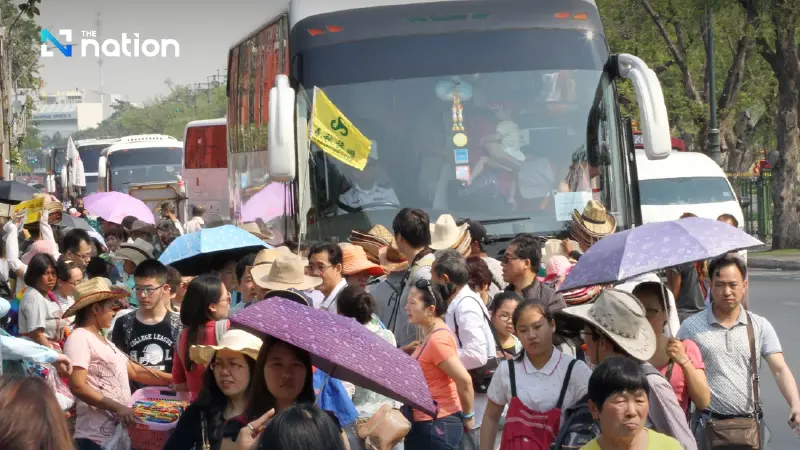


Rising oil prices from the Middle East conflict are pushing up airline costs, with ATTA warning China flights to Thailand could drop by 30%
Thailand’s tourism industry is beginning to feel the strain from the war in the Middle East, with soaring oil prices pushing up airline costs and prompting some Chinese carriers to scale back international flights.
Thanapol Cheewarattanaporn, president of the Association of Thai Travel Agents (ATTA), said the current conflict had already started affecting Chinese airlines, some of which were gradually reducing international services during the 2026 summer flight schedule as fuel costs rose directly with oil prices.

Thailand, which continues to rely heavily on the Chinese tourist market, is inevitably being affected by the situation, he said.
“Earlier, we expected flights from China to Thailand to continue increasing in line with the recovery in Chinese tourist demand,” Thanapol said. “But under the current situation, the volume of flights on Thailand-China routes is now expected to fall by 30% from normal levels.”
He said the uncertainty surrounding the Middle East war was now a key concern for private tourism operators, as it had driven global oil prices significantly higher and was directly affecting the aviation and tourism industries.

Charter flight operators in particular are facing mounting pressure from surging costs and are no longer confident enough to take on long-term business risk.
“Right now, charter operators can only see about one month ahead,” he said. “The situation is so uncertain that it is very difficult to plan for the long term, because costs could double at any time.”
If the situation remains unstable, he added, there could also be a slowdown in self-drive travel from ASEAN markets, as tourists are forced to limit fuel spending, further weighing on the tourism sector.
Thanapol said that during China’s Labour Day holiday from May 1-5, 2026, tourist arrivals would normally be expected to rise by about 30%. This year, however, travel demand has remained at a normal level rather than surging as anticipated.
He said Chinese travel behaviour had also shifted, with more tourists now travelling independently as fully independent travellers, or FIT, rather than joining large group inclusive tours, or GIT, which are more directly affected by rising costs.
Thanapol said the overall direction of the Chinese tourist market would likely become clearer after the Labour Day holiday, particularly from June onwards.

