
New Bangkok city plan set to boost high-rise projects in Thonburi
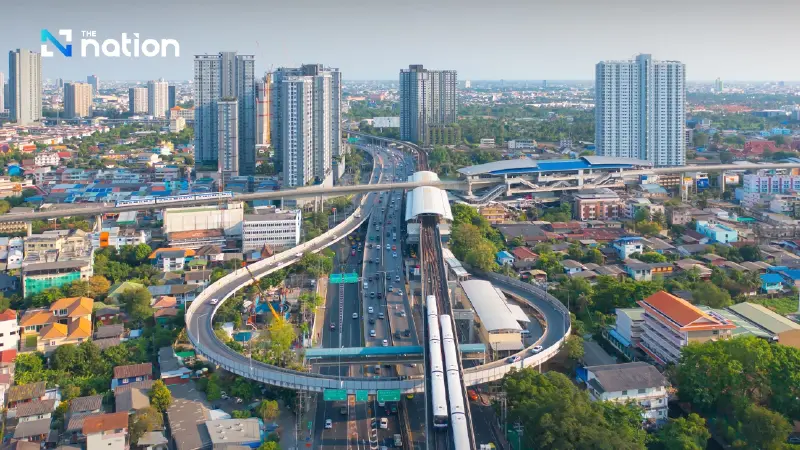


Bangkok’s new city plan is expected to unlock major development in western and southern districts as electric rail lines reshape land use.
The drafting of Bangkok’s new comprehensive city plan, the fourth revision, is expected to take effect around late 2027 and bring major changes to land-use rules in several areas.
The changes are expected to benefit landowners and developers by increasing land values and allowing more intensive development in line with rising land prices. While northern and eastern Bangkok are seeing significant changes, Thonburi, or the capital’s western and southern zones, is also set to benefit from future development.
The key driver is the expansion of several electric rail lines across these areas. Bangkok’s new comprehensive city plan is therefore being adjusted to align land use with the government’s infrastructure investment.
One of the clearest changes is the major rezoning of some areas from green-and-white diagonal zones, or land reserved for rural conservation and agriculture, into brown zones for high-density residential use and red zones for commercial use.
The changes are designed to support new electric rail networks, turning locations such as Taling Chan, Thawi Watthana, Bang Khae, Rat Burana and Chom Thong into promising areas for future urban expansion.
The major land-use changes in western and southern Bangkok under the draft new city plan include the following key points.

Western Bangkok: upper and central Thonburi
The expansion of mass transit systems is helping unlock green-and-white diagonal zones, classified as rural conservation and agricultural land, so they can accommodate more development.
In Taling Chan and Thawi Watthana, land-use rules are being adjusted to support urban expansion, driven by the Orange Line from Bang Khun Non to the Thailand Cultural Centre and the Red Line from Bang Sue to Taling Chan.
These rail lines are upgrading the area and changing former land-use colour zones, making it possible to develop more low-rise housing projects and high-rise buildings.
Southern Bangkok: lower Thonburi
Southern Bangkok is becoming a new strategic area connecting with the central business district through key electric rail projects.
The Southern Purple Line, from Tao Poon to Rat Burana, is seen as a major game-changer as it passes through high-potential locations including Wongwian Yai, Samre, Dao Khanong and Rat Burana.
This is expected to transform these areas into high-density residential and mixed-use districts.
Land prices along rail routes, especially in Wongwian Yai and Rat Burana, have continued to rise. Rat Burana is particularly notable as it still has land available for future project development.
The changes in land use under the draft new Bangkok city plan will pave the way for high-rise buildings, condominiums and large mixed-use projects along electric rail lines, replacing lower-density residential areas and low-density yellow zones.
This will increase development intensity and improve economic value along electric rail corridors.
The plan also supports the creation of suburban community centres, or sub-centres, by setting land-use zones more efficiently. These areas are intended to become development hubs that distribute growth away from the inner city.
They will serve as centres for business, commerce, services and recreation, helping create a better balance between workplaces and residential areas, reduce congestion and lower the need for people to travel into the city centre.
The approach is also expected to stimulate employment, shopping centres and new job clusters in outer Bangkok, rather than allowing growth to remain concentrated only in the inner city.
At the same time, the changes could push up land prices in suburban areas as more locations become attractive for future development.
