
New Bangkok city plan to unlock rail-linked mega-projects and prime land development
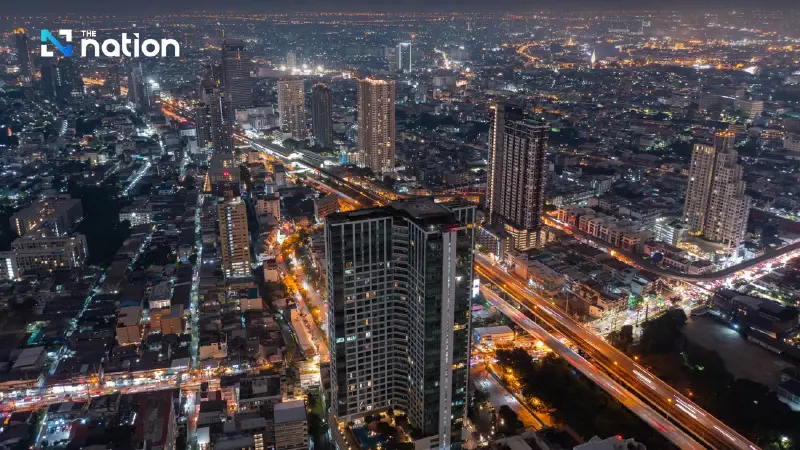


Bangkok’s revised comprehensive plan is set to reshape property development around mass-transit corridors, opening the way for mixed-use mega-projects, high-rise towers and major redevelopment of prime private and state-owned land.
- Expected to take effect in 2027, Bangkok's revised city plan will adjust zoning rules to allow for higher-density development, such as mixed-use projects and high-rises, along mass-transit rail lines.
- The plan will unlock prime land by increasing development potential, enabling specific mega-projects like One Bangkok's second phase, which includes a potential new tallest tower for Thailand.
- Large state-owned land parcels, including areas at Makkasan Station and Khlong Toei Port, will have their development potential significantly upgraded to attract private investment for large-scale projects.
- The overarching goal is to make rail corridors the backbone of Bangkok's future growth by encouraging more people to live and work along these transit routes.
Bangkok’s revised comprehensive plan is set to reshape the capital’s property landscape by increasing development potential around mass-transit routes, paving the way for major mixed-use projects, high-rise buildings and the redevelopment of prime private and state-owned land across the city.
The Bangkok Metropolitan Administration is revising the draft Bangkok Comprehensive Plan, in its fourth revision, to keep pace with government infrastructure investment, especially rail networks, as well as large-scale private-sector developments that are changing the city’s structure.
The plan is designed to encourage more people to live, work and spend daily life along electric rail corridors, while strengthening Bangkok’s competitiveness and supporting its ambition to become a global metropolis and a major destination for both Thais and foreigners.
At the same time, the revised plan seeks to create long-term urban space for people of all age groups to live more conveniently in the city, particularly around mass-transit lines.
New plan expected to take effect in 2027
The Bangkok City Planning Committee approved the draft plan on April 9, 2026. It is now being prepared for the legal process, including the posting of planning maps and regulations for 90 days.
During this period, stakeholders will be able to submit petitions seeking amendments, changes or the revocation of certain requirements under legal procedures.
The new Bangkok Comprehensive Plan is expected to come into force towards the end of 2027, or around September 2027.
The expansion of electric rail lines, particularly since the administration of Gen Prayut Chan-o-cha, has already accelerated major changes in Bangkok. Developers have continued to launch high-rise projects and condominiums along mass-transit routes, while large business groups have moved to develop prime land into mixed-use projects.

As a result, the new city plan is expected to adjust land-use rules to better reflect Bangkok’s changing development pattern. Several landowners are also waiting for the new plan to take effect in order to increase future land-use potential and raise project value.
One Bangkok phase 2 to feature Thailand’s tallest tower
One Bangkok, the mega-project on 108 rai of prime land at the corner of Wireless Road and Rama IV Road, is one of the clearest examples of how large-scale development is transforming the capital.
After the first phase opened, the project became a major magnet for visitors, office workers and businesses through its shopping centre and modern office towers. It has also helped turn Rama IV Road into a new economic axis for Bangkok.
Under the new city plan, the One Bangkok site is set to change from brown zoning, or very high-density residential land, to red zoning, or commercial land. It will be classified as Por 8, allowing development of up to 12 times the land plot size, including bonuses.
The second phase of One Bangkok is expected to include Signature Tower, also known as One Bangkok Tower 1. The tower is planned as the project’s landmark building and is expected to become Thailand’s tallest building, at around 437 metres with 92 storeys.
However, the main structure has not yet begun construction, with work currently progressing only on the foundation. The project is believed to be waiting either for the new Bangkok Comprehensive Plan or for the right market timing to maximise investment value.
Central Embassy phase 2 to expand luxury CBD footprint
Central Embassy Phase 2, located on the former British Embassy site on Phloen Chit Road, is another major project positioned to benefit from Bangkok’s central business district (CBD) zoning.
The mixed-use extension is planned at 235 metres, or 56 storeys, and will include an expanded luxury retail area, major flagship stores, Grade A+ office space and ultra-luxury residences.
The project will nearly double the retail space of Central Embassy and is intended to strengthen the area’s position as one of Asia’s leading luxury hubs. It will also include 141 super-luxury condominium units.
Once completed, the new phase will be seamlessly connected to the existing Central Embassy shopping mall. Completion is expected in 2029.
Because the site is located in a key CBD area, the new comprehensive plan is expected to maintain high land-use potential.
Ratchadamri mixed-use project rises on Vajiravudh College land
Ratchadamri remains another high-potential area for premium property development, especially among foreign investors familiar with the district as a place to live, invest and do business.
One closely watched project involves land around Nantawan Building, formerly linked to Thai Obayashi, and the Baan Somthavil condominium site. After Thai Obayashi won the tender for the land, plans were made to develop a new mixed-use project in partnership between Nantawan Group, linked to Thai Obayashi, and Saha Group.
The project sits on prime land owned by Vajiravudh College, next to Ratchadamri BTS station. Under the new comprehensive plan, the site is expected to receive maximum land-use potential because of its location beside the station.
The development combines two plots — Nantawan Building and Baan Somthavil — covering more than 6 rai. The combined site will be developed into a mixed-use project with office buildings, a hotel and commercial space.
Construction is now under way, with piling work in progress. The project is valued at around 8 billion baht.
Under the new plan, the site will be classified as Por 8, allowing development of up to 12 times the land plot size, compared with Por 5 under the current plan, which allows up to 10 times.
CPN targets Rama IX and Phahon Yothin
Central Pattana Plc, or CPN, is also moving ahead with major developments in key rail-linked locations.
The company has announced a five-year investment plan worth 110 billion baht, including Central GR9, a world-class mixed-use mega-project on 73 rai in the Rama IX new CBD.
The site is close to mass transit and is planned as a large urban district combining residences, shopping space and offices. The project is expected to add fresh momentum to Rama IX as a new economic centre.
Under the new comprehensive plan, the site will be classified as Por 7, allowing development of up to 10 times the land plot size.
CPN also owns another high-potential plot on Phahon Yothin Soi 19. The Central Phase 2 project sits on 48 rai, with part of the land still awaiting development.
The first phase is under construction and is targeted to open in early 2027. The area is designated as brown zoning, or very high-density residential land, making it suitable for large mixed-use projects, particularly because of its proximity to electric rail routes.
The development is expected to help strengthen the area as a gateway to Bangkok’s eastern zone.
MCOT prepares 50-rai Ratchada–Rama IX site
MCOT Plc’s 50-rai land plot in the Ratchada–Rama IX area is another site attracting attention from property investors.
The plot is close to the Orange Line, running from Bang Khun Non to Min Buri, and the MRT Blue Line. MCOT has recently conducted market sounding to gather investor feedback.
The company is preparing to open bidding for a 30-year long-term lease to develop a large mixed-use project on the site. The asset value is estimated at up to 9 billion baht.
If developed, the project is expected to help complete the urban fabric of the Ratchada–Rama IX district and attract more people into the area.
PTT waits for new plan on Thung Song Hong site
PTT Plc’s 70-rai land plot near Thung Song Hong station on the Red Line suburban rail system in Lak Si is also being closely watched.
The company has plans to develop the site into a mixed-use project. Earlier reports indicated that PTT wanted to wait for the new Bangkok Comprehensive Plan before moving ahead.
Under the new plan, the site is designated as orange zoning, or medium-density residential land.
AWC pushes Woeng Nakhon Kasem and reviews 100-storey tower plan
Asset World Corp Plc, or AWC, is investing in the Woeng Nakhon Kasem project in Yaowarat, its largest landmark mixed-use development.
The project covers more than 14 rai, or 22,400 square metres, in the heart of Yaowarat, with an investment value of 16 billion baht. The ceremonial foundation pillar has already been installed.
However, due to the complexity of construction, the project is expected to take about five years to complete. AWC therefore plans to open the section next to Ong Ang Canal first.
For Asiatique, AWC’s plan to develop a 100-storey tower may be adjusted to suit market conditions and investment timing.
The company is also transforming historic riverside areas along the Chao Phraya River through three plots that will become The Ritz-Carlton Bangkok, The Riverside.
The project will cover both sides of the river, including The Lhong 1919 Riverside Heritage Destination side and two plots on Song Wat Road. It will include 192 rooms and form part of AWC RiverJourney.
State land emerges as next development frontier
State-owned land is expected to be among the biggest beneficiaries of the new comprehensive plan.
One major site is the Port Authority of Thailand’s mixed-use project at Khlong Toei Port, covering 2,353 rai along the Chao Phraya River. The project is valued at around 100 billion baht.
Under the new city plan, the site’s development potential will be upgraded to Por 5, allowing development of up to seven times the land plot size. This is expected to make the site more attractive to private investors bidding for long-term development rights.
Another important site is the State Railway of Thailand’s land around Makkasan Station, or Makkasan Centre, covering 745 rai. This excludes the 140–150 rai transit-oriented development area around the high-speed rail station linking three airports, which is governed under Eastern Economic Corridor rules.
The Makkasan Centre land is located in the heart of Bangkok and is expected to be classified as Por 8 under the new plan, allowing development of up to 12 times the land plot size. It is viewed as one of the city’s most promising long-term lease opportunities.
The same applies to land around Krung Thep Aphiwat Central Terminal in the Phahon Yothin and Bang Sue areas. The State Railway of Thailand’s land in this area covers 2,325 rai and is also set to be classified as Por 8, allowing development of up to 12 times the land plot size.
Former TOT site near Chit Lom also draws attention
Another prime site is the former TOT land next to Chit Lom BTS station.
The 12-rai plot is owned by the Crown Property Bureau and is located in a highly strategic area linking Phloen Chit Road and Phetchaburi Road.
The site is currently open for private-sector bidding under a long-term lease.
Land-use potential in this area is not significantly different from the current city plan, as it is already located in the CBD and allows relatively high-density development.
Rail corridors become backbone of Bangkok’s next property cycle
The revised Bangkok Comprehensive Plan is expected to reinforce a clear development pattern: Bangkok’s next property cycle will be driven by rail-linked locations.
Private developers are already focusing on mixed-use projects, high-rise offices, luxury residences and large retail schemes near mass transit. At the same time, state agencies are preparing to unlock large land banks in strategic locations.
If the plan takes effect as expected in 2027, rail corridors could become the backbone of Bangkok’s future urban growth, linking residential, commercial and lifestyle districts into a more connected metropolitan structure.
