
Suriya to visit Malaysia on June 17 seeking end to seabass-shrimp trade dispute
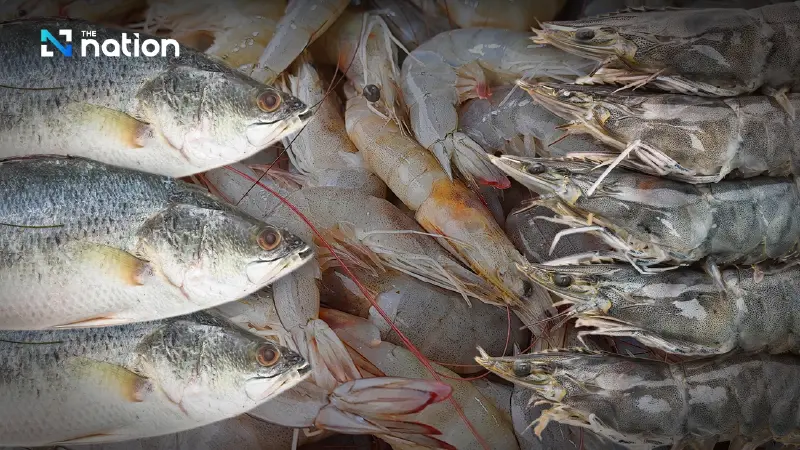


Agriculture Minister Suriya Juangroongruangkit plans to visit Malaysia on June 17 to seek a permanent solution to the seabass-shrimp dispute after Kuala Lumpur banned imports of five Thai shrimp species.
Agriculture and Cooperatives Minister Suriya Juangroongruangkit plans to visit Malaysia on June 17 for policy-level talks aimed at resolving a seafood trade dispute involving Thailand’s checks on Malaysian seabass imports and Malaysia’s ban on five Thai shrimp species.
Suriya said he was not ignoring the issue, after Malaysia’s suspension of Thai shrimp imports took effect on June 1.
He said the dispute stemmed from Thailand’s inspection process for seabass imported from Malaysia, particularly document checks by the Department of Fisheries that took longer than expected. Malaysia viewed the delay as a trade obstacle, he said.
Thailand offers to shorten checks while keeping standards
Suriya said the Agriculture Ministry had intended to ensure thorough and careful inspections, but after speaking with the director-general of the Department of Fisheries, he was assured that the inspection period could be shortened without lowering standards.
The Malaysian prime minister has also been informed of the issue and has written to Prime Minister and Interior Minister Anutin Charnvirakul asking Thailand to help facilitate seabass imports, Suriya said.
He added that Malaysia had instructed its own Fisheries Department to help facilitate imports of Thai shrimp.
Minister seeks permanent solution
Suriya said he had sent a letter to Malaysia’s Minister of Agriculture and Food Security seeking a permanent solution to the dispute.
He also informed Malaysia that he was ready to travel for talks next Wednesday, June 17. If the issue is resolved, Thai shrimp exporters would be able to resume shipments to Malaysia, while Malaysian consumers could benefit from lower shrimp prices, he said.
Thai consumers could also benefit from better seabass prices, making the outcome a “win-win” for both sides, Suriya added.
“In the letter, I asked Malaysia to first lift the ban on Thai shrimp,” Suriya said. He added that officials from both countries should hold preliminary talks before his trip so that ministerial-level negotiations would be easier.
Asked whether his personal visit could resolve the dispute, Suriya said he believed the matter benefited both sides and that talks at the policy level should be possible.
How the dispute began
The dispute began after Malaysia complained that Thailand’s document checks on Malaysian seabass imports were taking too long. Kuala Lumpur later imposed measures on Thai seafood, requiring analysis certificates for Thai seabass shipments and suspending imports of five Thai shrimp species from June 1. The measures covered brown tiger prawn, banana prawn, whiteleg shrimp, giant tiger prawn and blue shrimp.
The shrimp suspension is expected to continue until Thai agencies submit complete responses to a food-safety standards questionnaire for reassessment.
The restrictions have raised concern among Thai exporters and farmers, as the sudden suspension could cause revenue losses from the Malaysian market and create oversupply pressure in Thailand.
