
Alien crayfish in Kwan Phayao raises Thai freshwater alarm
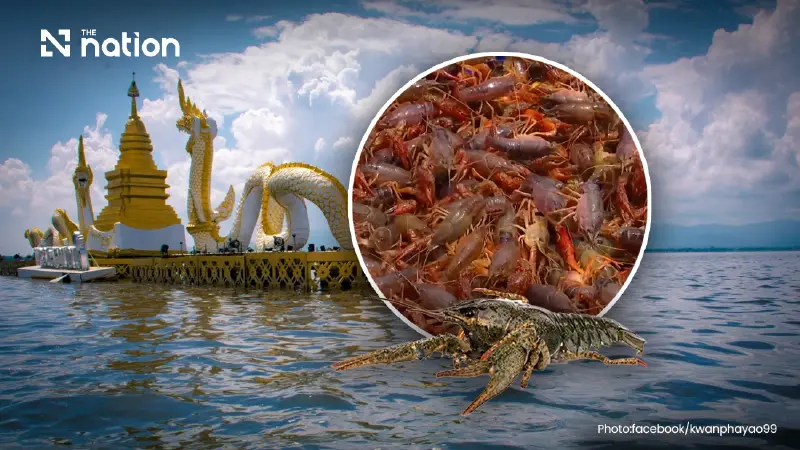


The discovery of alien redclaw crayfish in Kwan Phayao has become a major warning for Thailand, with experts cautioning over risks to freshwater ecosystems, local fisheries and the wider Thai economy.
- The discovery of the redclaw crayfish, an alien species, in Kwan Phayao is considered a serious warning for Thailand's freshwater ecosystems.
- Experts warn the invasive crayfish threatens native aquatic life, damages habitats through burrowing, and could spread diseases to economically important species.
- In response, Thai authorities are implementing surveillance and control measures, as well as public campaigns to prevent the release of non-native species into natural waterways.
- The situation calls for a comprehensive management strategy that includes monitoring, removal, and potentially encouraging consumption to control the population, similar to global responses to invasive species.
The excitement in Phayao over the capture of redclaw crayfish in Kwan Phayao is turning into something far more serious: a warning sign for Thailand’s freshwater ecosystems.
The crayfish is an alien aquatic species that can adapt quickly, feed on a wide range of food sources and burrow into riverbanks, pond walls and paddy bunds. Experts warn that, if left unchecked, it could damage natural habitats, threaten native aquatic life and pose risks to economically important aquatic species.
More than a local curiosity, the discovery has renewed concern over alien species that escape or are released into natural waterways. For Thailand, the urgent priority is no longer only to trace where the crayfish came from, but also to monitor, control and remove it from the wild before its population becomes harder to manage.
Phayao moves to contain alien crayfish risk
Assoc Prof Dr Jessada Denduangboripant and fisheries academics have identified the crayfish as a non-native aquatic species with the potential to invade freshwater ecosystems if it spreads and establishes a self-sustaining population in the wild.
Phayao authorities are now monitoring the situation and implementing surveillance and control measures. Public campaigns are also being stepped up to discourage people from releasing alien aquatic species into natural water sources.
The Department of Fisheries classifies crayfish as a controlled alien aquatic species because of traits that support rapid spread. It can survive in different conditions, consume varied food, compete with native species and dig burrows along pond embankments and shorelines.
There are also concerns that it could carry diseases affecting commercially valuable aquatic animals.
Not always villains, but dangerous in the wrong place
Alien aquatic species are not necessarily “villains” from the start. Many enter countries as ornamental pets, farmed species, research subjects or commercial animals. Some may be legally imported, while others are smuggled in.
Problems often arise when they escape from poorly controlled farms or are released into the wild by people unaware of the consequences.
The redclaw crayfish case in Kwan Phayao is not unique. Several countries have faced similar challenges. In Europe, crayfish from North America have been linked to pressure on native crayfish and freshwater ecosystems.
In China, crayfish have generated huge economic value, but some areas have also reported damage to paddy bunds and irrigation systems because of their burrowing behaviour. In parts of Africa, authorities continue to monitor the effect of alien crayfish on native aquatic plants and animals.
Global lessons point to control, removal and use
Few countries have avoided the problem of alien species, whether fish, shrimp, shellfish or other aquatic animals. The key difference lies not only in how such species enter an ecosystem, but also in how quickly and effectively each country responds.
International experience suggests that alien species management must look at the whole system. Measures usually combine prevention, surveillance, population control, removal from the wild and, where appropriate, practical use to create incentives for reducing their numbers.
One widely cited example is the management of lionfish in the United States and the Caribbean, where authorities have encouraged consumption alongside tracking and removal. The idea is simple: the more invasive species are taken out of the wild, the more their ecological impact can be reduced.
A similar mix of measures has been used in parts of Europe affected by crayfish outbreaks, including removal, tighter controls on keeping and breeding, and technology to monitor their spread.
Thailand has already encountered several alien species in natural waterways, including redclaw crayfish, zebra tilapia, golden apple snails and blackchin tilapia. Each case requires more than one response: monitoring, control, removal and appropriate use must work together.
Alien species do not choose which country they enter. Every country, however, must choose how to respond. For Thailand, the real question is not only how the crayfish reached Kwan Phayao, but also how quickly the country can limit its impact, reduce its population and turn the problem into a manageable risk before it is too late.
Source: Bangkokbiznews
