
Phetchaburi fisheries chief hails success of seabass project to control alien blackchin tilapia
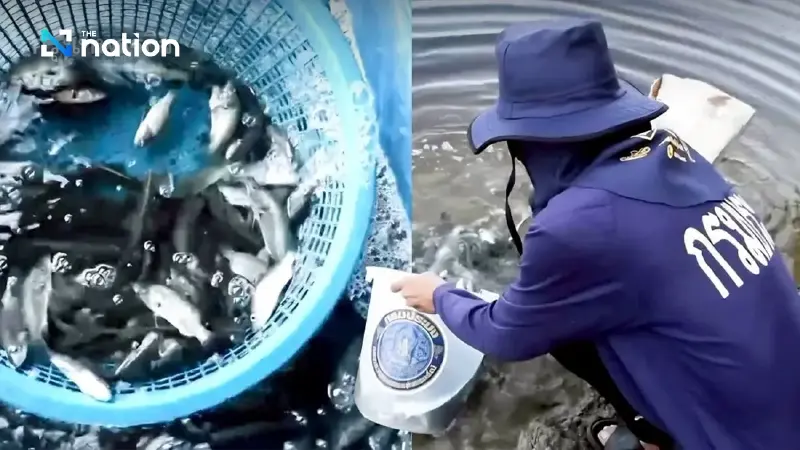


Phetchaburi’s pilot project using seabass to control invasive blackchin tilapia in shrimp and crab ponds shows promising results, say officials and farmers.
The head of the Phetchaburi Fisheries Office on Tuesday announced the success of a pilot project that uses seabass to control the spread of alien blackchin tilapia in aquaculture ponds.
Prachuap Jianyi, chief of the provincial fisheries office, said the first phase of the Seabass Fund Project, launched in February, had yielded positive results in helping crab and shrimp farmers manage the invasive species.
The project is financially supported by Charoen Pokphand Foods (CPF).
Free seabass provided to farmers
Under the first phase of the project, crab and shrimp farmers received seabass fingerlings free of charge, with a recommended release ratio of 30 seabass per rai of pond area.

In the ongoing third phase, Prachuap said his office and CPF distributed 500 seabass fingerlings to 20 shrimp farmers in Moo 8 village, Tambon Nong Khanan, in Mueang district.
For the first time, farmers in the third phase are also releasing the seabass into temporary ponds used for storing salt water, before transferring the water into their main shrimp ponds.
Invasive fish blamed for losses
Farmers across several provinces have reported that blackchin tilapia, an invasive species from Africa, has infested both natural water bodies and aquaculture ponds. The species has severely impacted populations of native fish, shrimp, and crabs — causing financial losses to farmers.
On March 21, a group of demonstrators dumped two tonnes of blackchin tilapia in front of Government House, calling for urgent government action against the infestation.
CPF, which was previously the only company authorised to import blackchin tilapia for research, has been accused by opposition parties and civil groups of causing the outbreak. The company has denied any responsibility, stating that all 2,000 of its imported fish had been destroyed. Instead, it blamed the spread on aquarium fish importers.
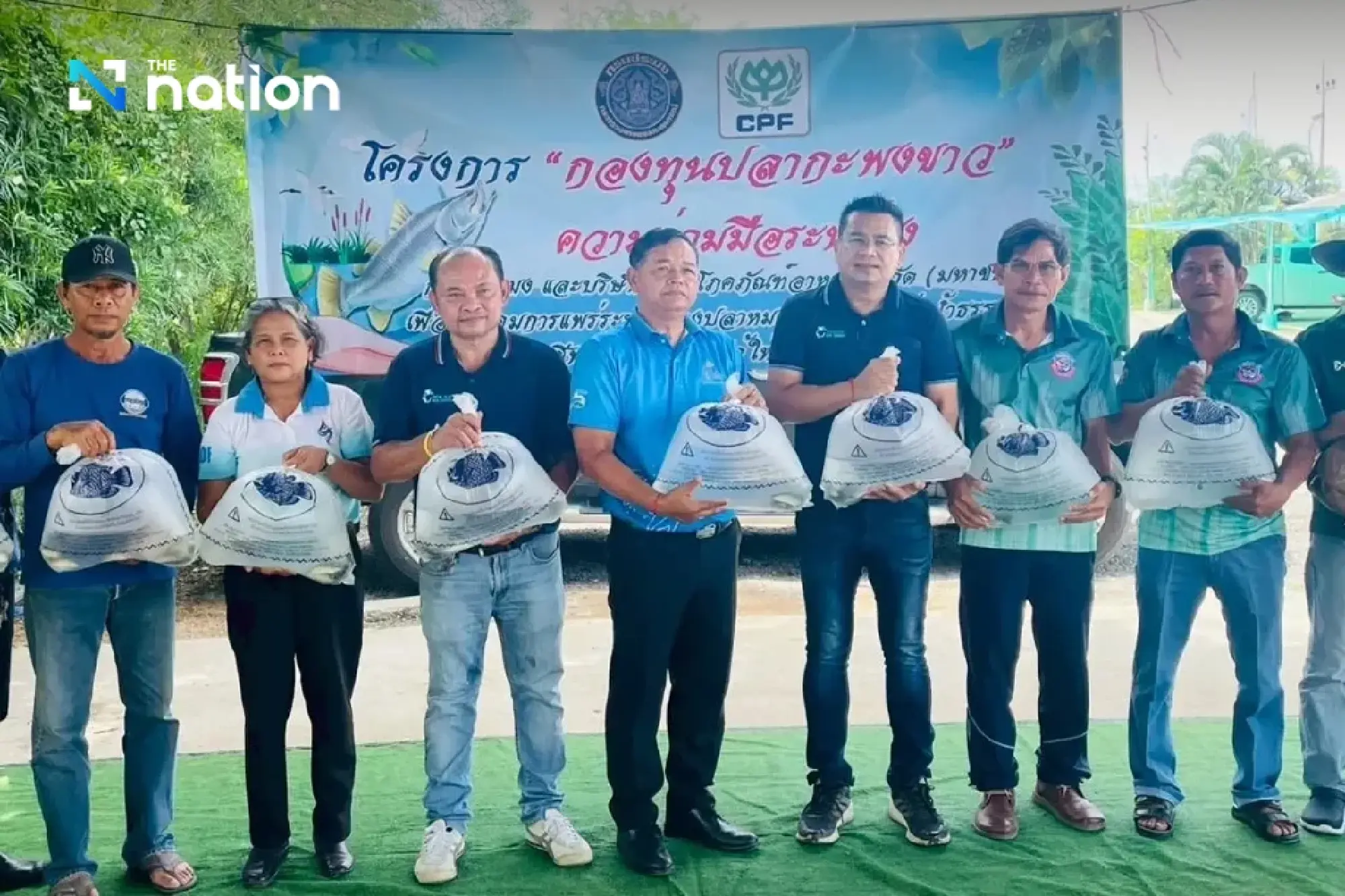

Farmers report promising results
Kanchana Chotechuang, a crab farmer in Tambon Bangkhem, said the seabass significantly reduced blackchin tilapia populations in her pond and in those of other farmers participating in the first phase.
Yai Suknirat, a shrimp farmer, agreed. He said the project has been very useful, effectively controlling the alien species — and added that farmers could also sell the fully grown seabass for additional income.
