
Thailand’s June inflation rises 2.42% as fuel and ready-to-eat food prices climb
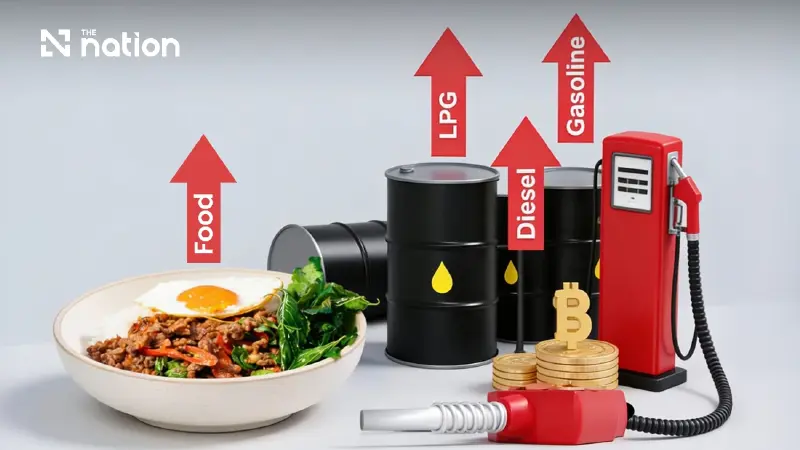


Thailand’s headline inflation rose 2.42% in June 2026, driven by higher fuel, transport and ready-to-eat food prices, while the Commerce Ministry maintained its 2026 inflation forecast at 1.5-2.5%.
Thailand’s headline inflation rose by 2.42% year on year in June 2026, driven mainly by higher domestic fuel prices, rising public transport fares and broad-based increases in ready-to-eat food prices, the Trade Policy and Strategy Office said.
Natiya Suchinda, deputy director-general of the Trade Policy and Strategy Office, said the country’s headline Consumer Price Index stood at 102.85 in June, compared with 100.42 in the same month last year.
She said domestic fuel prices remained higher than a year earlier due to the impact of conflict in the Middle East and the restructuring of domestic retail oil prices. The higher fuel costs also pushed up public transport fares compared with the previous year.


Fuel and transport costs drive inflation
The non-food and non-beverage category rose by 3.31% year on year, led by higher prices of diesel, gasohol and petrol, as well as public transport fares, house rents and cleaning-related products.
However, some items recorded lower prices, including electricity bills, hotel room rates, personal care products and clothing.
Natiya said other goods and services had only a limited impact on overall inflation.
Ready-to-eat food prices rise broadly
The food and non-alcoholic beverages category increased by 1.03% year on year, driven by higher prices of ready-to-eat meals such as prepared dishes, noodles, rice with curry, rice with stir-fried basil and fried rice.


Prices of white rice, non-alcoholic beverages and fresh fruit also increased.
However, several food items became cheaper, including pork, glutinous rice and fresh vegetables.
Core inflation, which excludes fresh food and energy, rose by 1.23%, accelerating from 0.92% in May 2026.
CPI falls from May as fuel prices ease
On a month-on-month basis, Thailand’s headline CPI fell by 0.34% from May 2026, mainly due to a 0.66% decline in the non-food and non-beverage category.
The decline was led by lower domestic fuel prices. Hotel room rates also fell as operators launched promotional campaigns, while domestic airfares declined due to weaker travel demand during the low season and lower fuel costs.
However, some goods and services became more expensive, including personal care products, cleaning products, international airfares, pet food and expressway tolls.


Food prices still edge higher month on month
The food and non-alcoholic beverages category rose by 0.15% from May, led by higher prices of ready-to-eat meals, including prepared dishes, rice with curry, noodles, stir-fried soy sauce noodles, gravy noodles, rice with stir-fried basil and fried rice.
Natiya said the increases reflected the gradual pass-through of higher business costs to retail prices.
Prices of white rice, instant coffee and soft drinks also rose after operators ended promotional campaigns. Items with lower prices included food delivery, pork and fresh fruit.
Thailand’s inflation remains relatively low globally
The latest international comparison for May 2026 showed Thailand’s headline inflation rising by 2.79%, placing the country at the 44th-lowest level among 139 economies that had reported inflation figures.
Among ASEAN economies, Thailand ranked fifth out of nine countries that had released data: Brunei, Timor-Leste, Singapore, Malaysia, Thailand, Indonesia, Vietnam, the Philippines and Laos.
Second-quarter CPI rises 2.70%
For the second quarter of 2026, Thailand’s headline CPI rose by 2.70% from the same quarter of 2025 and by 3.08% from the previous quarter.
For the first six months of 2026, headline CPI increased by an average of 1.08% from the same period last year.
Inflation expected to remain positive in third quarter
The Commerce Ministry expects headline inflation to remain positive in the third quarter of 2026, supported by fuel prices that remain higher than a year earlier, higher ready-to-eat food prices, increased travel costs and the likelihood of higher fresh vegetable prices.
Natiya said ready-to-eat food prices had risen broadly, with relatively large increases per dish. Although some production costs have begun to ease, the trend reflects a more permanent increase in living costs.
Fresh vegetable prices are also expected to remain higher than last year due to a low base, while the impact of El Niño remains a risk.
Electricity and meat prices may ease pressure
Factors expected to help contain inflation include electricity bills for May to August 2026, which remain slightly lower than the same period last year, and a likely decline in meat prices due to sufficient supply entering the market.
The Commerce Ministry maintained its forecast for headline inflation in 2026 at 1.5% to 2.5%, with a midpoint of 2.0%.
