
Thai tuna tipped to weather US tariff as shrimp faces tougher competition
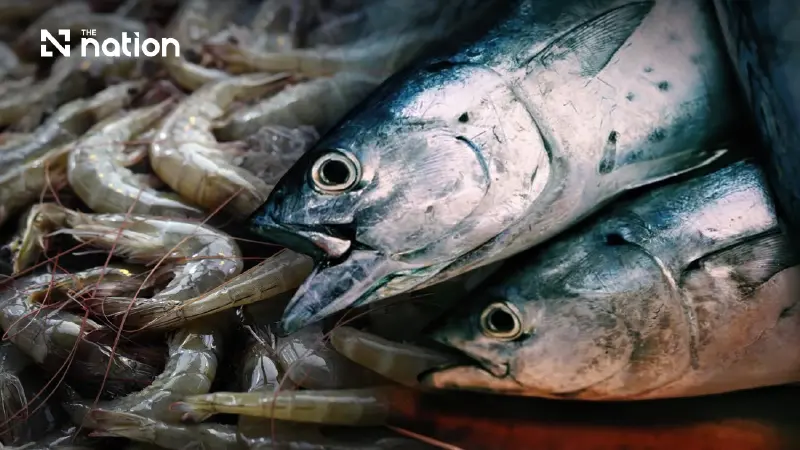


Thailand expects tuna exports to remain competitive under a proposed 12.5% US Section 301 tariff, while the shrimp sector faces urgent cost pressures.
- Thailand's seafood exports face a proposed 12.5% additional US import tariff resulting from a USTR investigation into the country's lack of laws preventing imports of goods made with forced labor.
- The Thai tuna industry is expected to remain competitive and maintain its market share, as its highly efficient supply chain is anticipated to absorb the impact of the new tariff.
- In contrast, the shrimp industry faces a tougher challenge, as the 12.5% tariff creates a significant price disadvantage against major competitors like Ecuador and Indonesia, which will be subject to a lower 10% rate.
Thailand’s Department of Fisheries expects the country’s tuna industry to remain competitive despite a proposed additional US import tariff of 12.5%, while acknowledging that shrimp exporters face a greater challenge from lower-cost rivals.
The department said the US measure followed an investigation by the Office of the United States Trade Representative (USTR) under Section 301 of the Trade Act of 1974. The inquiry concerned trading partners’ failure to establish and effectively enforce bans on imports of goods produced using forced labour.
The main concern involving Thailand was not the country’s treatment of workers in its domestic fisheries sector, the department said. Instead, it related to the absence of laws or measures preventing the import of foreign goods linked to forced labour.
Department of Fisheries director-general Thitiporn Laoprasert said the USTR investigation covered 60 major US trading economies. Washington regarded the failure to impose and enforce effective import restrictions on goods made with forced labour as an unreasonable trade practice that burdened US commerce.
The department maintained that Thailand’s fisheries labour-management standards were transparent and said it would accelerate measures to strengthen oversight throughout the supply chain.

Most US fisheries imports come from affected economies
According to the department, 96% of the total value of US fisheries imports comes from the economies included in the investigation. Only 4% originates from countries not covered by the inquiry.
Thailand’s major competitors in the US seafood market are therefore also affected by the additional tariffs, although different rates have been proposed.
The United States has outlined two additional tariff levels. A 10% tariff would apply to 16 countries that have already introduced bans on imports produced with forced labour or have commitments under Agreements on Reciprocal Trade. These include Canada, Ecuador, Indonesia, Mexico and the United Kingdom.
A higher rate of 12.5% would apply to 46 other countries, including Thailand.
The Department of Fisheries assessed the potential effects on Thailand’s two most important fisheries exports to the United States: tuna and shrimp. Together, the two product groups account for 76% of the value of Thai fisheries exports to the US market.
Strong tuna supply chain expected to limit impact
Thailand is the largest tuna exporter to the United States, accounting for 29.73% of the total value of US tuna imports, worth US$574 million.
Although Thai tuna would face an additional tariff of 12.5%, compared with 10% for competitors including Ecuador and Indonesia, the department said the relatively small difference in tariff rates was unlikely to cause severe disruption.
Thailand has a well-established tuna-processing industry and a highly efficient supply chain, allowing businesses to adjust and maintain their position in the US market, it added.
The department therefore expects Thai tuna exporters to remain competitive and retain their existing market share despite the higher tariff.
Shrimp exporters face sharper price disadvantage
The outlook is more challenging for Thailand’s shrimp industry.
Thai shrimp accounts for 4.53% of the US import market, with exports valued at US$302 million. By comparison, India holds a market share of 36.15%, Ecuador 25.59% and Indonesia 14.69%.
Thailand’s proposed tariff rate of 12.5% would place it at a price disadvantage against Ecuador and Indonesia, whose products would be subject to the lower 10% rate.
Ecuador has also continued to increase its shrimp production and operates with lower costs. As US consumers are generally highly sensitive to price, these factors could further weaken the competitiveness of Thai shrimp.
The department said the public and private sectors must work together urgently to restructure production costs and raise the value of Thai shrimp products.
The response would include measures to improve competitiveness while strengthening management across the entire fisheries supply chain.
Import controls to address forced-labour concerns
The Department of Fisheries said it was accelerating several measures to address the US concerns and prevent labour issues from becoming future trade barriers.
It has endorsed a Labour Ministry proposal to establish a committee responsible for setting standards for imported goods and services at risk of involving forced labour.
The committee would develop measures and guidelines to prevent the import of products linked to forced labour, directly addressing the issue raised by the United States.
The department has also appointed a working group to analyse the US Department of Labor report entitled Supply Chain Study on Forced Labor in the Fishing Industry in Thailand.
Its recommendations will be used to improve Thailand’s operations, while officials will compile factual information and enforcement statistics to support a request for Thai fisheries products to be removed from forced-labour-related lists under the Trafficking Victims Protection Reauthorization Act and executive orders, known as the TVPRA/EO List.
Seabook system to strengthen worker protection
The department will continue improving the registration and protection of migrant workers employed on fishing vessels through the Seabook system.
Under the 2015 Fisheries Emergency Decree, foreign workers may apply for seafarers’ identification documents subject to conditions intended to prevent forced labour and human trafficking.
Workers must be at least 18 years old, while employment contracts must be examined and witnessed by government officials.
The system also requires biometric identification records, health examinations, health insurance and payment of wages through bank accounts at rates no lower than the legal minimum wage.
Inspections tightened at ports and at sea
Monitoring of fishing vessels will be strengthened both at ports and in open waters.
Thailand operates 30 Port In-Port Out control centres and 19 Forward Inspection Points nationwide. The inspection system involves 85 multidisciplinary teams supported by interpreters.
Officials examine documents, welfare arrangements and living conditions aboard vessels. They also interview workers to identify possible indications of labour abuse.
Fishing patrol vessels measuring between 60 and 70 feet will continue conducting joint inspections and enforcement operations at sea with security agencies.
The department will also increase communication throughout the supply chain, distributing information, regulatory measures and operating guidelines to aquaculture farmers, raw-material importers, collectors, processing plants and exporters.
The aim is to ensure that all parties understand the requirements and cooperate in adjusting production practices across the industry.
“Labour and environmental standards have become part of the new rules governing global trade,” Thitiporn said.
“This Section 301 investigation shows that even developed economies, such as the European Union and Australia, are considered by the United States to require more effective law enforcement.
“The Department of Fisheries is determined to use this situation as an opportunity to raise standards across Thailand’s fisheries industry, making it transparent, sustainable and fair to workers.
“This will help Thai fisheries products retain international acceptance and achieve stable growth.”
