
Thailand luxury hotels draw global investors as wealth tourism rises
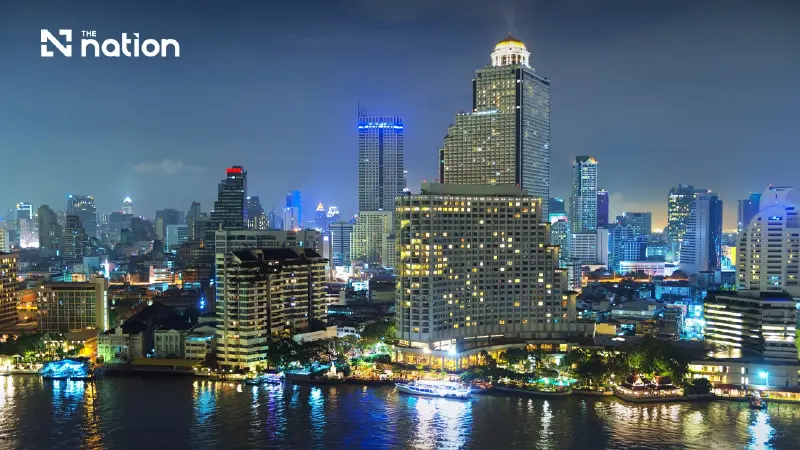


Thailand’s luxury hotel market is attracting strong investor interest as limited supply, global hotel brands and high-spending travellers drive asset values and room rates higher.
- Global investors are increasingly targeting Thailand's luxury hotels as resilient, safe-haven assets that offer stable, long-term returns amid economic uncertainty.
- The sector's appeal is magnified by a limited supply of available high-end properties, which drives up asset values as investor demand grows.
- A rise in "wealth tourism" is fueling growth, with hotels shifting focus to selling lifestyle experiences and integrating into large mixed-use developments to attract high-spending travelers.
- Market strength is demonstrated by the entry of major global hotel brands and a sharp increase in average room rates, with ultra-luxury properties now commanding nearly 15,000 baht per night.
Thailand’s luxury hotel sector is emerging as one of the country’s most attractive investment assets, as global economic uncertainty pushes investors towards properties seen as resilient, scarce and capable of generating long-term returns.
While many business sectors remain under pressure from global volatility, high-end hotels are increasingly being viewed not only as hospitality businesses but also as safe-haven assets that can preserve value and deliver stable growth over time.
According to JLL, luxury hotel transaction value across Asia-Pacific reached US$2.1 billion in 2025, up 77% from 2017 and close to the pre-Covid peak of US$2.4 billion recorded in 2019.
The figures underline a major shift in investor perception. Luxury hotels are no longer being assessed purely as service businesses, but as high-value real estate assets with strong long-term income potential in an unpredictable global market.
Limited supply drives asset values higher
Although investment demand for luxury hotels is rising across Asia, Thailand has a distinct market dynamic. The key factor is limited supply, as many owners of high-end hotels prefer to hold their assets over the long term rather than bring them to market.
At the same time, demand from both Thai and international investors has continued to grow. Since 2017, luxury hotels have accounted for almost 20% of total hotel transaction value in Thailand, although recent transaction volume represents just 7.9% of the market.
This imbalance reflects a market where high-quality assets are scarce, pushing valuations higher. The buyback of shares in a luxury hotel in central Bangkok and the sale of a 51% stake in InterContinental Bangkok are clear signs that investors remain willing to pay for premium hospitality assets.
Luxury hotels shift from rooms to experiences
A major change in the luxury hotel industry is the move away from simply selling rooms towards selling experiences.
Modern travellers, especially those with strong purchasing power, are no longer looking only for a place to stay. They want experiences that reflect their identity, lifestyle and quality of life.
Wellness retreats, cultural tourism and highly personalised services have therefore become central to the next phase of competition. The concept of “lifestyle luxury” is replacing the traditional image of five-star hotels by combining travel, social connection, wellbeing, art and local culture in a more seamless way.
Mega-projects reshape the luxury hotel business
Another major growth driver is the rise of large mixed-use mega-projects such as One Bangkok, Dusit Central Park and Hatai by the Narai Hospitality Group.
These developments are changing the role of hotels from places to stay into lifestyle anchors within wider urban ecosystems.
Hotels in these projects are no longer competing only on room numbers. They are competing on their ability to create a complete lifestyle environment that includes retail, restaurants, workspaces and high-end residences.
The result is that hotels are becoming part of the urban experience itself, helping attract wealthy customers throughout the year rather than relying only on seasonal demand.

Bangkok rises as an Asian luxury destination
Over the next two to three years, Thailand’s luxury hotel market is set to enter a new phase of competition, led by the launch of Aman Nai Lert Bangkok, Andaz One Bangkok and The Ritz-Carlton One Bangkok.
The return of Dusit Thani Bangkok is also raising competitive standards, while Six Senses Bangkok and The Langham – Custom House Bangkok are preparing to open in the near future.
The arrival of these global hotel brands reflects strong confidence in the Thai market. It is also helping position Bangkok as one of Asia’s most closely watched luxury travel and hospitality destinations.
Room rates climb towards THB15,000 a night
One of the clearest signs of market strength is the rise in room rates since 2019.
Luxury and ultra-luxury hotels in Bangkok, Phuket and Samui have been able to raise their average daily room rates sharply, supported by strong demand from high-end travellers.
Ultra-luxury hotels can now command rates of nearly 15,000 baht per night, up from around 10,000 baht before Covid. The increase shows that despite higher prices, purchasing power among wealthy travellers has not weakened in line with broader global economic pressures.
Luxury hotels become a standout Thai investment asset
Amid global economic uncertainty, luxury hotels are proving themselves as assets with both resilience and growth potential.
Limited supply, rising demand from high-spending travellers, the arrival of world-class hotel brands and the shift towards lifestyle luxury are creating a new growth cycle for Thailand’s hospitality industry.
As premium hotel assets remain rare and investment capital continues to flow into the sector, luxury hotels are no longer just part of the service economy. They are becoming one of the most sought-after investment assets in Thailand’s real estate market.
