
ROH Chief Confirms Royal Orchid Sheraton Buy-Back Will Proceed; Targets 30-Day Resolution with Funding Ready
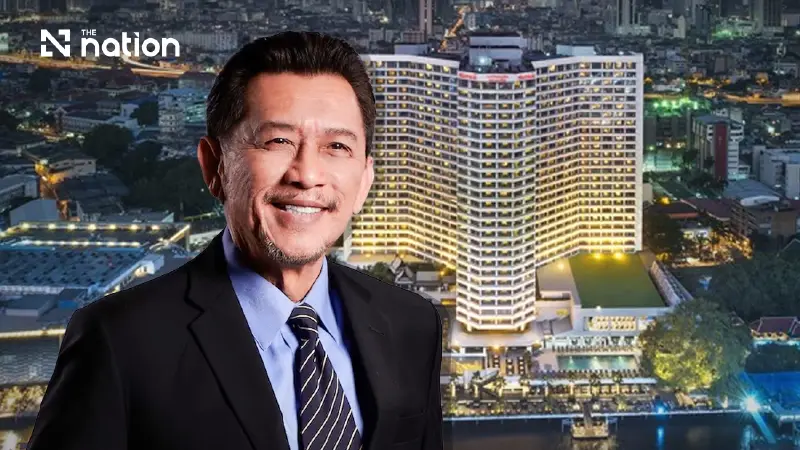


ROH MD Wittawat Wipakul dismisses funding fears over the Bt4.873-billion Sheraton buy-back, targeting a resolution with the trustee within 30 days
- ROH's chief confirms the 4.873 billion baht buy-back of the Royal Orchid Sheraton will proceed, dismissing speculation that the deal will be abandoned.
- The company has secured a US$187 million credit facility from OCP Asia, ensuring funds are ready to cover the buy-back price and hotel renovations.
- A 30-day window has been established to resolve the deal, which was delayed by a procedural dispute over the timing of payment versus the transfer of property title deeds.
- The delay is administrative, not financial, as ROH's financiers require a simultaneous exchange of funds and deeds, while the trustee requested payment upfront.
ROH MD Wittawat Wipakul dismisses funding fears over the 4.873-billion baht Sheraton buy-back, targeting a resolution with the trustee within 30 days.
Royal Orchid Hotel (Thailand) Plc (ROH) has strongly dismissed speculation that it intends to abandon its high-profile buy-back of the Royal Orchid Sheraton Riverside Bangkok. The company insists that capital is fully secured and predicts the transaction will be finalised within the next 30 days.
The property, a prominent five-star fixture along Bangkok’s Chao Phraya River, is at the centre of a multi-billion-baht transaction that recently missed its critical 14 July deadline, triggering concerns among investors and real estate investment trust (REIT) unitholders.
The friction stems from a mandatory buy-back agreement tied to the Grand Royal Orchid Hospitality Real Estate Investment Trust with Buy-Back Condition (GROREIT). Under the original terms of the structure, ROH was obligated to repurchase the hotel assets for 4.873 billion baht.
When the mid-July deadline passed without a transfer of ownership, One Asset Management (ONEAM), the REIT manager, publicly stated that ROH had failed to repurchase the assets and accept their transfer at the relevant land office.
This delay has stalled GROREIT's planned exit strategy, which includes repaying trust borrowings, returning capital to unitholders, and winding down the trust.
It has also triggered a secondary dispute over whether ROH’s operating lease has expired and who possesses the administrative authority to run the hotel whilst the transaction remains in limbo.

Speaking to Thansettakij reporter Thirada Munpolsri, Wittawat Wipakul, managing director of ROH, clarified that the delay is purely administrative rather than financial. He emphasised that ROH has no intention of abandoning the asset and that funding is securely in place.
ROH has secured a credit facility of US$187 million (approximately 5.6 billion baht to 5.7 billion baht) from OCP Asia, a Singapore-based private credit fund manager.
Of this sum, approximately 500 million baht has been earmarked for immediate hotel renovations and working capital, with the remainder covering the buy-back price.
According to Wittawat, the transaction stalled because of a fundamental mismatch in the payment process demanded by the trust’s trustee, MFC Asset Management Plc (MFC).
"MFC requested that ROH transfer the funds upfront via the Bahtnet system. Only after receiving the money would they retrieve the land title deeds from custody to complete the transfer," Wittawat explained.
This structure was rejected by ROH's international financiers, who cannot release billions of baht without the simultaneous physical delivery of the title deeds.
Wittawat argued that the contract signed five years ago explicitly stipulates a "same-time" transaction—a standard industry practice where funds and deeds are exchanged concurrently at the Land Department.

30-Day Window to Resolve Stance
A path forward remains open. ONEAM recently notified the Stock Exchange of Thailand that a 30-day window has been established to resolve this procedural dispute.
To show goodwill, Wittawat announced that ROH is prepared to pay reasonable interest or compensatory fees to the trust for any losses incurred due to the extension, should the transfer take an additional two weeks to a month to finalise.
"Every party involved wants a successful outcome. The trust needs to return capital to its unitholders, and ROH wants to resume direct ownership of a landmark asset we are uniquely qualified to manage," Wittawat said.
He added that he remains in close contact with MFC executives and is prioritising face-to-face negotiations over legal action, which he warned would only harm retail shareholders.
ROH is currently coordinating the inbound remittance of the OCP Asia funds whilst working to align the timing of the exchange with the trustee.
