
Hainan plans to end sales of new petrol-only vehicles in 2030
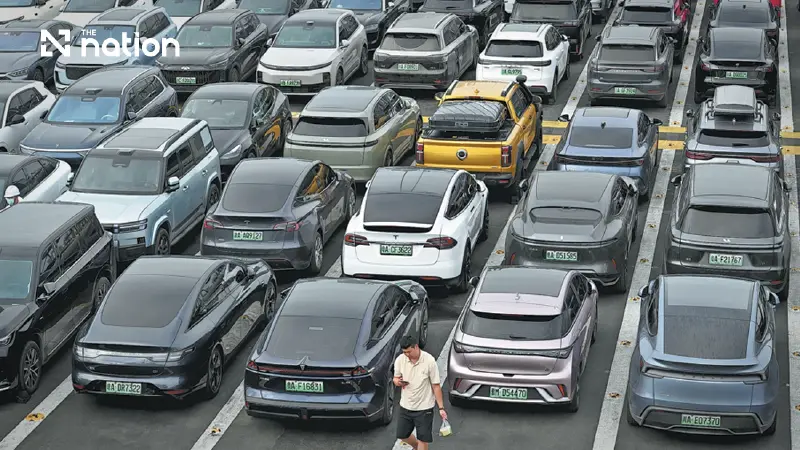


The island will keep existing petrol vehicles legal while plug-in hybrids and extended-range electric models remain available as its NEV network expands.
- Hainan will ban the sale of new, exclusively petrol-powered vehicles starting in 2030, making it the first province in China to enact such a policy.
- The prohibition does not apply to plug-in hybrids or extended-range electric models, which will remain available for purchase.
- Vehicles already registered in Hainan before the 2030 deadline can continue to be used, inspected, and sold within the province.
- The measure is part of Hainan's goal for New Energy Vehicles (NEVs) to represent 45% of its total vehicle stock by the end of the decade.
New petrol-only vehicles will cease to be sold in Hainan in 2030 under a prohibition that no other provincial-level region in China has yet adopted.
The measure is confined to new vehicles relying entirely on internal combustion.
Those already registered may stay in use, undergo inspection and change hands after the deadline.
Petrol vehicles coming from beyond the island can still enter for tourism.
Plug-in hybrids and extended-range electric models are excluded from the restriction and will remain available to buyers.
By the decade’s end, Hainan wants NEVs to represent 45 per cent of its total vehicle stock, against 23.75 per cent in 2025.
That objective falls under its plan for the national ecological civilisation pilot zone.
The market has already shifted rapidly.
During 2025, 116,800 NEVs were sold, accounting for 62.9 per cent of all vehicles newly registered in Hainan.
The monthly penetration figure stood at 55.13 per cent in January 2026, according to the province’s department of industry and information technology.
Hainan recorded China’s highest rate in April 2026, at 74.5 per cent.
Manufacturing output from NEVs was valued at 3.34 billion yuan ($493 million) in 2025.
A unified charging-and-swapping system developed by Hainan Power Grid Co Ltd now brings together 73,000 outlets.
The integrated “one-network” platform covers all public charging infrastructure.
Users in downtown Haikou and Sanya are within 25-minute charging circles, while a 100-kilometre fast-charging corridor serves intercity highways.
Grid-responsive technology is being tested at 354 smart charging stations, where power delivery can be altered to match demand on the grid.
Another 12 vehicle-to-grid sites enable owners to sell electricity held in their vehicles back to the grid.
Cold-related battery deterioration seen in northern regions is avoided by Hainan’s tropical climate.
Many mainstream electric models can also cover the island’s coastal scenic highway without recharging.
Fuel pricing provides a further advantage for electric vehicles.
Rather than collect separate highway tolls, Hainan places road maintenance costs in petrol prices through a surcharge of 1.05 yuan per litre, pushing fuel above mainland levels.
In May this year, a litre of 92-octane petrol cost 9.89 yuan in Hainan and 8.74 yuan in Shanghai, creating an immediate operating-cost benefit for electric models.
The policy has been built over several years.
Hainan first raised the prospect of ending fossil-fuel vehicle sales before 2030 in 2018.
A detailed NEV roadmap was followed in 2019, when it became the first province to publish one.
The commitment appeared again in the 2022 carbon-peaking plan and the transport network plan in March this year.
Passenger vehicles are only one part of the programme.
Hainan will run fuel-cell vehicle trials involving heavy trucks, cold-chain logistics and public transport.
Its plans also cover zero-carbon freight corridors at ports, more shore power for vessels, sustainable aviation fuel at airports and rail-freight conversion projects aimed at transferring cargo from road to rail.
Experts say the Hainan approach could affect policy elsewhere.
Guangdong province and Shanghai may take phased action because their NEV penetration is high and their charging networks are mature.
The initiative, aimed at peaking carbon emissions, represents a major step towards reshaping China’s transport energy system.
Source: China Daily
