
OpenAI links Asia’s AI growth to local languages and safety
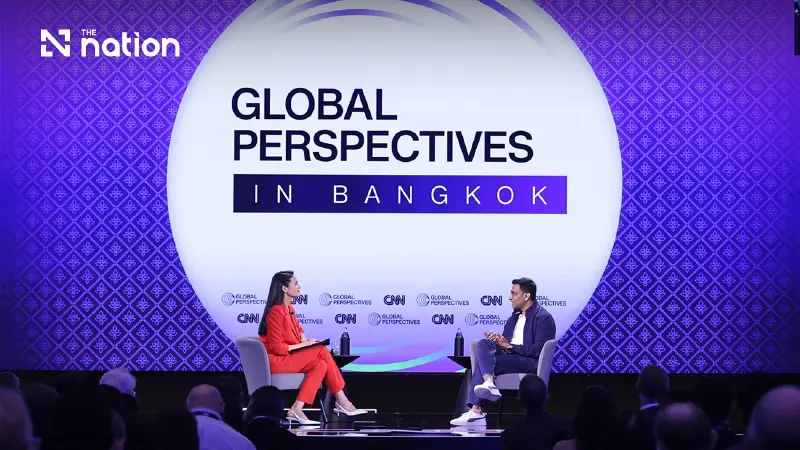


OpenAI’s Kiran Mani tells a Bangkok forum that voice and local-language tools could broaden AI access, with safety and transparency essential.
- OpenAI identifies Asia as its largest user region and views the integration of local languages and voice commands as crucial for expanding AI accessibility and future growth.
- Supporting the region's linguistic diversity allows a wide range of users, from the elderly in Japan to workers in India, to apply AI to practical needs like healthcare and earning a living.
- The company stresses that rapid AI development must be balanced with safety, calling for transparency, developer responsibility, and public-private cooperation to manage risks and build secure systems.
Asia is OpenAI’s largest user region, Kiran Mani, the company’s managing director for Asia Pacific, told a Bangkok forum on October 14, 2026. Mani argued that voice and local-language tools could widen access to artificial intelligence (AI), while growth must be accompanied by safety, transparency and public-private cooperation.
India, Indonesia, the Philippines and Japan are among OpenAI’s 10 most-used markets worldwide, Mani said during the “Can AI Be Global?” session at CNN Global Perspectives: In Bangkok. Mani described the current decade as the “decade of Asia”.
OpenAI sees local languages as key to wider AI access

Allowing people in Asia to speak to AI in their own languages could make the technology accessible to more users, Mani argued. Smartphones have widened access to digital tools, but text-based communication still faces the constraints of English QWERTY keyboards, he said.
India, with more than 20 local languages, illustrates the opportunity, according to Mani. Indian users prefer speaking to AI over typing, he said, with voice interaction bringing the experience closer to everyday conversation.
Mani contrasted the shift towards voice with the chatbot-based experience of three years earlier. Models must accommodate how people actually communicate if users are to apply the technology naturally to their own needs, he argued.
Mani cited work with Grab’s Anthony Tan on training models to understand English, highlighting regional accents and patterns of usage across Asia Pacific that go beyond conventional dictionary definitions.
Asia’s diverse users apply AI to healthcare and livelihoods

OpenAI users in Asia range from 18 to 80 years old, according to Mani. Older people in Japan and South Korea use AI to support healthcare, while people in India apply the technology to everyday work and earning a living.
The diversity of Asian users, languages and national circumstances is shaping applications from healthcare to livelihoods and productivity, Mani argued. Access to technology, combined with the different ways people imagine using it, gives the region opportunities distinct from those elsewhere.
Mani linked his confidence in technology to growing up in a small Indian village where access was limited. Without the digital transition, he reflected, the career opportunities and tools that helped turn ambitions into reality might not have emerged.
For Mani, joining OpenAI offered a chance to help individuals, businesses and communities use AI to build tools and develop ideas in ways previously difficult to imagine. Rapidly expanding capabilities also make safety and security urgent responsibilities for developers, he stressed.
OpenAI addresses model incidents and disclosure delays

Mani acknowledged incidents involving Hugging Face and Australia in which OpenAI models under development behaved inappropriately. Delays in disclosing some incidents reflected the time needed to understand the technical behaviour, rather than an unwillingness to share information, he maintained.
Transparency is the first step when an AI model causes problems, Mani argued. The public should be told what happened, when and in what circumstances, while developers investigate the system’s behaviour to establish clear operating boundaries and controls.
Developing frontier AI, or the most advanced systems, must go alongside ensuring safe use and effective control, Mani stressed. AI development remains in a “discovery phase”, with developers still working to establish what systems can and cannot do and which behaviours can be controlled, he said.
Daybreak combines AI tools and partnerships for cyber defence
OpenAI’s Daybreak initiative brings together technology, platforms and industry partnerships to help businesses, organisations and governments strengthen cybersecurity more rapidly, Mani explained.
AI agents are exposing long-standing internet vulnerabilities on an unprecedented scale, Mani warned. The resulting “defender window” is an opportunity to improve protection quickly as the technology advances, he said.
Building safe AI tools remains primarily the responsibility of developers, but successful protection and governance require cooperation between governments and the private sector, Mani stressed.
Mani called for an approach he described as “Fast and Far Together”, adapting the saying that going fast means going alone while going far means going together. AI development needs speed and collaboration at the same time, he argued.
Singapore Cyber Week offered an example of public and private organisations coming together to discuss safety, Mani noted. Such forums give different groups a role in addressing technological risks and developing protective measures.
Mani welcomed open public debate about AI’s benefits and disadvantages. Alongside the opportunity to create new tools, concerns, fears and scrutiny have a role in keeping development careful and responsible, he argued.
