
Commerce Ministry defends 100-baht durian live sale after farmer backlash
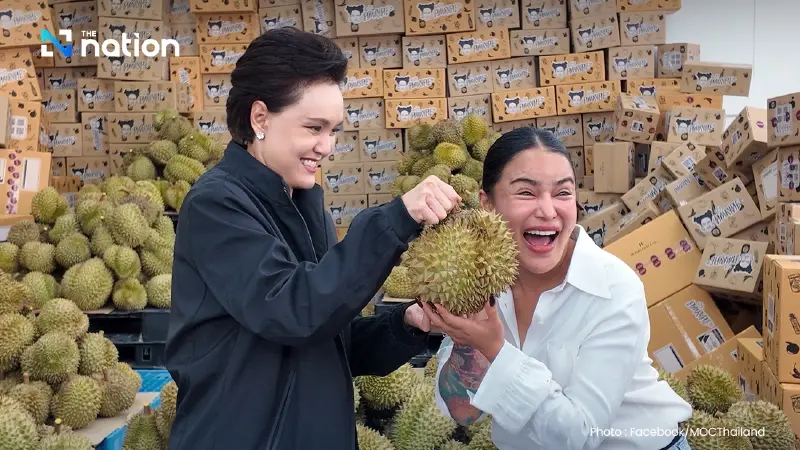


Thailand’s Commerce Ministry has defended a planned online durian sales linked to a live event by Commerce Minister Suphajee, saying the 100-baht-per-fruit promotion involved secondary-grade durians, while farmers fear it could pressure farmgate prices.
Ministry defends controversial durian live-commerce sale
Thailand’s Commerce Ministry has defended a planned controversial online durian sale promoted through live commerce, after a planed 100-baht-per-fruit promotion sparked concern among farmers over its potential impact on market prices.
Koranit Nonjui, deputy spokesman for the Commerce Ministry, said the ministry is moving ahead with plans to expand sales channels for Thai fruit by using influencers and live-commerce platforms to sell durians directly from production areas.
The clarification followed public criticism of online durian sales linked to a live event by Commerce Minister Suphajee on Sunday, which drew strong reactions on social media. On Sunday, Suphajee joined an influencer to announce a plan to sell 100-baht-per-fruit durian on a live event on the night of April 29.

Farmers fear 100-baht price could hurt farmgate sales
The controversy erupted after durians were promoted online at around 100 baht per fruit.
Many farmers expressed concern that the low promotional price could be used by exporters, buying agents or middlemen as an excuse to pressure farmers into selling durians at cheaper prices, or at the same level of 100 baht per fruit.
Farmers warned that such pricing could lead to losses, especially as some said they were already selling durians to agents at about 120 baht per kilogramme.
They argued that consumers and traders could misunderstand the promotion as a reflection of normal market prices, even though durian prices vary widely depending on grade, size, ripeness and quality.

Commerce Ministry says promotion involved secondary-grade durians
Koranit said the ministry had checked the facts and found that the 100-baht-per-fruit sale was a special promotion run by online entrepreneur Pimrypie.
He said the campaign was intended to stimulate domestic durian consumption and help distribute secondary-grade fruit to a wider group of consumers.
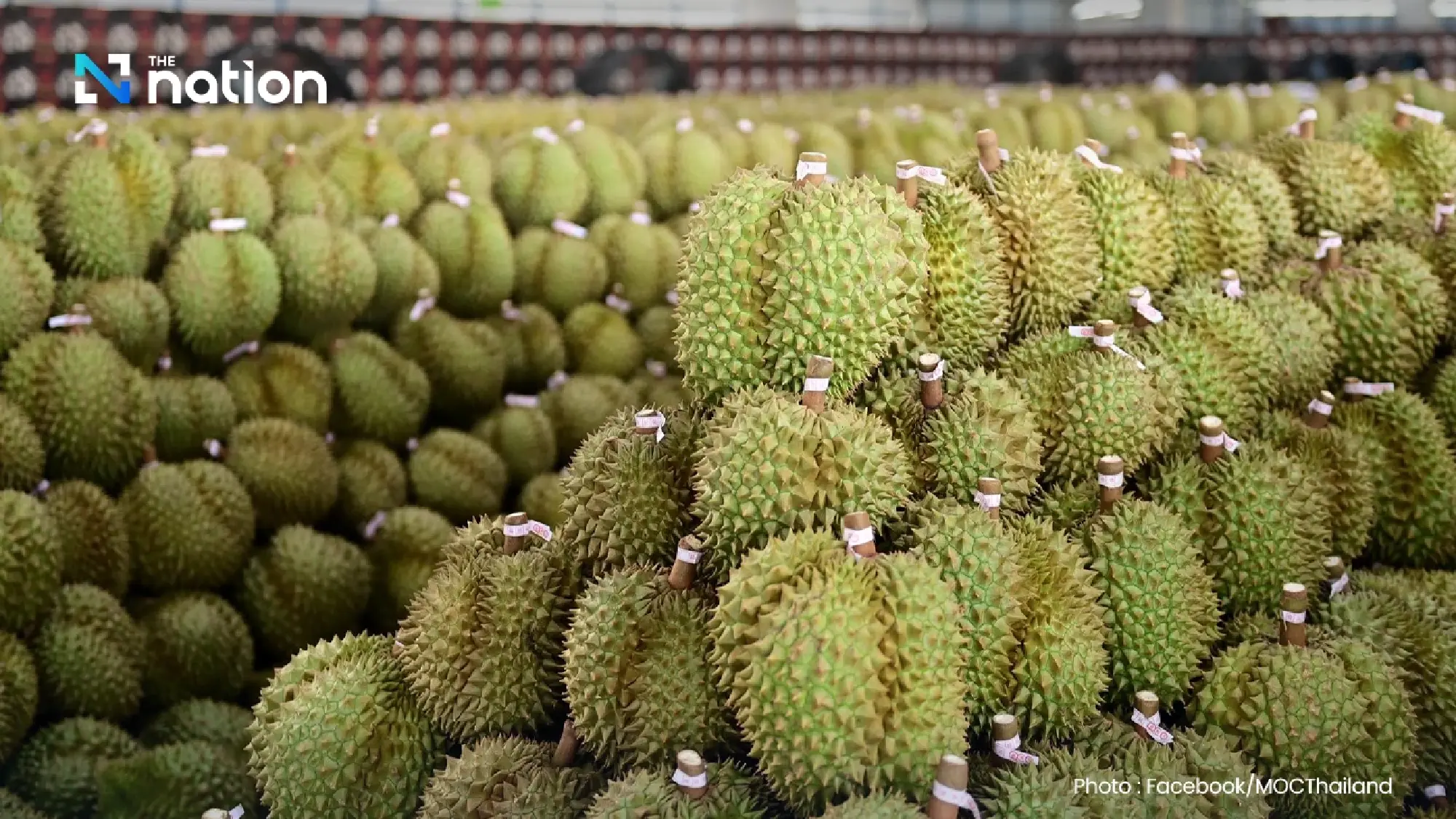
According to the ministry, the durians sold under the promotion were fruit normally sold in the domestic market by packing houses or orchards. They were fairly ripe and of good quality, but their shape may not have met premium market standards.
The ministry said the fruit was suitable for small families and should not be viewed as the benchmark price for all durians in the market.

Live commerce promoted as new channel for farmers
The Commerce Ministry said live commerce remains an important tool to help farmers reach consumers more quickly and expand market access, particularly during periods of higher fruit output.
Koranit said the approach is not simply aimed at releasing produce, but at upgrading Thai fruit trading to match modern consumer behaviour.
Consumers increasingly want convenience, fast delivery and clear information about the origin of products, he said.
Under the ministry’s approach, influencers are encouraged to visit orchards, select durians directly from farms, cut them fresh and arrange delivery to consumers.
The ministry said this model could help build trust in Thai fruit quality while giving farmers more opportunities to sell outside traditional channels.
Farmers to receive online sales support
The ministry also plans to support farmers with knowledge on online selling, content creation and digital market access.
The aim is to help growers develop their own sales channels in the long term, rather than depending only on middlemen or traditional fruit trading networks.
The ministry said the live-commerce model also allows different sectors to take part in supporting Thai agricultural products and building a stronger, fairer market system.
Ministry says market prices remain higher
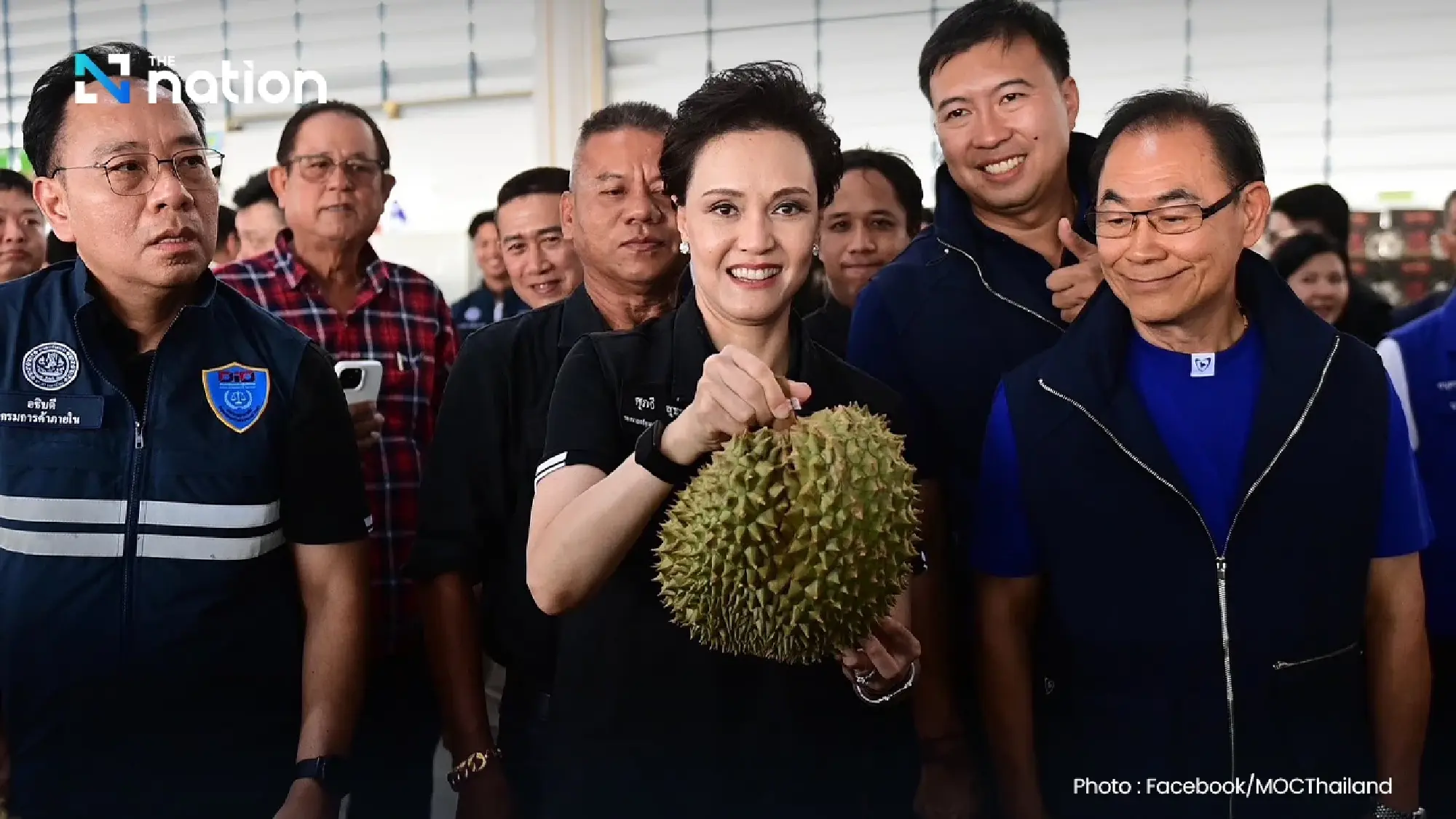
Following field inspections on April 27, 2026, the Commerce Ministry said durian prices at trading areas and sales points were averaging around 140–150 baht per kilogramme.
The ministry said this level was in line with market mechanisms and product quality during the season.
Koranit said the ministry would continue to closely monitor durian prices and production volumes, while implementing measures to maintain market balance, stabilise prices and build confidence among farmers, traders and consumers.
