
Thai firms in France urge Anutin to fast-track EU free trade deal


Thai businesses investing in France have urged Prime Minister Anutin Charnvirakul to accelerate Thailand-EU FTA talks, saying a deal could slash EU tariffs on Thai goods to zero and strengthen exporters’ competitiveness.
Thai businesses investing in France have urged Prime Minister Anutin Charnvirakul to accelerate negotiations on the Thailand-European Union free trade agreement, saying a successful deal could significantly improve the competitiveness of Thai exports in the European market.
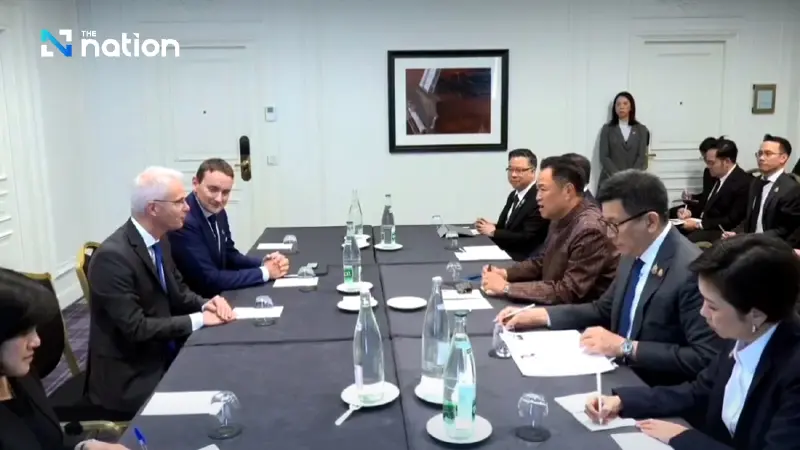
The proposal was raised during a meeting between Anutin, who also serves as interior minister, and executives of three Thai companies operating in France. The meeting took place at the Salon Charpentier room of the InterContinental Paris Le Grand hotel on Saturday, May 23, 2026, at 2pm local time in Paris.
The discussion formed part of Anutin’s visit to France from May 21-27, which the Thai government said is aimed at strengthening strategic and economic cooperation between the two countries. Thailand’s Public Relations Department reported that the delegation includes senior economic and foreign-policy ministers.
Private sector says FTA would lift export competitiveness
After the talks, Ratchada Thanadirek, spokesperson for the Prime Minister’s Office, said the private sector had submitted two key recommendations to the government, with the Thailand-EU FTA at the top of the agenda.
Thai business representatives said concluding the FTA would help reduce tariffs imposed by the EU on Thai goods from the current rate of up to 24% to 0%, giving Thai products a stronger foothold in Europe.
They said the tariff cut would boost Thailand’s competitiveness, help Thai goods penetrate the European market more effectively, and create substantial benefits for exporters across a wide range of sectors.
The EU’s official trade page says the bloc is negotiating an agreement with Thailand to support new market access, increase trade and investment, and promote sustainable development.

Thai executives brief PM on European business challenges
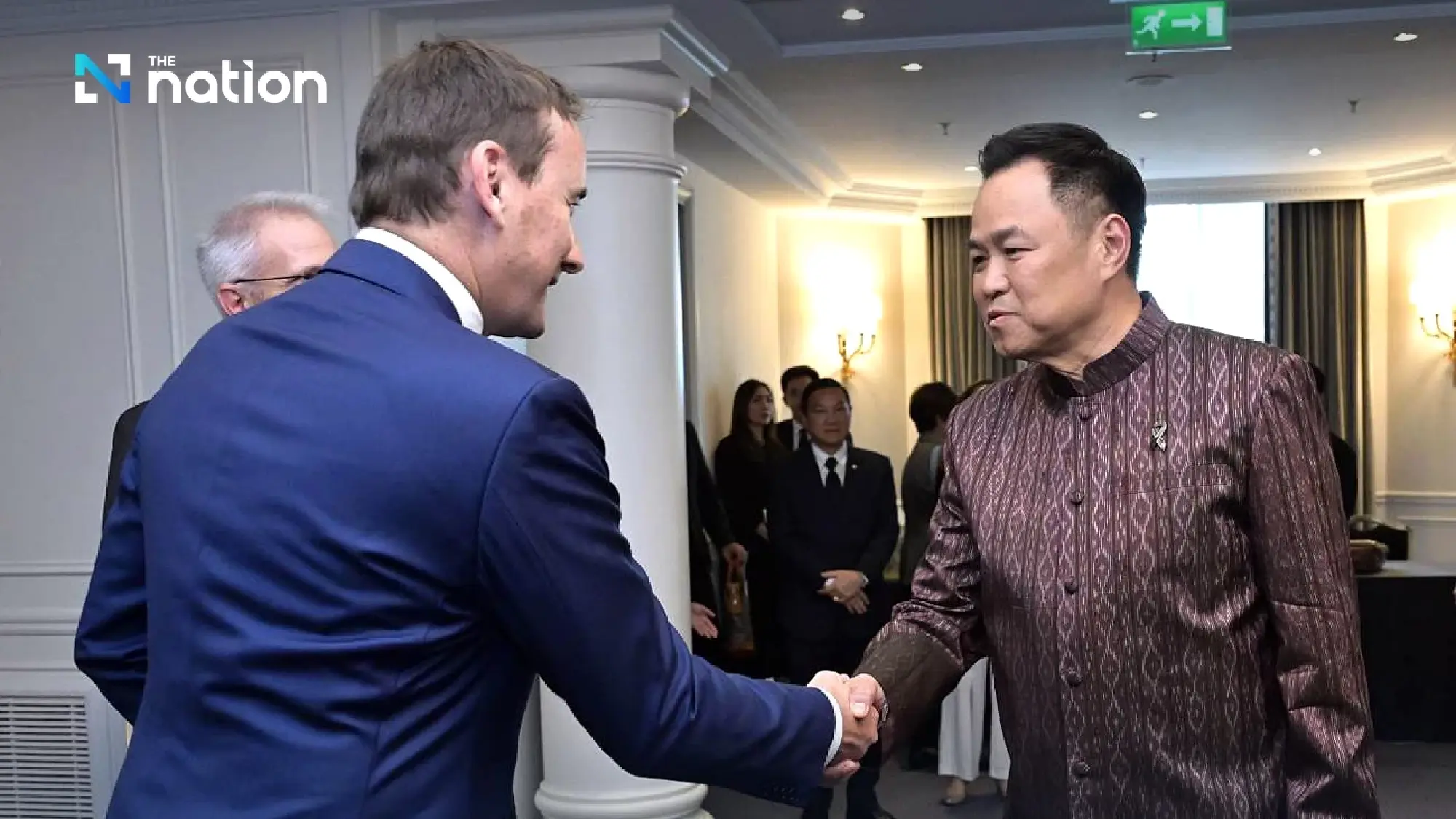
The prime minister met executives from three Thai-linked companies investing or operating in France and Europe.
They were Erwan Vilfeu, president of Ambient Branded under Thai Union Europe; Ermis Panagiotopoulos, head of Sustainability Advocacy for Europe, the Middle East and Africa at Indorama Ventures; and Supasit Sukanin, chief executive officer of Mud and Hound.
The meeting was aimed at hearing first-hand views from Thai businesses on opportunities, challenges and policy support needed to expand in Europe, as well as ways to deepen economic cooperation between Thailand and France.
Push for Thai restaurant franchises in Europe
The second proposal focused on promoting Thai franchises and Thai-branded businesses in Europe, particularly in the restaurant sector, through support from the Export-Import Bank of Thailand.
The private sector said Thai food remains highly popular internationally, but many Thai restaurants in Europe are run by non-Thai operators who may lack proper knowledge of authentic Thai cooking.
As a result, they said, the identity and original flavours of Thai cuisine are sometimes distorted.
Business representatives proposed that the government introduce measures to help Thai nationals in France and other European countries open and operate authentic Thai restaurants. They said this would also increase imports of genuine Thai ingredients and help promote Thai culture more accurately.
EXIM Bank to be brought into talks
Anutin expressed strong interest in the proposals and said the government was ready to push them forward.
He said the next step would be to bring Thai private-sector operators with strong potential in restaurant franchising into discussions with EXIM Bank.
The talks would focus on designing concrete financial measures and policy support to help Thai businesses expand in Europe, particularly in the food and franchise sectors.
