
Cambodian rice undercuts Thai Hom Mali by US$400 a tonne
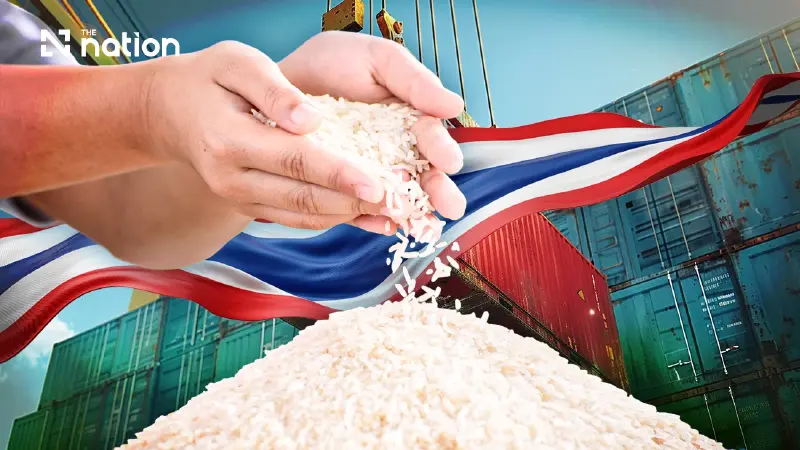


Thai Hom Mali faces widening price pressure in the US as Cambodian jasmine rice sells for about US$800 a tonne and first-half exports fall 19%.
Cambodian jasmine rice priced as much as US$400 a tonne below Thai Hom Mali rice is putting Thailand’s share of the US market under growing pressure, as Thai rice exports fell 19% in the first half of 2026.
Thailand exported 3.28 million tonnes of rice from January to June, down from 4.04 million tonnes in the same period last year. Export earnings declined 20.51% to US$1.911 billion, or about 60.387 billion baht.
The United States remained Thailand’s largest rice market by value at 12.489 billion baht, although exports fell 13%. South Africa ranked second at 6.247 billion baht, down 10%.
Exports to Malaysia surged 201% to 3.908 billion baht, while shipments to the Philippines rose 85% to 3.780 billion baht. Export value to China fell 48% to 2.945 billion baht.
Border closures widen jasmine-rice price gap
Chookiat Ophaswongse, honorary president of the Thai Rice Exporters Association, told Thansettakij that competition in the jasmine-rice market required close attention, particularly in the United States.
Exports of Thai Hom Mali rice have fallen by about 20% over the past seven to eight months because Thai prices are substantially higher than those offered by competitors, he said.
Chookiat linked the widening price gap to the closure of Thailand-Cambodia border crossings. About 500,000 tonnes of Cambodian paddy would previously enter Thailand each year for milling and re-export, but the closures have prevented those shipments from crossing the border.
Cambodian exporters have consequently accelerated sales in overseas markets at prices far below those of Thai Hom Mali rice.
Cambodian jasmine rice was previously about US$50 a tonne cheaper than the Thai product, but the gap has widened to as much as US$400. Thai Hom Mali rice is being offered at around US$1,200–1,250 a tonne, compared with about US$800 for Cambodian jasmine rice.
Chookiat said the substantial difference had prompted importers in several countries to choose Cambodian rice. He also said that, in some markets, Cambodian rice was subsequently repackaged and marketed as Thai jasmine rice.
The shift has increased pressure on Thailand’s market share in the United States, China and some European countries.
Thai white rice faces cheaper competitors
Thai white rice is also coming under pressure from lower-priced supplies from other major exporters.
Thai 5% broken white rice is currently priced at about US$440–450 a tonne. Vietnamese rice is offered at around US$420, Pakistani rice at about US$395 and Indian rice at approximately US$350 a tonne.
Despite its higher price, Chookiat said Thai rice retained advantages in quality and reliable delivery.
He said some importing countries remained uncertain about the quality of Indian rice and whether shipments would arrive on schedule. Buyers in the Philippines and Malaysia continued to place importance on Thai rice quality and generally did not favour older Indian rice stocks.
Philippine and Malaysian demand offsets Iraq decline
Thailand’s rice shipments to Iraq have almost stopped because of the war in the Middle East, after exports reached only about 90,000 tonnes early in the year.
Higher demand from the Philippines and Malaysia has partly offset the loss of that market. Both countries have accelerated imports to expand their reserves against potential disruption associated with El Niño.
The Philippines imported nearly 400,000 tonnes of Thai rice during the first six months of 2026. Its purchases normally total only 200,000–300,000 tonnes for an entire year, but shipments could reach 600,000–700,000 tonnes this year.
Malaysia has expanded its rice reserves from enough to cover three months of demand to stocks sufficient for nine months, driving a significant increase in imports from Thailand.
Seven-million-tonne target remains within reach
Chookiat said stronger demand from the Philippines, Malaysia and African markets, particularly South Africa, should help support Thai exports during the second half of the year.
This demand could partly cushion the effects of aggressive price competition and the near-disappearance of the Iraqi market.
“If there are no further negative factors from geopolitical developments or global market volatility, Thai rice exports in 2026 could still come close to the target of seven million tonnes,” he said.
Thailand could also retain its position as the world’s third-largest rice exporter behind India and Vietnam, despite increasingly intense price competition, he added.
Source: Thansettakij
