
Thailand submits new data on 3 sectors in US capacity probe
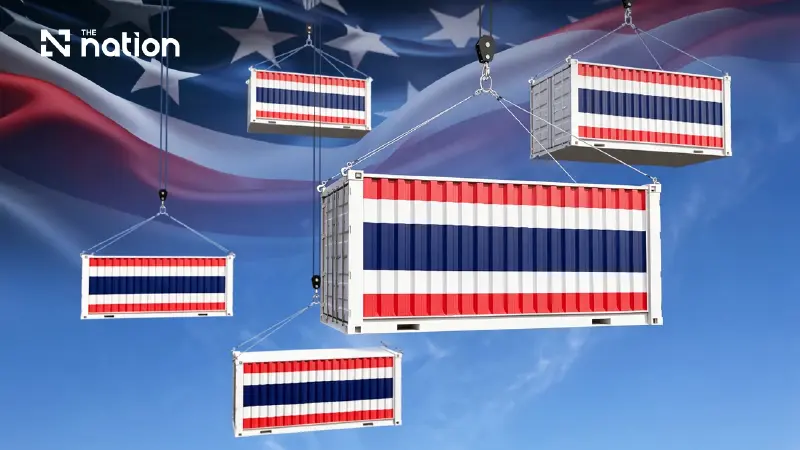


Thai officials say new data show 75–90% capacity use in three industries as Thailand works to retain a 19% US tariff in trade talks
- Thailand has submitted new production data for its automotive, machinery, and rubber products sectors in response to a US trade probe concerning excess manufacturing capacity.
- The new data indicates these key industries are operating at 75-90% capacity, directly challenging older US figures that showed nationwide capacity below 60% and raised concerns about transshipment.
- This submission is a key part of Thailand's negotiations to retain a 19% tariff framework on its goods and demonstrate that its industries are not being used as transit routes for other countries' products.
- The new dataset was compiled through a targeted survey of major companies that export to the US, which Thai officials argue provides a more accurate and credible picture than the broader national statistics previously considered.
Thailand’s Commerce Ministry has submitted new production data for three industries under US scrutiny, arguing that older manufacturing statistics misrepresent the country’s actual capacity use and contribute to concerns about transshipment. Thai officials say the automotive and parts, machinery and rubber products industries are operating at 75–90% of capacity. The figures form part of Thailand’s response to US trade investigations, alongside negotiations aimed at retaining the previously discussed 19% tariff on Thai goods.
The targeted data collection is separate from a broader revision of Thailand’s manufacturing statistics, with updated national data expected in October 2026.
Why Thai manufacturing faces US scrutiny
The Office of the United States Trade Representative (USTR) launched investigations covering 16 trading partners, including Thailand, under Section 301 of the Trade Act of 1974.
The investigations examine “acts, policies and practices” contributing to structural excess capacity in manufacturing. Washington considers such capacity an obstacle to bringing production back to the United States and a threat to American manufacturing jobs.
For Thailand, the three industries identified are automotive and parts, machinery, and rubber products, which US authorities regard as maintaining significant trade surpluses in global markets.
Bangkok Biznews reported that the US assessment cited Thailand’s goods trade surplus with the United States at US$51 billion in 2025, compared with US$46 billion in 2024.
Other concerns included manufacturing capacity utilisation below 60% for two consecutive years and only one-third of industries recovering to their pre-Covid-19 levels.
The figures previously considered by US officials covered 2024–2025 and put nationwide capacity utilisation at 59%. Thai officials argue that these older figures do not accurately represent current production in the industries being examined.
The report also described the earlier survey’s coverage as just 10%, although it did not specify the population against which that percentage was calculated.
The dispute involves information associated with the Manufacturing Production Index (MPI), compiled by the Industry Ministry’s Office of Industrial Economics (OIE). The index measures manufacturing output, while the percentages cited in the dispute concern capacity utilisation.
New survey draws on major exporters
Arada Fuangtong, director-general of the Department of Foreign Trade (DFT), told Bangkok Biznews that Thailand had raised the data issue during discussions with the United States on Section 301 and excess capacity.

Thai officials subsequently discussed the observations with the Industry Ministry. Deputy Prime Minister and Finance Minister Ekniti Nitithanprapas instructed the agencies concerned to update the information to reflect current conditions.
Arada said the new dataset took one to two months to survey and compile in cooperation with the private sector. It focused on actual production capacity and information from major companies exporting to the United States.
Businesses participated in both preparing and checking the figures. According to Arada, the participating private-sector representatives covered 80–90% of Thai exporters selling to the US market.
Arada said this approach provided a more accurate picture of the industries under investigation than relying on the existing OIE data.
US officials questioned the new figures, but Thailand explained their origins, collection methods and sources, she said. According to her account, the US side regarded the submission as clearer and more credible than the information previously considered.
The DFT has shared the dataset with the Industry and Finance ministries for use in government work. The underlying company production information remains confidential, with businesses authorising its use for negotiations.
National manufacturing data update expected in October
The Industry Ministry is separately revising the national MPI, while the DFT’s submission concentrates on the three industries facing allegations involving excess capacity and transshipment risks.
“Our data focus on the three industries facing allegations, but will contribute to the broader national dataset so that it better reflects the facts,” Arada said.
Deputy Prime Minister and Commerce Minister Suphajee Suthumpun said weaknesses in the existing MPI had contributed to allegations that Thailand was serving as a transit route for goods.
Suphajee said the calculations still included industries that had ceased operating while leaving out newer industries. The Industry Ministry was therefore updating the index to reflect the current manufacturing structure.
The wider work forms part of Thailand’s overhaul of the manufacturing production index.
Suphajee said Thailand had supplied detailed information to the United States to demonstrate that the three industries under investigation were not involved in transshipment. She cited the new capacity utilisation figures of 75–90%, contrasting them with the earlier understanding that utilisation was below 60%.
Thai officials also explained the measures and intensity of inspections used to detect false declarations of origin and transshipment. Suphajee said Thailand wanted closer trade cooperation to improve US understanding and establish a more accurate shared assessment.
Thailand aims to retain 19% tariff
US acceptance of the new information would not automatically alter tariff measures, Arada cautioned.
“The fact that the United States has listened to and considered the new data does not mean tariff measures will automatically change. The final decision depends on US President Donald Trump and the outcome of negotiations on an Agreement on Reciprocal Trade (ART) between Thailand and the United States. Capacity data are only supporting information for the negotiations,” she said.
Thailand’s negotiating objective is to keep the tariff within the previously discussed 19% framework and prevent Thai goods from facing higher duties than competing products from other countries in the region.
Thai officials consider that essential to protecting exporters and manufacturers reliant on the US market. Higher tariffs than those imposed on competitors could affect orders and investment while adding pressure to domestic production.
Washington’s emphasis on addressing trade imbalances makes the ART negotiations important to both countries, given Thailand’s substantial surplus with the United States.
In its Section 301 response, Thailand has also provided USTR with explanations and supporting evidence concerning enforcement of labour measures and the structure of domestic manufacturing capacity.
Souce: Bangkokbiznews
