
North bears brunt of PM2.5 as Thailand hotspots top 2,300
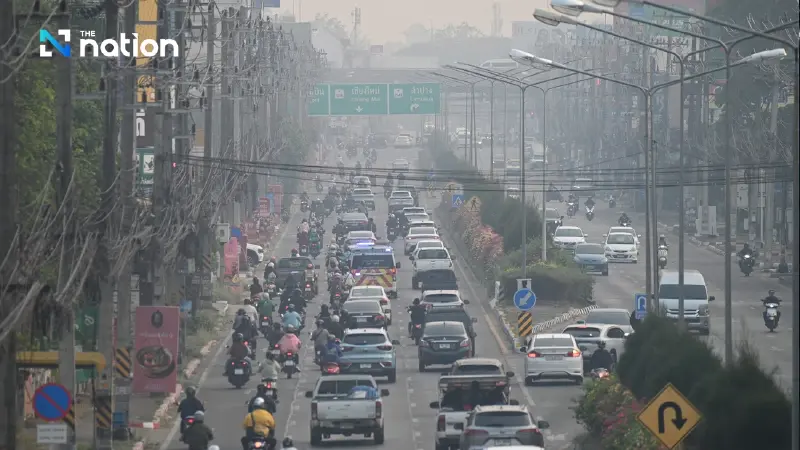


At least 28 provinces were above the PM2.5 standard on April 20, with northern readings hitting 164.8 µg/m³ and hotspot pressure still high.
Thailand’s PM2.5 pollution remained above the standard in at least 28 provinces by 5pm on Monday, with the North recording the country’s highest reading at 164.8 micrograms per cubic metre, while hotspot data for April 19 showed 2,358 hotspots nationwide. The figures were reported by the Center for Air Pollution Mitigation and GISTDA.
Northern provinces remain under the greatest pressure
The North remained the hardest-hit region, with PM2.5 levels ranging from 37.5 to 164.8 µg/m³ across Chiang Rai, Chiang Mai, Nan, Mae Hong Son, Phayao, Lamphun, Lampang, Phrae, Uttaradit, Sukhothai, Phitsanulok, Tak, Kamphaeng Phet, Phichit and Nakhon Sawan. In the central and western regions, levels ranged from 22.2 to 69.7 µg/m³, with readings above the standard in Uthai Thani, Chai Nat, Sing Buri, Ang Thong, Suphan Buri, Kanchanaburi, Ratchaburi, Samut Songkhram and Phetchaburi. In the Northeast, four provinces — Bueng Kan, Loei, Nakhon Phanom and Ubon Ratchathani — also exceeded the limit.
Bangkok, the East and the South fare better
By contrast, Bangkok and neighbouring provinces, the East and the South were mostly in the good to very good range, according to the national PM2.5 summary. Separately, the Bangkok Metropolitan Administration reported a citywide PM2.5 average of 21.1 µg/m³ at 7am on Monday, with air quality rated good overall.


Hotspots keep cross-border haze in focus
GISTDA’s Suomi NPP satellite data showed 2,358 hotspots in Thailand on April 19, with the largest shares found in conservation forests at 1,419 and national reserved forests at 636. Agricultural land accounted for 158 hotspots, agricultural reform land 83, communities and other areas 57, and roadside areas five. Among neighbouring countries, Myanmar recorded 1,536 hotspots, followed by Laos with 775 and Vietnam with 578, underlining the continuing role of transboundary haze.
Forecast points to more pressure this week
The seven-day outlook for April 21-27 suggests the problem is far from over. CAPM said the 17 northern provinces were likely to see dust levels rise further between April 21 and 25, while the central and western regions were expected to face a worsening trend throughout the week. Bangkok and surrounding provinces, the Northeast and the East were expected to improve, though some areas would still need monitoring, while the South was forecast to maintain good air quality.
Public urged to limit outdoor exposure
Authorities advised people in areas with health impacts, and in zones under close watch, to cut back on outdoor activity or wear PM2.5 protective masks when going outside. Children, older people and pregnant women were urged to avoid outdoor activity altogether, and to seek medical attention promptly if they developed throat irritation, coughing or breathing difficulties. CAPM said the public could follow updates through Air4Thai, AirBKK and GISTDA’s hotspot monitoring system.
