
Anti-drug network urges cannabis return to Thai narcotics control
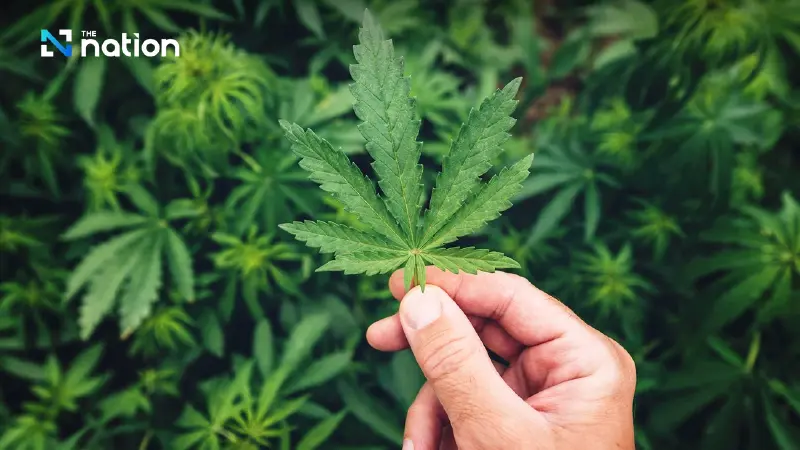


Four years after Thailand unlocked cannabis, the network cites patient data and calls for the plant to be brought back under the Narcotics Code.
- An anti-drug network of doctors, academics, and civil society members is urging the Thai government to return the cannabis plant to the narcotics control list.
- The call is driven by a public health crisis following the 2022 liberalization, with data showing a 6.5-fold increase in patients treated for cannabis dependence and psychosis.
- The network proposes to reclassify cannabis to control recreational use while simultaneously using a ministerial regulation to permit strictly supervised access for medical purposes.
- The policy's negative impact on tourism is also cited, with a surge in cannabis-related hospital cases among foreign visitors in tourist destinations.
Since June 9, 2022, Thailand has entered the era of “cannabis liberalisation” after the cannabis plant was removed from the narcotics list. Controversy later led to the issuance of the 2026 ministerial regulation under the Narcotics Code authorising the production, import, export, sale or possession of Category 5 narcotics, specifically extracts from cannabis or hemp plants.
It has been in force since April 26, 2026.
As a result, cannabis and hemp extracts with THC (Tetrahydrocannabinol) levels of more than 0.2%, which are narcotics controlled under the Narcotics Code, can be licensed for production, import, export, sale and possession if used for medical purposes.
However, over the past four years, empirical data have reflected a worrying public health crisis with long-term consequences.

Accelerating legal changes to return cannabis to a narcotics status
The government’s latest policy and key proposals from experts seek to correct the direction of cannabis policy and make it genuinely safe for Thai society.
They come after four years of changes to cannabis policy in Thailand, from a plant once branded a serious narcotic to one “unlocked” for broad access under the cannabis liberalisation policy.
However, looking back from the starting point to the present, statistical evidence and real social impacts are raising major questions about the value of the policy and its future direction, which the Ministry of Public Health urgently needs to review.
Starting point and legal loopholes: On February 8, 2022, Anutin Charnvirakul, then Minister of Public Health, signed a Ministry of Public Health notification that resulted in the cannabis plant no longer being classified as a narcotic under the Narcotics Code.
The change officially took effect from June 9, 2022, marking the point at which cannabis became widely available for recreational purposes without an effective narcotics law to control it.
A network of doctors, academics and members of civil society against drug abuse analysed that the policy at the time was a “mistake” because cannabis was removed from control without sufficient supporting safeguards, and because it did not follow the Narcotics Control Board’s resolution of January 25, 2022, which said a Cannabis and Hemp Act should be in place before unlocking.

Health crisis: figures that do not lie
Empirical data from Ministry of Public Health agencies nationwide over the past three to four years show a frightening trend in illnesses linked to cannabis use.
Inpatient statistics from public health facilities reflect the reality affecting Thai people as follows:
- Cannabis poisoning: Patients with severe nausea and vomiting, palpitations, abnormal heartbeat, panic or paranoia increased by as much as 3.5 times, from an earlier average of only 30-40 patients a month before the unlocking to an average of 115 patients a month in the first year after the cannabis liberalisation policy.
Although in the second and third years the figures began to fall to averages of 83 and 60 patients a month, respectively, the source said the decline resulted from people’s own “caution” in consuming food containing cannabis, not from effective state control measures.
- Cannabis dependence: This is one of the most worrying issues, because the number of patients dependent on cannabis who required treatment (code F12.2) increased continuously by 6.5 times, from an average of 130 patients a month to more than 830 patients a month. The data show that more people are using cannabis continuously to the point where they cannot stop on their own, affecting their normal way of life.
- Cannabis-induced psychosis: The impact on mental health is no less serious. The number of psychosis patients for whom cannabis was a cause (code F12.5) also increased by 6.5 times, from an earlier average of 85 patients a month to an average of 556 patients a month. This figure is a clear indicator that free access to cannabis has led to more psychotic conditions in Thai society.
Cannabis-related patients surge two years after unlocking
In addition to affecting Thai people, the policy has also affected the image and safety of foreign tourists.
Data from hospitals in provinces that are world-renowned tourist destinations found that cannabis-related patients rose from 0 cases a month to about 90 cases a month in the two years after the unlocking.
Alarmingly, 80% of these patients were foreign tourists, which, in the view of business operators in the areas, directly affected confidence and the tourism industry.
Many questions have arisen over the past four years of cannabis liberalisation.
Most recently, a ministerial regulation issued under the concept of “medical cannabis towards a health economy” took effect on Sunday (April 26, 2026), allowing cannabis or hemp extracts with more than 0.2% THC to be produced, imported or sold for medical purposes. What, then, is the clarity?
The “contradiction” in administration is this: if the Ministry of Public Health accepts that cannabis extracts with high THC levels are still narcotics, but can be controlled for medical use through a ministerial regulation, why is the same model not applied to the “cannabis plant”? If cannabis had remained controlled under the Narcotics Code for the past four years, the situation involving illness and recreational use would likely not be as serious as it is today.
Three proposals were put forward to lay policy foundations
Proposals from the network of doctors, academics and civil society on the fourth anniversary were submitted clearly to the Minister of Public Health to correct past mistakes and lay the foundations for proper policy, as follows:
- Return the cannabis plant to the Narcotics Code: The Ministry of Public Health should issue a notification placing the cannabis plant back under the control of the Narcotics Code, like opium plants or hallucinogenic mushrooms, so that there are clear and effective penalties and controls on recreational use.
- Medical use through a ministerial regulation: Once cannabis is returned to narcotics status, the Ministry of Public Health should use its authority to issue a ministerial regulation allowing the cannabis plant to be used for medical benefit, as it has just done with extracts containing THC > 0.2%.
- The principle that “everyone benefits”: This approach would allow patients who need cannabis to continue accessing treatment legally, while the public, young people and society as a whole would be protected from misuse or unlimited recreational use.
Conclusion: The lesson from four years of cannabis liberalisation shows that unlocking a psychoactive plant without strict control laws has created an enormous burden for Thailand’s public health system and risks to young people’s wellbeing.
It is time for the Ministry of Public Health administrators to make decisions based on empirical evidence and the public interest.
Returning cannabis to the narcotics law control system, while opening a strict medical pathway, is the most reasonable solution to end the long-running cannabis liberalisation crisis.
