
Thai-made cancer drug breakthrough — affordable hope within reach
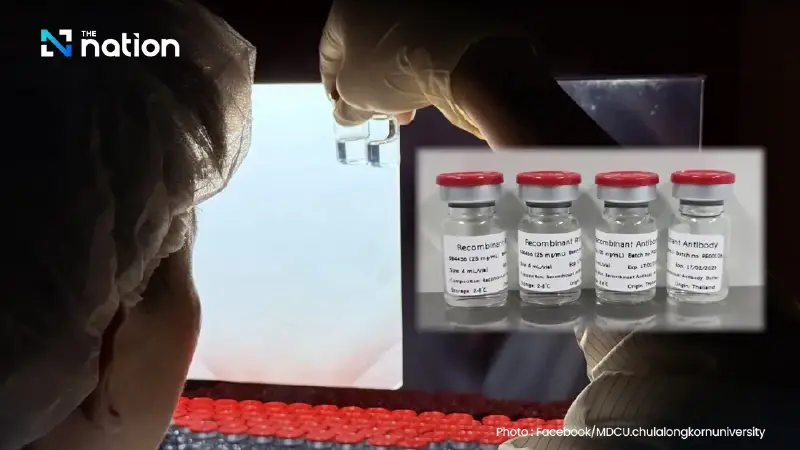


Thai researchers unveil affordable immunotherapy cancer drug, aiming to cut costs and expand access for patients nationwide
Cancer remains one of Thailand’s leading causes of death, with more than 140,000 new cases diagnosed each year, nearly 400 patients every day, placing a heavy burden on both the healthcare system and affected families.
In recent years, immunotherapy has emerged as a transformative approach in cancer treatment, helping to extend survival and improve outcomes for patients with various types of the disease.
Yet despite its promise, the high cost of these advanced medicines has remained a major barrier, limiting access for many within Thailand’s healthcare system, where balancing treatment effectiveness with resource sustainability is critical.
That gap may soon begin to close.
On April 20, at the Rattanavitthayaphat Building, Faculty of Medicine, Chulalongkorn University, in collaboration with the Thai Red Cross Society and clinical partners, announced progress in developing a Thai-made biological cancer drug.
The event also marked the signing of a clinical research collaboration with the Faculty of Medicine Vajira Hospital, Navamindradhiraj University, paving the way for human trials and wider access to treatment for Thai patients.

Prof Virote Sriuranpong, MD, Ph.D., an oncologist at Chulalongkorn University’s Faculty of Medicine, said the project has now entered its eighth year, representing Thailand’s first effort to develop its own cancer biologics. At present, most immunotherapy drugs are imported and come with prohibitively high costs.

“Original drugs from overseas cost between THB80,000 and THB100,000 per treatment cycle, with patients requiring doses every three weeks,” he said. “This means ongoing financial strain until the disease stabilises, leaving access almost impossible for those without civil servant healthcare benefits.”
The locally developed alternative is expected to reduce costs to the low tens of thousands of baht per course. If included in Thailand’s National List of Essential Medicines and supported by the Universal Healthcare Scheme, access could expand significantly nationwide.

Crucially, this innovation is not traditional chemotherapy. It belongs to a class of antibody-based immunotherapy drugs that work by reactivating the body’s immune system, effectively “unmasking” cancer cells and enabling white blood cells to detect and destroy them.
“Conventional chemotherapy controls the disease for around eight months on average,” Prof Virote explained. “This new immunotherapy can extend control to more than two years, and in 15–20% of responsive patients, survival may exceed five years. It is not designed to replace chemotherapy entirely, but to work alongside it, giving patients more time with their loved ones.”
Human clinical trials are expected to begin within three months. The first phase will enrol 20 participants, lung cancer patients whose tumours express PD-L1 protein at levels of at least 50%.
According to Prof Virote, around 20–25 out of every 100 lung cancer patients meet this criterion and are most likely to benefit from the treatment. The initial trial will test safety and early effectiveness, with 10 participants recruited from each institution.
Looking ahead, researchers aim to scale the programme to 75 patients in line with standard clinical trial protocols. The ultimate goal is not just scientific success, but long-term sustainability.
“Our aim is to push this drug onto the National List of Essential Medicines and into the Universal Healthcare Scheme, so the government can fully cover the cost,” he said. “This would transform access, turning a once out-of-reach treatment into a basic healthcare right, while strengthening Thailand’s healthcare system and reducing national expenditure.”

Trairak Pisitkun, MD, Assistant Dean for Strategy at Chulalongkorn’s Faculty of Medicine and Deputy Director of the Queen Saovabha Memorial Institute, said the eight-year journey has spanned everything from cell line development to industrial-scale manufacturing, all achieved under resource constraints with strong public support.
He noted that immunotherapy differs fundamentally from chemotherapy and targeted therapies by activating the immune system itself, allowing it to fight cancer more sustainably across multiple types, including lung and breast cancer. Laboratory results have shown complete tumour reduction, leading to the transition into human trials.
“This is not just a laboratory project,” he said. “It is a mission for all Thais.”
Fundraising campaigns and charity concerts are planned to support further research and expand treatment to other cancer types.

Assoc Prof Jiruth Sriratanabam, MD, Dean of the Faculty of Medicine at Chulalongkorn University and Director of King Chulalongkorn Memorial Hospital, said the initiative reflects the university’s commitment to addressing national healthcare challenges, particularly cancer.
“The development of this biologic drug in Thailand will enable patients to access effective and appropriate treatment, while reinforcing the role of universities in translating research into real-world impact,” he said.

Asst Prof Jakravoot Maneerit, MD, Dean of the Faculty of Medicine at Vajira Hospital, added that the collaboration would strengthen Thailand’s medical research capabilities and demonstrate to the world that Thai researchers are ready to develop advanced cancer treatments.
For many patients, the stakes could not be higher.
If successful, this breakthrough may redefine cancer care in Thailand, replacing a painful choice between treatment and financial survival with something far more powerful: genuine, affordable hope.

