
Drug-resistant infections kill 38,000 Thais a year
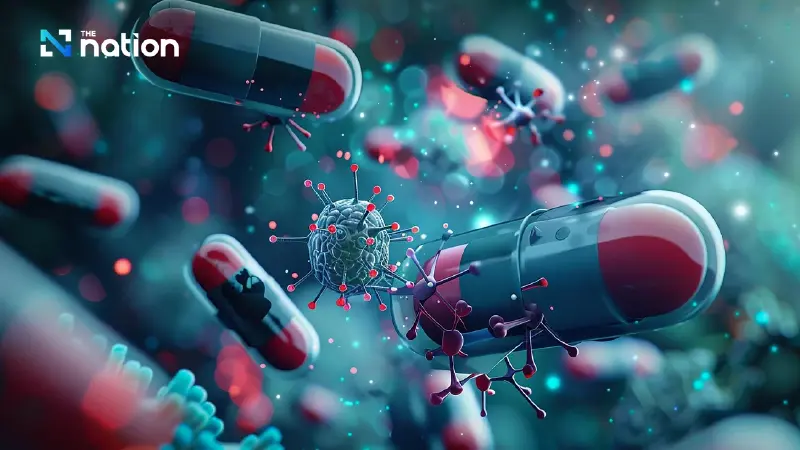


Antimicrobial resistance (AMR) could shorten global life expectancy by 1.8 years by 2035, as Thailand records one drug-resistant infection death every 15 minutes
As the world celebrates medical breakthroughs that could one day extend human life, drug-resistant infections are quietly moving in the opposite direction. It threatens to shorten life expectancy and weaken health systems around the world.
Antimicrobial resistance (AMR), commonly described as drug resistance, occurs when bacteria, viruses, fungi or parasites evolve in ways that make medicines less effective.
In the case of antibiotics, this means infections that were once easy to treat can become harder, more expensive and sometimes impossible to cure.
Over the past century, antibiotics have played a major role in extending average human life expectancy by around 23 years.
They have transformed many once-deadly infections into treatable illnesses and made modern medicine safer, including major surgery and cancer treatment.
But experts warn that this medical foundation is now under growing strain.
Current estimates suggest AMR could reduce average global life expectancy by 1.8 years by 2035.
Drug-resistant infections are already linked to 4.71 million deaths worldwide each year, and that number is expected to rise by as much as 70% by 2050.
Children are among the most vulnerable.
Infants and children under five account for around one-fifth of global deaths linked to drug-resistant infections.
Why the world is struggling to keep up
Experts say the AMR crisis is being driven by two major structural problems.
New antibiotics are not being developed fast enough
The antibiotics market has been shrinking for decades as major pharmaceutical companies scale back investment because returns are often considered too low.
As a result, the development of new antibiotics has fallen by 35% over the past five years.
The World Health Organization says only 90 antibiotics are currently in clinical development, and just five are considered genuinely innovative drugs capable of tackling severe drug-resistant strains.
Access to effective medicine remains unequal
Overuse and misuse of antibiotics can speed up resistance, but poor access to the right medicine can also allow bacteria to evolve and become harder to treat.
Reports indicate that 5.7 million people die each year because they cannot access quality antibiotics or receive them in time, particularly in low- and middle-income countries.
In some countries, only 0.2% of patients with severe infections receive antibiotics that properly match their illness.
Thailand faces a costly health threat
For Thailand, drug-resistant infections are no longer a distant global issue.
They are already a major challenge for the sustainability of the country’s universal healthcare system and national wellbeing.
Thailand records an average of 38,000 deaths from drug-resistant infections each year, equivalent to one death every 15 minutes.
The crisis also causes an estimated 46 billion baht in economic losses annually through longer hospital stays and more expensive medicines.
The Public Health Ministry and partner networks are driving the national action plan on antimicrobial resistance management. The plan aims to:
- reduce illness caused by drug-resistant infections by 20%;
- cut antibiotic use in humans by 20%;
- reduce antibiotic use in livestock by 30%.
However, implementation remains difficult because self-medication is still deeply rooted in Thai society.
Many people continue to buy antibiotics, often mistakenly called “anti-inflammatory medicine”, to treat colds or sore throats, even though most of these illnesses are caused by viruses rather than bacteria.
A sustainability issue, not only a health issue
The fight against AMR is closely linked to the United Nations Sustainable Development Goals because public health, economic stability and social security all depend on medicines remaining effective.
Experts say tackling the crisis will require a system-wide response, including:
- new financing mechanisms to encourage antibiotic research;
- stricter controls on antibiotic use in agriculture and livestock;
- stronger public awareness campaigns;
- better understanding that antibiotics should not be bought or taken unnecessarily;
- coordinated action across public health, farming, hospitals and communities.
The warning is clear: every unnecessary or incorrect use of antibiotics today increases the risk of creating stronger “superbugs” that could come back to threaten future generations.
