
Thaksin forced to enlist Army help for novice PM
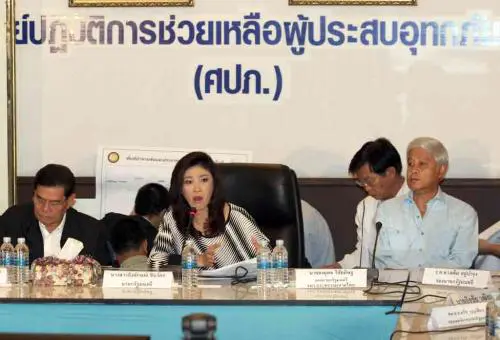


The centre is headed by Justice Minister Pracha Promnok, with the deputy prime ministers and other Cabinet members serving as its advisers. The FROC has two parts - the operations centre, headed by Science Minister Plodprasob Surassawadee, and the joint-c
The first part deals with relief work for residents affected by flooding, with the focus on emergency aid and evacuation. The second supports the work of the first part and its main responsibilities include assessment of the situation, issuing warnings, and crisis management of water.
The team includes Wim Rungwattanachinda, secretary to the PM’s Office minister who acts as the FROC spokesman, Police General Pongsapat Pongcharoen from the Royal Thai Police, Thirachai Wuthitham from the Ministry of Justice, and General Palangkoon Klaharn from the Ministry of Defence.
As water runoff has flooded provinces upstream along the Chao Phraya and is now closing in on Bangkok, the government centre has still worked without clear direction and unity. It appears the government has been on the defensive in tackling the flood problems. The fast and furious flow of floodwater has put Prime Minister Yingluck Shinawatra – a political novice – under severe stress. There were media images of her breaking into tears while the crisis was worsening.
Only a small number of Cabinet members have been actively working with the FROC to tackle the flood problems. Deputy Prime Minister and Interior Minister Yongyuth Wichaidit, who should have been the centre’s chief, given his status in the government and the ruling Pheu Thai Party (he is the second-in-command in the Cabinet and the Pheu Thai leader), has failed to work proactively. Previously he was head of the government’s 24/7 Emergency Operation Centre for Flood, Storms and Landslides, but he focused on routine jobs although the centre was supposed to work proactively, a source said.
“That explains why the [emergency operation] centre’s work is considered a failure. And that’s the reason why Yongyuth was not appointed as head of the FROC. The centre needs a man of fast action to head it so that he can tackle a big and severe disaster,” the source said.
The prime minister appears to have been isolated, and the situation is not different from when she recently instructed her Cabinet members to visit different flood-hit areas. Only a handful of government ministers followed her order, as they obviously did not consider Yingluck the de-facto prime minister.
Her big brother Thaksin Shinawatra, who is considered the ruling party’s “big boss”, recently mobilised banned politicians from the dissolved Thai Rak Thai Party to help Yingluck fight the flood crisis. They include Phumtham Wechayachai, Prommin Lertsuridej, Pongsak Raktapongpisarn, Sita Divari, Varathep Ratanakorn, and Suranand Vejjajiva. Red-shirt leaders like Natthawut Saikua also helped in “brainstorming” and worked with the FROC.
However, it appears too many cooks are spoiling the broth. “The centre now is chaotic and people work unsystematically. Information has to pass many processes before reaching the prime minister. Some information that required screening was reported to the public immediately, which led to widespread panic,” the source said.
One instance was when Plodprasob issued a warning at a press conference on October 13 about water runoff and suggested an evacuation of areas in Pathum Thani and Bangkok. He was later corrected by colleagues at the FROC after the announcement caused widespread panic among residents in those areas.
To prevent such an incident, Natthawut and Suranand have now been assigned to act like programme producers for the FROC’s press conferences and news updates to be broadcast on the state-run NBT.
Their back-up team includes red-shirt people, staff of Voice TV (satellite-based television owned by Thaksin’s family), and PM advisers headed by Pansak Vinyurat.
With the situation getting critical and water nearing the capital, Thaksin summoned the defence minister and advised him to call a meeting of armed forces commanders with the prime minister. This was to summon help from the military, in terms if manpower, equipment, and systematic work.
Although the “big boss” is wary of the military commanders after they showed dissatisfaction over the Pheu Thai politicians’ campaign to amend the Defence Ministry Act to allow more political involvement in military reshuffles, he needs them to come to the rescue at this time of crisis.
The government has refused to declare a state of emergency in the flood-hit areas to protect temporary flood walls from being destroyed by angry residents whose homes are inundated because of the walls.
However, the armed forces have helped make flood prevention and relief efforts more systematic.
The military appears to be the prime minister’s last resort in tackling the floods, while Thaksin has remained her major supporter.
