
Crocodile rumours run wild during floods


Play
Crocodile sightings have been one of the more colourful aspects of Thailand's floods this monsoon season, but at least 70 per cent of the reports were hoaxes, an official said Tuesday.
During the past three months of floods, the worst to hit the central plains in five decades, there have been numerous reports of crocodiles on the loose but few proven sightings, Fisheries Department official Kumthon Suaroon said.
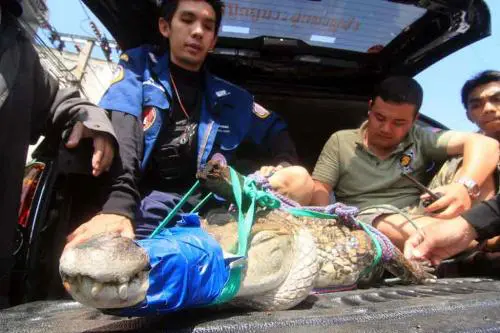
"Since the flooding began we've only caught 10 crocodiles, and they were all young ones," said Kumthon, who heads the department's farm registration division and the crocodile catching teams.
There are about 700 legal crocodile farms registered with the Fisheries Department, most of which are located in the central plains, including Bangkok and its suburbs.
When the central plains were inundated last month by the overflowing Chao Phraya River and runoff from the north, reports of crocodile escapes from farms began to proliferate.
"There are a lot of rumours of crocodiles escaping their farms," Kumthon said. "About 70 per cent of these reports were hoaxes and the remaining 30 per cent were either due to people mistaking monitor lizards for crocodiles or misinformation spread intentionally by boat taxis or burglars," the official told dpa.
Monitor lizards are large reptiles indigenous to most of South-East Asia, and are not a significant threat to humans.
Thailand boasts the world's largest commercial crocodile industry, with some 600,000 of the reptiles being raised for their skin, which is used to make handbags, shoes and belts.
Crocodile meat, bones and blood are exported to Asian countries as food and medicine.
Altogether crocodile skin and meat exports earn the country about 1.4 to 1.8 billion baht (46.7 to 60 million dollars) a year.
The impact of this year's floods on crocodile exports has yet to be assessed.
To avoid future crocodiles panics, the Fisheries Department is mulling new regulations requiring farms to build higher walls around their compounds, Kumthon said.
