
Burma vows tax incentives


Play
IMF helping kyat unification, bigtax changes to come, minister tells CEOs at Davos summit
The Burmese government is drafting a tax incentive law which will be the most attractive in the region, as it prepares to achieve a six-per-cent growth target in 2012, according to an economic minister.
U Soe Thein, Burma’s Industry Minister, told international journalists the tax incentive law could be passed by the end of the upcoming Parliamentary session next month.
A plan is also underway to boost international business confidence in the kyat – the Burmese currency – in consultation with the International Monetary Fund (IMF).
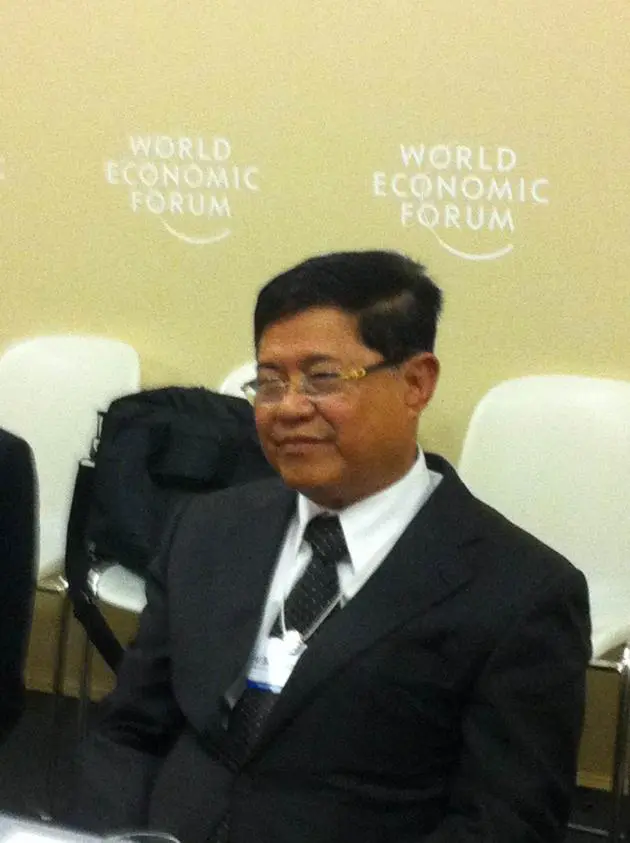
U Soe Thein led a delegation, which also included Rail Transport Deputy Minister Thura U Thaung Lwin, to their first participation at the World Economic Forum.
“We were very busy meeting global policymakers, officials and CEOs,” the minister said.
The Burmese delegation’s trip followed a recent visit by WEF chairman Klaus Schwab to Burma, where he met both Thein Sein, the president, and opposition leader Aung San Suu Kyi. He invited both to attend the Davos forum.
U Soe Thein said he received a lot of ideas and learnt about many issues at WEF sessions. They included the Eurozone crisis, job creation, sustainable energy and green policy, resource management, population and growth, poverty eradication, refugees and displaced people, women and children, SMEs, anti-corruption and good governance.
“We learned what we shall (need) to do in the future...We were honoured to attend,” he said.
In his meeting with CEOs, the minister said they extended recognition to what the Burmese government was doing in its reforms, and were interested in the country’s growth and investment potential, plus the peace process with ethnic minorities. He reiterated that the reform process was not due to external pressure or economic sanctions but followed the desires of the Burmese people.
He said Burma was centrally located to engage in trade and investment with China, India and Africa. It had markets as well as skilled labour, plus availability of energy resources, including gas and hydroelectricity.
“Like Norway and Sweden, we also have access to two seas and have fishing potential,” U Lwin said, noting that his country was also the world’s biggest producer and exporter of rice in the pre-war era.
U Soe Thein said his government was working, with assistance from Japan, on tax investment incentives, which would be the most attractive in the region. The package would include an eight-year tax exemption, with a possible extension, if the ventures proved profitable for the country. The law could be passed during the parliamentary session next month.
The minister said consultations with the International Monetary Fund in December and this month were helping the authorities work on “currency exchange unification” and mechanisms for implementing fiscal and monetary policies.
He said the government planned to upgrade the central bank, now a department under the Finance Ministry. It had been proposed to give it independence.
The Burmese industry minister said three economic zones were being set up: one of which would be Dawei (undertaken by Italian-Thai Development) and another near Yangon aimed at facilitating firms from China, Japan, Korea, Thailand and the rest of the world.
“Yes, we are in a hurry…” he said, citing preparations for the 2013 Southeast Asian Games, and 400 meetings scheduled for it to assume chairmanship of Asean in 2014, plus the Asean Economic Community in 2015, and to achieve the UN Millennium Goals.
“Tourism is booming and we need more hotels, certainly,” he added.
