
NHSO hopes to bring healthcare scheme up to par with other benefits


Play
The National Health Security Office (NHSO) is hoping to put the universal healthcare scheme on par with the health benefits enjoyed by civil servants and company employees in the next five years.
An effective primary gate-keeping system will be one of the themes as the NHSO, which oversees the universal healthcare scheme, moves into its second decade.
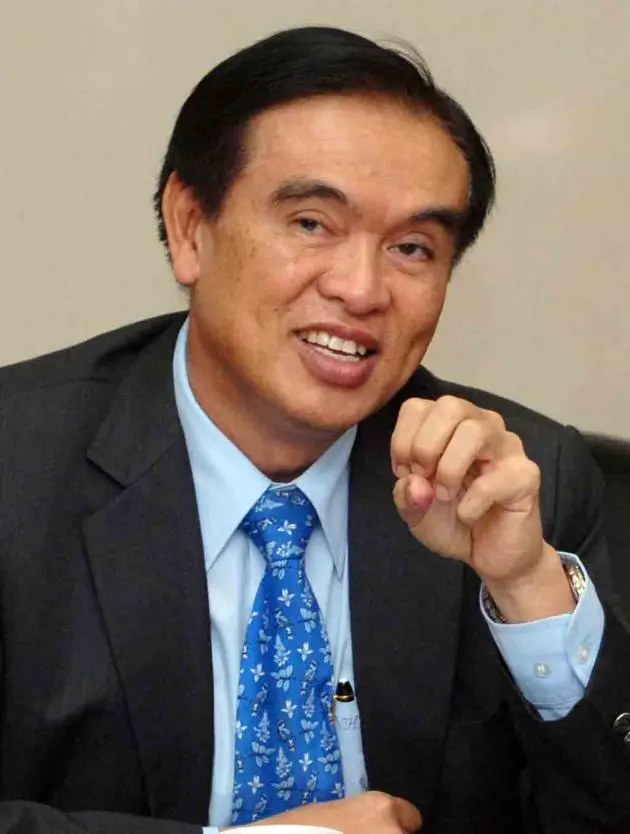
“There are a few problems we have to tackle first, like the inequality issue when compared with other healthcare programmes and the need to focus more on primary care,” NHSO secretary-general Dr Winai Sawasdivorn said last week.
According to him, though the universal healthcare scheme has been quite successful over the past decade, there has been the problem of equality for members of the scheme when compared to the beneficiaries of the Social Security Scheme and the Civil Servant Medical Benefit Scheme (CSMBS).
On average, CSMBS spends between Bt11,000 and Bt12,000 annually on each of its beneficiaries. The universal healthcare scheme, meanwhile, offers a flat Bt2,755 per year for beneficiaries under the care of participating hospitals.
“While CSMBS offers up to Bt18,000 for an appendix removal surgery at Siriraj Hospital, the universal healthcare scheme only pays up to Bt9,500,” Winai pointed out, adding hat it was necessary to achieve equality when it came to healthcare services.
“So, I hope we will be able to see the same standard of treatments and rights in the next four or five years,” Winai said, adding that he was not concerned about opposition from certain groups of doctors.
“It will be difficult for them to topple NHSO and the universal healthcare scheme,” he said confidently, adding that since the universal healthcare scheme was one of the populist policies launched by Thai Rak Thai (TRT) Party, the current ruling Pheu Thai Party would fully support it. Pheu Thai Party is a reincarnation of the TRT.
“The policy earned the party great support,” Winai commented.
Thanks to the universal healthcare scheme, which was previously known as the Bt30 scheme, patients no longer have to worry about the cost when seeking medical treatment.
According to research, the scheme also cut down on bankruptcies caused by huge medical bills from 6.8 per cent in 1995 to 2.8 per cent in 2008. It also saved more than 80,000 families from getting poorer. People, meanwhile, gave the scheme 83 points in 2003 and as much as 90 points in 2008.
Given the popularity and success of the scheme, Winai said he was confident that political will would not be lacking for the scheme to continue, though inefficient management might bring it down. He explained that if the NHSO were to bring the scheme up to the level of CSMBS, it would likely need about Bt300 billion per annum, three times more than the Bt100 billion needed presently.
“We will have to improve our management system and primary-care services. We need a proper plan,” Winai said.
He said he was confident that primary-care units, once improved, would be able to cut down on the incidences of serious diseases and symptoms that usually cost a lot to treat.
Winai added that having primary-care units overseen by retired nurses and doctors would also allow for more time to be spent on each patient, while those with non-serious complaints can also get treated there.
At present, doctors are able to spend about two-and-a-half minutes per patient. “I hope to see them spend at least five minutes,” Winai said, adding that in some foreign countries, doctors spend up to 15 minutes on each patient.
As for Thailand’s overall healthcare sector, Winai said more doctors were needed and that the brain drain should be stopped. He said that since the country was becoming a medical hub, private hospitals were doing their best to lure doctors from state institutions.
“Then, state hospitals in cities take doctors away from major hospitals in provinces, which in turn try to attract doctors from medical facilities in remote areas,” Winai explained, adding that the government should consider creating more permanent jobs for medical workers.
“Statistics show that some 100,000 medical workers, including doctors, work at state hospitals as ordinary employees, not civil servants,” he said.
Winai also lamented that there were ethical risks involved when health services became too business-oriented.
“Thailand has allowed hospitals to be listed in the stock market. Foreign countries would not allow this,” Winai added. “Such focus on profits may harm patients.”
