
Thick smog hangs over North, Northeast


Play
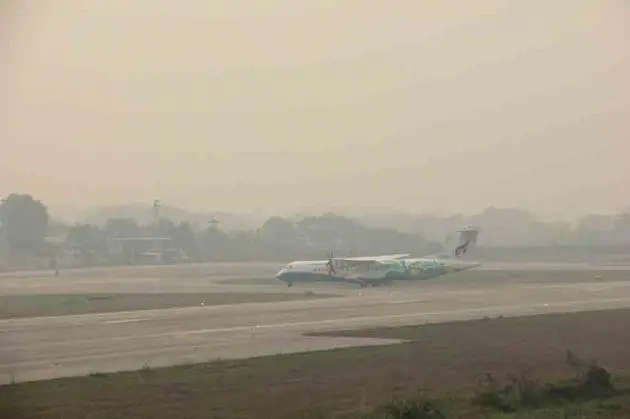
Several provinces in the North and Northeast are still under thick smog with an increasing number of people suffering from eye irritation and respiratory problems.
Meanwhile, Chiang Rai has lost some 20 per cent of its tourists, and more and more people are seeking treatment for red eye.
In Chiang Mai, farmers living in tambon Mae Taeng have reported that bears, forced out of the wilderness by the smog, are hunting their animals. So far, these wild bears have killed 30 chickens and a dog, and farmers have set up guard to protect their stock.
Fur found tangled in barbed wire is pending verification by Chiang Mai University, senior district official Chaiyakan Suwan said. “If the animals are sun bears or honey bears the risk will become greater,” he said, adding that the smog could also prompt tigers and other predators to hunt farm animals or come closer to the villages.
In Lampang’s Mae Moh district, three kindergarteners have been hospitalised for respiratory problems and eye irritation.
Results from air qualitychecking stations under the Department of Pollution Control show that the density of particles and dust detected at three locations in Lampang – two in Mae Moh and one in Muang district – had exceeded safety limits.
The smog in the North is coming from wildfires as well as manmade fires in two districts in Chiang Rai as well as Mae Hong Son’s Pai district in addition to neighbouring countries. The smog in the Northeast is caused by fires in Phu Kheo and Phu Lan Kha mountain ranges in Chaiyaphum province, where some 10,000rai of forestland has been set ablaze.
Chief of the Chiang Rai tourism office, Somkiat Chuentheerawong, has called on residents to stop setting fires because the province is losing tourists.
Meanwhile, fire trucks have been spraying water to reduce the effect of smog in residential areas, while cloudseeding operations are underway in nine provinces including Lamphun, Phrae and Phayao.
