
Democrats dump Sonthi on doubts over his actions


Play
The House committee on reconciliation appears to be burning bridges rather than mending fences.
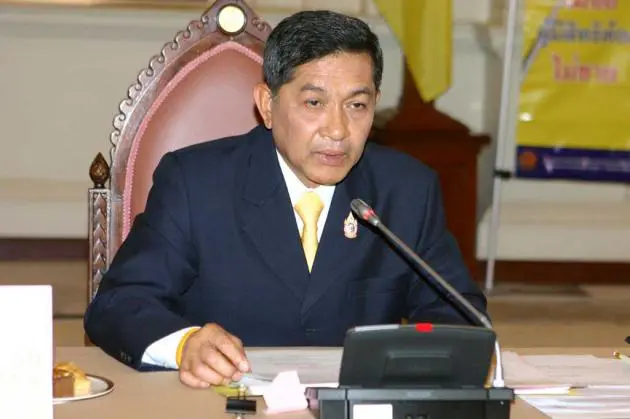
Yesterday nine Democrats resigned in protest at committee chair Sonthi Boonyaratglin, who refused to heed their minority demand for a review of the King Prajadhipok’s Institute report on reconciliation measures.
Democrat Party leader Abhisit Vejjajiva issued three open letters reminding the committee that the KPI report, if hastily implemented, could trigger a new round of political turbulence. But Sonthi decided to turn a deaf ear.
Back in January, Sonthi seemed to have basked in the limelight. He hosted a luncheon to kickstart the reconciliation process attended by key party leaders, including Democrat Abhisit and Pheu Thai’s Yongyuth Wichaidit.
Less than three months later, he is being seen as a snake-oil salesman pushing for a rescue of fugitive former prime minister Thaksin Shinawatra, the very man he ousted from power in 2006, instead of building a consensus on reconciliation.
Even if he has good intentions, he appears to be doing the wrong thing at the wrong time.
Following the disbanding of the junta in 2007, the former coup leader enjoyed a quiet life in retirement. Critics claimed that the pro-Thaksin camp convinced him to enter politics in the wake of the political unrest in 2010.
At the time, the Matubhum Party was undergoing a transformation and Sonthi became party leader. Many believe veteran politician Chavalit Yongchaiyudh, a Thaksin supporter, had a hand in engineering Sonthi’s comeback.
His party managed to win just two House seats in the general election last July. But he gained a prominent role beyond the dreams of a first-time MP. Thaksin suddenly cited a mantra of forgiveness. And Pheu Thai MPs began treating him like a long-lost friend – not a foe who committed the cardinal sin of seizing power.
Sonthi began his legislative career by portraying himself as a changed man who wanted to rectify the coup damage.
Coalition and opposition lawmakers rallied behind him after realising his potential to bring about reconciliation. The House voted to install him as chair of the bipartisan committee for mending the bitter political division.
Early this month, the KPI submitted a preliminary study preceding a full report in the next few weeks. The study spawned a fiery debate on several contentious issues, notably a recommendation to repeal the work of the Asset Examination Committee.
In addition to addressing the amnesty issue for those involved in the political disturbances, the KPI study touched on the perceived injustice caused by the AEC, the coup-appointed agency responsible for targeting Thaksin and his accomplices for graft proceedings.
Sonthi fanned the controversy by hinting at his support to repeal the AEC’s work. This prompted an angry reaction because many saw an ulterior motive to help Thaksin evade his conviction and punishment. The former PM was sentenced to two years jail by the Supreme Court in late 2008 for a land purchase by his wife, deemed to be improper, but fled overseas before the ruling was handed down and claims the verdict was unjust.
Although the KPI study team subsequently issued a series of clarifications, outlining three options on what to do with the AEC’s work, each having pros and cons, Sonthi ploughed on to cite the study as the basis of the committee’s report.
After the KPI threatened to withdraw its report and several leading figures, including Abhisit and Chart Thai Pattana MP Sanan Kachornprasart, aired their opposition, Sonthi softened his stand to factor in all dissenting views in his final report.
He insisted, however, on highlighting the option calling for a repeal of the AEC work, arguing the House will debate and make a final decision on the matter.
But his committee is no longer bipartisan; reconciliation seems to have broken down in the House.
