
DSI to probe pills in South Korea


Play
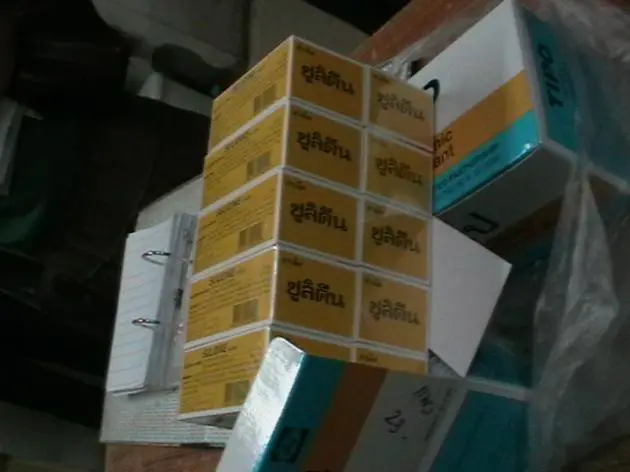
The Department of Special Investigation (DSI) will visit South Korea to investigate the export of about 40 tonnes of pseudoephedrine-laced cold medicine to Thailand, after a company under suspicion claimed its name was used without permission on false dec
DSI chief Tarit Pengdith said Deputy PM Chalerm Yoobamrung, as head of the DSI’s Special Case Committee, instructed investigators to proceed carefully and gather complete evidence because this was a major case of medical orders and smuggling. He had not objected to the proposal for the Special Case Committee to take up the matter, as it had nothing to do with medicine being siphoned out of hospitals.
An initial probe found that the company that reportedly ordered and imported the medicine claimed its name was used quietly and explained that its business was to import auto and computer parts. So DSI investigators will try to get information from South Korea in order to determine who ordered and smuggled the cold pills through the airport by falsely declaring the medicine as other things.
Chalerm instructed the DSI, the Office of the Narcotics Control Board, the Office of the Public Sector Anti-Corruption Commission and the Police Narcotics Suppression Bureau to work together closely to avoid mistakes, Tarit said.
The DSI will also investigate major drug cases that were taken on as special cases, while other drug cases were the responsibility of local police and the Police Narcotics Suppression Bureau.
In related news, a meeting due to be held yesterday of the Public Health Ministry committee on drug control and the rehabilitation of addicts was postponed till April 30 as some officials and Food and Drug Administration (FDA) staff went to inspect three private hospitals in the North.
The hospitals – one in Lamphun and two in Chiang Mai – placed suspiciously high orders of pseudoephedrine-based cold medicine last year. The officials were also due to inspect a clinic in Nakhon Si Thammarat.
The committee’s spokesman and assistant secretary Thanakrit Jitareerat said one Chiang Mai hospital had ordered 280,000 pseudoephedrine tablets and 40,000 pseudoephedrine-mixed tablets by forging the hospital director’s signature and stole the pills, which led to the hospital filing a police complaint. The other Chiang Mai hospital ordered 233,230 pseudoephedrine-mixed tablets, while a small hospital in Lamphun ordered 670,000 pseudoephedrine tablets and 394,000 pseudoephedrine-mixed tablets.
The 10-bed Sirivej Hospital in Lamphun also ordered 670,000 pseudoephedrine tablets and 394,000 pseudoephedrine-mixed tablets, but only had 100 and 3,180 tablets left in its inventory respectively. He said the hospital was found have forged orders, failed to complete medical records as well as issued false treatment reports, even though the management maintained its innocence and insisted that none of these pills were ordered since last March. He said it appeared that three sales representatives from pharmaceutical companies were involved, who sold such medicine to Siam Rat Hospital in Chiang Mai. Officials would inspect their records of drug prescriptions for patients, he said.
Dr Somchai Pinyopornpanich, chief of the Department of Health’s service support centre, said the authorities had also inspected a clinic in Nakhon Si Thammarat because it had ordered 440,000 pseudoephedrine tablets. They should be able to determine by April 24 if the order was in line with prescriptions.
