
Pushcart bomb injures soldiers, civilians in South


Play
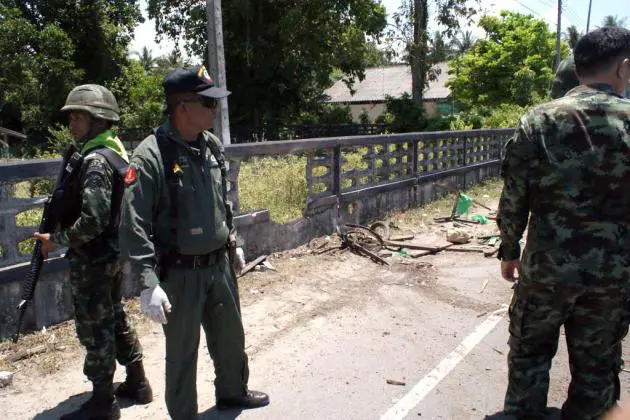
A bomb went off on TakbaiTaba Road in Narathiwat's Tak Bai district yesterday afternoon, injuring eight people including a threeyearold boy, civilians and soldiers.
A military Jeep was wrecked in the explosion.
Police say the 7kg bomb was in an iron box hidden in a twowheel pushcart.
The injured were taken to Tak Bai Hospital. Seriously hurt were Sergeant Major 3rd Class Uthen Kaewwichien and a boy named Muhammad Paosa. Six others three soldiers and three civilians were slightly injured.
Police investigations found that two men on a motorcycle put the bomb on the pushcart then fled. Later, when the soldiers’ jeep passed by, the bomb was detonated by radio communication. The blast also hit the civilians who were on two motorcycles.
A village head was shot dead by suspected insurgents in front of his house in Narathiwat’s Sungai Padi district early yesterday morning.
Police found the body of Sainung Ada, 50, riddled with bullets. He had a 9mm pistol in his hand. Also found at the scene were 18 cartridges from AK47 and M16 rifles.
The police say Sainung was walking in front of his house at 5am when two gunmen in hiding opened fire. He tried to fight back but it seems likely his weapon jammed.
Sainung was attacked and injured by a suspected insurgent on October 24, 2010, but he fought back and the gunman retreated. He had publicly announced that he would join hands with authorities to crackdown on separatists.
Army Chief General Prayuth Chanocha said the Army Region 4 had adjusted its strategies in tackling the deep South violence, ahead of the eighth anniversary of the April 28 Kreuse Mosque massacre in Pattani.
He said the Army would carry out more operations and intelligencegathering, while also hunting for criminalcode wanted men and looking for stolen vehicles. He said the Army would also maximise its limited manpower in proactive measures. Prayuth said the Army would leave measures like guarding of premises to police and volunteers so they could work in highrisk areas such as roads and checkpoints for better efficiency.
The Army chief admitted the limitations of technology, such as incomplete CCTV camera installation. He said the Army was trying to promote joint planning and the use of CCTV cameras in preventing incidents rather than as evidence of crimes already committed.
He said the 20 agencies should integrate with security agencies working in the area, while the public should cooperate by avoiding going out at night on risky roads so that state officials could perform their duties without misunderstandings.
