
Myanmar opposition leader sworn into Parliament


Play
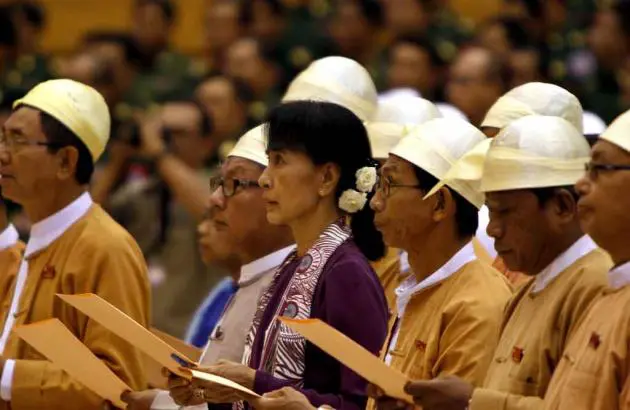
Naypyitaw - Myanmar opposition leader Aung San Suu Kyi on Wednesday was sworn in as a member of Parliament, after backing downover an earlier objection to the wording of the oath.
Suu Kyi and 33 members of her National League for Democracy (NLD)party who won seats in the April 1 by-election took an oath thatincluded the contentious clause to "safeguard the constitution,"before taking their seats in the Lower House.
"I'm very happy to be in Parliament," Suu Kyi said. "I will try tofulfill the people's wishes 100 per cent." The Nobel Peace laureate and her NLD colleagues were initiallyscheduled to join Parliament on April 23, but postponed in protest atthe oath of office that obliged them to "safeguard" the 2008constitution, which cements the military's dominant role in politics.
The NLD wanted it reworded to "respect" the constitution. On Monday, Suu Kyi, 66, announced her decision to take up her seatin parliament despite the oath.
United Nations Secretary General Ban Ki-moon on Tuesday praisedSuu Kyi after meeting with her in Yangon. "Real leadership demonstrates flexibility for the sake of thepeople," Ban said.
Suu Kyi has personified Myanmar's pro-democracy movement againstthe former ruling junta over the past two decades, 15 years ofwhich she spent under house detention in her family compound.
Her political fortunes took a turn for the better afterPresident Thein Sein came to power in March 2011. He opened adialogue with her in August, paving the way for her entry intomainstream politics via the April 1 by-election, in which Suu Kyi andher NLD members won 43 out of 45 vacant parliament seats.
The NLD won 37 seats in the Lower House, 4 in the Upper House and2 in regional houses.
Suu Kyi and the NLD were expected to seek several amendments tothe constitution, including the wording of the oath, which is anannex to the charter.
They will also to seek to amend the article that allows themilitary to appoint 25 per cent of the parliamentarians, and otherclauses to allow the ethnic minority groups greater autonomy in theirtraditional states.
Commander-in-Chief General Min Aung Hlaing has come out againstany amendment that would weaken the military's role in politics, saidWin Min, a political scientist at Harvard University.
But he said, "Suu Kyi may focus on constitutional amendments ontheir ethnic minority issue as it is in line with the president'spriorities." The government has signed ceasefire agreements with a dozen ethnicminority insurgencies in recent months, but genuine peace will likelyrequire constitutional changes that guarantee these groups a measureof the autonomy they have been fighting for for the past six decades.
Without the support of the leading Union Solidarity andDevelopment Party (USDP) and the military, the NLD has small chanceof pushing through any amendments or laws.
The NLD and other opposition parties between them hold less than10 per cent of the seats in parliament.
To propose an amendment or draft law they need the approval of 20per cent of the Lower House, which is dominated by the pro-militaryUSDP, which won the 2010 general election.
To pass an amendment they need 75 per cent of the votes.
"We don't see any need to amend the constitution," USDPsecretary-general Htay Oo said following the closing of theparliament session at midday on Wednesday.
Parliament was expected to resume in June or July
