
Real brain of Pheu Thai to keep its low profile


Play
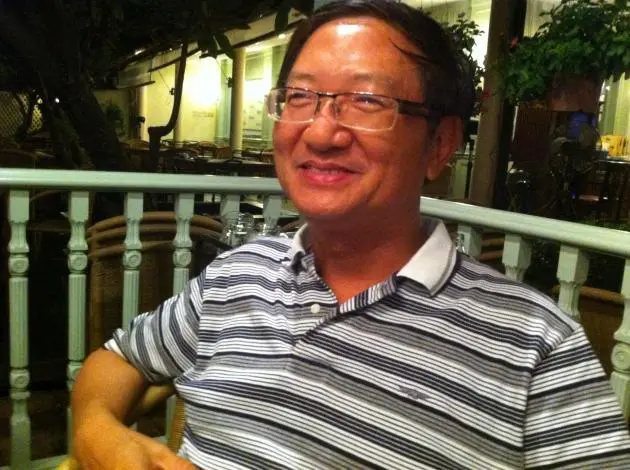
Prommin Lertsuridej, praised by his boss, fugitive former prime minister Thaksin Shinawatra, as the brains behind the now defunct Thai Rak Thai Party, has vowed not to seek any political position once the five-year political ban on him and 110 other TRT e
“I won’t return as a political appointee,” he said during an interview. “I was given the chance to work and I was happy. I want others to have that chance,” he said during an interview last week.
Others in the so-called 111 Club of ex-TRT politicians whose bans are about to expire may fight for titles initially, but peace will return as they have to work together to push through the party’s policies, he said.
“I’m out now; circumstances have changed. I’m interested in formulating economic ideas and will be pleased if they put the ideas into practice. Whatever ideas I may have will be passed on to those who want them. If the ideas are unwanted, I’m OK with it. I’m ready to help the government where I can.”
In his behind-the-scenes role in recent years, the 58-year-old spent time accumulating advice from academics and other parties and formulating economic plans for Pheu Thai, which is now led by Thaksin’s younger sister, Prime Minister Yingluck. In the Thaksin era, Prommin served as deputy prime minister in charge of economic affairs and played a key role in TRT’s populist policies.
Prommin recalled some painful experiences during the political ban. After the coup in 2006, he was closely watched while his boss was in exile. As he approaches retirement age, he prefers a quiet life and chooses not to return as a public figure.
To him, the ban was part of the attempt to eradicate Thaksin. Though, even with the coup, the attempt failed and all involved have learned the consequences. Referring to Dusit and Abac polls which said a majority of Thais support the return of the 111 Club’s members to politics, he said the ban served only to briefly disperse some able and popular politicians, against the people’s will.
“It demonstrated that [the banned politicians] can’t be replaced.”
He said that since 1973, Thailand’s politics have evolved in a way that has increased people’s power, in line with technological, economic and social developments. A key turning point was the May bloodbath in 1992, following a coup a year earlier, paving the way for the 1997 Constitution.
“I thought that [the 1991 coup] would be the last…Given the strong criticisms and admissions by the [coup] leader, General Sonthi [Boonyaratglin], the last coup should be the very last. No one should attempt to repeat it,” he said.
He reiterated that TRT came into power under the 1997 Constitution, which stipulated checks-and-balances and supported people’s power. He said it was painful to see power change hands under the barrel of a gun again in 2006.
“Still, I’m not sorry [for joining the Thaksin government], as I was able to use my knowledge to help develop the country.”
He claimed that TRT was the first party to tell the public how to reap democratic returns and how to press for their democratic rights. Meanwhile, externally, under Thaksin, Thailand won greater support from the US, Europe and the Middle East. This has revived since Yingluck came to power and her government has won greater international acceptance than the previous government, he said.
“Corruption has been in Thai society for a long time,” he said, countering criticism that the coup followed widespread corruption in the TRT era. “It depends on how you handle it and how the country is doing, in the big picture.”
While the coup cost Thailand the opportunity to rise further in the global scheme of things following the 2006 coup, Prommin said the negative consequences linger today, as many people remain in jail and many lost their lives in the political conflicts. Reconciliation will happen only when the facts are available, he said, referring to Martin Luther King’s famous saying, “No justice, no peace”.
He said a mechanism is needed to deal with diverse public demands and conflicts, as differences of ideas must be tackled in a peaceful way. Yet, he reiterated that all must accept the majority decision, to show that all, regardless of social status, are equal.
Denying that the Red Shirts have been bought, he split them into four groups – Thaksin’s fans, those against dictatorship, academics, and non-monarchists. They are independent from each other, he said.
“At one time, peace-loving Thais paused under the power of guns. But when they cast votes again, they will vote for their choice. They are denounced as stupid voters, but that’s their right and they are responsible for the negative consequences if they make the wrong decision,” he said.
Throughout the transformation of TRT into the People Power Party and then Pheu Thai, the movement’s base popularity has never been shaken, Prommin said. He attributed this to a deep understanding of people and their problems, which he said were the foundations of TRT’s economic policies.
As a non-politician, he said political parties should compete through policies to win votes in a constructive way. The Democrats’ moves on the cost of living are a good example, he said. Not all parties can compete in terms of populist policies, he said, as this requires a thorough understanding of the public’s demands.
