
Just one-fifth of wastewater is being treated
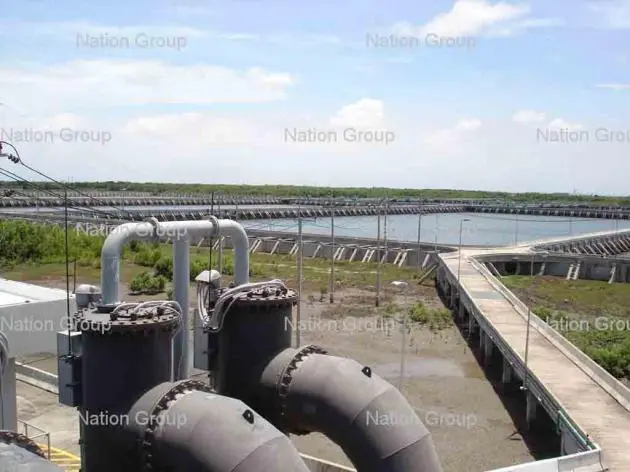


Nearly half of the country's existing wastewater-treatment facilities have run into problems, and at present capacity, just one fifth of Thailand's wastewater is being treated.
“Every day, communities, factories and farms release 14.8 million cubic metres of wastewater,” Pollution Control Department director general Wichien Jungrungruang said. “Of that amount, only 3.2 million goes into the proper treatment systems.”
Wichien said that Bt83 billion has been spent on the construction of 101 wastewatertreatment plants. Construction on 91 of those has already been completed, but 20 are not working properly.
“Some parts of the systems are malfunctioning,” Wichien said.
Local authorities are unable to maintain their systems because they cannot collect wastewater treatment fees and because they lack adequate technical knowledge.
“In some areas, the systems are simply not comprehensive enough,” Wichien said.
Apart from the malfunctioning treatment plants, 28 others are discharging poorly treated water.
“The quality of water from these wastewatertreatment facilities is not up to standards,” he said.
These include facilities in Mueang Sukhothai, Mueang Map Ta Phut in Rayong and Nong Khaem in Bangkok.
“At this point, we have just 43 good wastewatertreatment facilities in place,” Wichien said.
Wastewater Management Authority director Pairoj Sattayasankul admitted that many existing facilities were in disarray.
“We have now requested a budget of Bt270 million to revive nine facilities in key cities such as Songkhla, Chon Buri, Chiang Mai and Prachuap Khiri Khan,” Pairoj said.
Most of these facilities had been completely abandoned for four or five years now, he said.
“After we revive them, we will then need money to keep them in operation,” Pairoj added.
The government should consider collecting wastewatertreatment fees from households, Pairoj recommended. The idea might sound impossible today but it would be better for the long run, he said.
“The wastewatertreatment fee should be at Bt3 per cubic metre of wastewater,” he said.
Pairoj said his organisation would work with local administrative bodies in raising public awareness of the need to finance the wastewatertreatment facilities.
“The process may take a few years,” he said.
Meanwhile, the Office of Natural Resources and Environmental Policy and Planning (Onep), has embarked on construction of eight new wastewatertreatment facilities with a budget of Bt770 million.
“Our representatives will sit on the design panel for these new facilities,” Wichien said of the Onep projects.
The new plants will be in Mueang Phetchabun, Chiang Rai’s Mae Sai Municipality, Khon Kaen’s Mueang Ban Phai, Surin’s Tambon Tha Toom, Mueang Tak, Prachuap Khiri Khan’s Hua Hin, Surin’s Tambon Wong Kong and Nakhon Ratchasima’s Kud Chik Municipality.
The Wastewater Management Authority has also recently secured Bt3.7 billion for construction of wastewatertreatment systems in the Om Noi and Om Yai areas of Samut Sakhon and Nakhon Pathom. Construction of the facility in Om Noi is set to begin next year.
“In addition, we have been seeking a budget for Bt3 billion for the construction of the wastewatertreatment facility in Pathum Thani,” Pairoj said.
On the longabandoned Klong Dan wastewatertreatment plant, Pairoj said his agency would consult with the Pollution Control Department about possible solutions.
Located in Samut Prakan, the Klong Dan plant would have provided wastewater treatment for 1.2 million residents and around 4,000 factories, but the project was plagued by corruption and lack of environment impact assessment and was largely opposed by the local community.
“If we will revive this plant, we will need a budget of about Bt4.6 billion,” Pairoj said.
