
92 Thais in Myanmar face prison sentences


Play
Five relatives of encroachers said to have been arrested on Friday
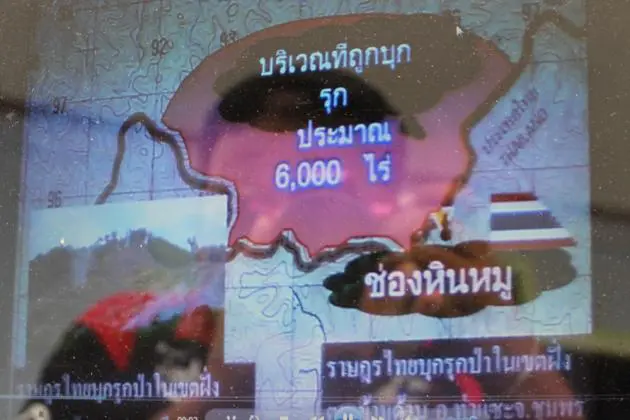
Authorities in Myanmar expect that 92 Thais, arrested on July 4 for encroaching on forestland opposite Ranong’s Kraburi district, may face six months in jail without suspension – the punishment given to three Ranong residents arrested for encroaching on Myanmar forest in 2009, an informed source said yesterday.
Meanwhile, Army officers in Ranong speedily contacted their Myanmar counterparts to check a rumour that five more Thais were detained on Friday trying to retrieve cars, backhoes and motorcycles left across the border.
Interrogation of the 92 Thais, now detained in Koh Song, is nearly done, and they are due to hear a verdict on their case next Friday. The source said it was likely that the 92, initially charged with illegal entry and encroaching on forestland, would face six months in jail. Certain individuals may also face punishment for other charges being investigated by Myanmar officials, if more evidence is found against them.
Myanmar officials considered charging the Thais with illegal entry, encroaching on forestland without permission, growing narcotic plants (marijuana and kratom), possessing war weapons, and obstructing officials from performing their duty.
Ranong disaster prevention chief Manas Pisutthikritaya affirmed it was likely the Thais would get a six-month jail term based on the 2009 case.
As for the rumour the Myanmar army had nabbed five more Thais on Friday allegedly trying to take back relatives’ vehicles, Colonel Pornsak Pulsawat, commander of the 25th Infantry Regiment Task Force, confirmed that 100 Thai cars, backhoes and motorcycles had been left in Myanmar. But he had no information about more arrests, so they would keep asking.
In related news, Ranong Chamber of Commerce president Nareumol Khoraphum said Myanmar has given the green light for foreigners to lease large areas of farmland in southern Myanmar, around Tanintharyi Division, via joint ventures with local businesspeople at 60:40 or 50:50. Citing information from a recent visit about farm leases for oil palm and rubber plantations, she said the attractions were cheap labour and a long-term lease of 10 to 30 years.
However, there were several conditions to be studied further – such as the requirement for knowledge transfer to local people about farming, rubber tapping and rubber sheet making, as well as detailed regulations for bringing produce out of Myanmar.
Her office would talk soon with Koh Song Chamber of Commerce about details before informing the Thai businesspeople about the opportunity, as there was about 100,000 rai of Myanmar farmland near Ranong that might be good for an oil palm plantation. She said Malaysians had reportedly got concessions to at least 200,000 rai in Tanintharyi Division to grow oil palm.
