
Security officials far too laid back: experts


Govt's approach lacks courage, senior Democrat says
There have been no intelligence breakthroughs for officials trying to identify those responsible for a recent spate of carbombings, as the perpetrators are believed to be new recruits from several insurgent strongholds in the deep South, intelligence sources said yesterday.
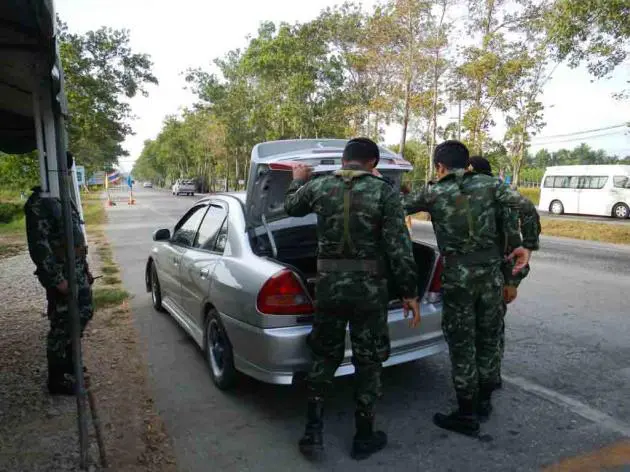
The sources attributed the ease with which insurgents have been able to move explosives between locations to the “passive” approach taken by security officials, who continue to rely on checkpoints at the same old sites.
A more proactive approach is needed, through preemptive operations and raids in areas where insurgents are active, the source said, adding that the intelligence services need to improve their performance.
The Royal Thai Air Force yesterday provided details of air support to be given to ground troops operating in the deep South, saying initial operations would include aerial photography and patrols by USmade AU23 aircraft, spokesman Air Vice Marshall Monthol Satchukorn said.
Aerial reconnaissance sorties would be stepped up in the meantime, while operational plans to determine which areas would be covered would be worked out by next week and submitted directly to the Defence Ministry, Monthol said. Air Force troops are operating in the deep South in several capacities, including maintaining security at an airbase in Pattani’s Nong Chik district, he said.
Meanwhile, the government’s handling of the violence in the South is in disarray, lacking integration and courage, Democrat Party executive and former deputy interior minister Thavorn Senniam said yesterday.
Thavorn said the Yingluck Shinawatra government had failed in its management of insurgencycontainment activities and development projects in the region in its first year in power, through inconsistent policies and a lack of courage among Cabinet members and senior officials in charge of internal security.
Thavorn said he had privately dubbed a newly established government committee tasked with bringing the surge in violence under control the “Centre of Cowards, Taking Advantage of Subordinates [operating in the deep South]”, because it was run by people “who are only good at talking, like [Deputy Prime Minister] Chalerm [Yoobamrung].”
He accused Chalerm of instructing security officials to spread rumours that insurgents planned to kill VIP visitors to the South, so that he could use it as an excuse not to visit the area. Thavorn rejected Chalerm’s proposal that Democrat MPs discuss the issue with him, suggesting that the minister instead implement his eight proposals for curbing the violence and sustaining longterm peace in the region.
Democrat Party leader Abhisit Vejjajiva earlier called on the government to immediately consider the following three points: The practice of setting up centres with redundant responsibilities and assigning many people to the same or similar jobs must be stopped, as it interferes with the work of the Southern Provinces Border Administrative Centre (SBPAC); assigning Thawee Sodsong as SPBAC director would not be beneficial to its operations, given his record of opposition to state policies in the South; and former prime minister Thaksin Shinawatra should stop involving himself in antiinsurgent efforts through a neighbouring country, which complicates the issue. Abhisit did not elaborate on the latter two concerns.
Tuesday’s carbomb attack on the CS Pattani Hotel in Pattani has resulted in security measures being heightened throughout the deep South, with parking of motorcycles being restricted by owners of shophouses in many urban areas. In Narathiwat, parking of motorcycles on major roads in Yi Ngor district has been banned.
Buddhists in many provinces conducted memorial circumambulations at temples during the day yesterday to minimise the chance of ambushes during travels to and from their homes. Tight security was put in place around temples with soldiers and marines in combat gear present.
