
No new ideas to deal with South


Play
As political and security chiefs play 'musical chairs', the decisions of leaders do not reflect ground reality
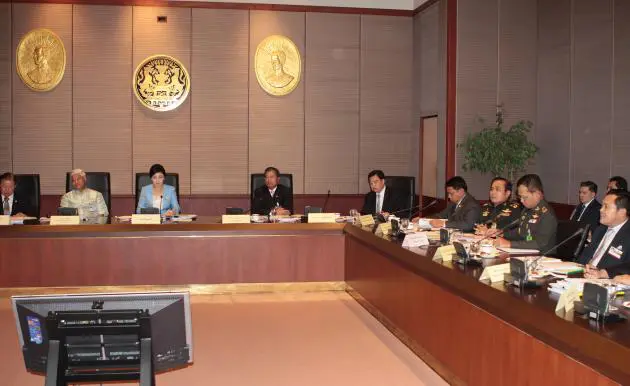
A modicum of hope had preceded this week’s gathering of Prime Minister Yingluck Shinawatra and 17 ministries and security agencies to nail down a viable strategy for the three southernmost provinces, where violence has spiked in recent months.
But after a day of lengthy discussion, despair hung in the air. No new thinking emerged.
Essentially, the meeting was deemed by many as a knee-jerk reaction to the flare-up of attacks that rubbed the government the wrong way.

The outcome of the meeting also doesn’t seem to reflect the reality on the ground.
Basically, Wednesday’s meeting was like musical chairs. By moving people around, it created the impression of civilian supremacy in the restive region traditionally dominated by the Army.
More than 5,000 people have died since January 2004 in this Muslim-majority region.
Still unclear is the division of labour between civilians and the military, namely the Southern Border Provinces Administrative Centre (SBPAC) and the Fourth Army Area, whose commander doubles as the director of the region’s Internal Security Operations Command (Isoc).
There has been a suggestion by the incoming police chief, Pol General Adul Saengsingkaeo, that the SBPAC come under Isoc for operational purposes.
But in Thailand’s bureaucratic scheme of things, SBPAC’s secretary-general is equivalent in rank to a ministry’s permanent secretary, while the Fourth Army’s commander-general is several notches below that pay grade, probably somewhere even with a district chief.
The military has yet to come to terms with the notion of civilian supremacy.
Civilians, on the other hand, have yet to grasp the ethno-nationalist nature of the conflict, which has placed an unwanted spotlight on the country’s concept of statehood. Playing the religious card hasn’t worked and separatist militants continue to enjoy moral and tactical support from the local Malay Muslims.
As it stands, the deep South is very much pervaded by an “us versus them” mentality – Thai colonial masters and Malay colonial subjects.
Generosity and good intentions from the state can’t change that equation as long as the culture of impunity prevails.
Thai diplomats based in Muslim countries were also brought in to make suggestions to the Wednesday meeting. But one can hardly name a Muslim country that has succeeded in dealing with its minorities. Perhaps the Foreign Ministry needs to look elsewhere for a success story – like countries that have good relationships with their minorities.
The meeting also talked about establishing 13 safe zones but did not really explain what they are or how are they going to go about achieving this objective.
Interesting rhetoric came out of the meeting, including “development projects aimed at improving livelihood, justice, human rights and conflict resolution”.
Seven working groups have been formed to oversee these tasks and objectives. But if the past is any indication, translating these noble ideas into real action will be problematic.
Nevertheless, all eyes will be focusing on Deputy Prime Minister General Yuthasak Sasiprapha, as he has been appointed to take charge of the newly set up operations centre to work on a strategy to restore peace in the region. Basically, he will be overseeing existing agencies and practices.
But without legislative backing and real operational teeth, the centre could very well disappear
in the blink of an eye if and when a new government comes into power. Continuity has never been a strong point for Thai political leaders, and bureaucrats don’t seem to want to make such an issue their problem.
Deputy Prime Minister Chalerm Yoobamrung suggested that negotiating with the insurgents could be a step towards ending the violence. But without a designated agency with real political commitment, as well as legislative backing, a formal peace process is still a pipe dream.
