
Yongyuth's future in the balance


Play
Deputy PM urged to consult EC after 'expulsion' over Alpine scandal; Council of State says he's legally entitled to leniency
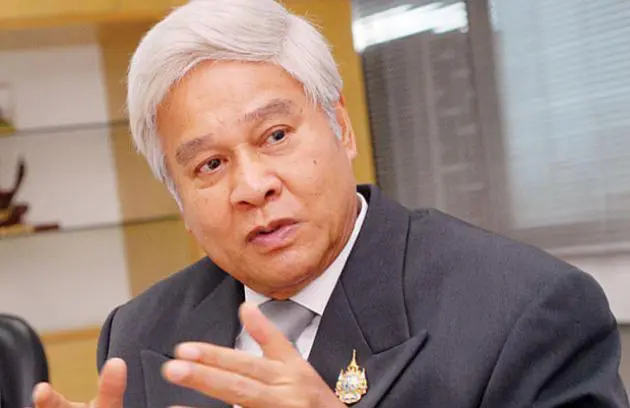
An Election Commission (EC) member has suggested that Deputy Prime Minister and Interior Minister Yongyuth Wichaidit seek the EC’s advice on whether he has to quit the two powerful posts immediately, following a Civil Service Committee ruling against his handling of the Alpine land case.
The Civil Service Committee resolved on Thursday to “expel” Yongyuth, a former Interior Ministry permanent secretary, after the National Anti-Corruption Commission (NACC) decided to indict him for unlawfully certifying as legal the 2002 sale of a 732-rai land plot owned by a foundation representing Wat Thammikaram to Alpine Real Estate Co and Alpine Golf & Sports Club.
Yongyuth approved the sale even though the plot was owned by a monastery and could not be sold or transferred.
Given the latest development, the Yongyuth case could prompt Prime Minister Yingluck Shinawatra to reshuffle her Cabinet if Yongyuth has to leave his current posts.
Current Interior permanent secretary Phranai Suwannarat, who is the Civil Service Committee’s vice chairman but did not attend Thursday’s meeting, was reportedly scheduled to hold a press conference at 9am today to clarify the issue.
Former charter drafter Seri Suwanpanont said the Civil Service Committee’s expulsion resolution immediately disqualified Yongyuth from his ministerial and MP posts.
“If Yongyuth refuses to leave the posts, the Election Commission can file a complaint to the Constitution Court. It has the mandate to do so. If it doesn't, any person can file the complaint. Yongyuth can also do that [to seek] clarity,” Seri said.
However, if Yongyuth disagrees with the order, he has the right to file a case with the Administrative Court, which could prolong the process of his disqualification from the ministerial and MP posts, Seri said.
According to the Constitution, a person who has been dismissed from government service or a state enterprise is prohibited from becoming an MP or a minister.
EC member Prapun Naigowit said yesterday that Yongyuth should ask the EC to point out whether he has to leave his posts right away.
The expulsion order signed by Deputy Interior Minister Chuchart Harnsawat on Thursday referred to a meeting on September 14 at which it was agreed the committee had no choice but to expel Yongyuth.
“The Interior Ministry’s Civil Service Committee, in the meeting 8/2012 [the eighth meeting of 2012] on September 14, 2012 agreed with the minority of the National Anti-Corruption Commission that there had not been enough evidence to believe that Yongyuth Wichaidit committed the wrongdoing as accused,” the document said. However, after the NACC resolved to indict Yongyuth, the committee had no choice but to expel him according to the anti-corruption law and the ministry’s regulations, the document said.
At the end of the document, the committee cited an opinion from the Council of State saying Yongyuth was qualified to benefit from the 2007 Exoneration Act, which affords some leniency to people convicted of a crime or disciplinary violation if they have never committed the crime before. It also said Yongyuth could appeal to the Civil Service Committee’s ethics panel within 30 days or file a complaint to the Administrative Court within 90 days.
The Council of State yesterday issued a memo saying Yongyuth is eligible for leniency under the Exoneration Act. According to the memo, the council was ordered to consider the case by the prime minister. The memo was identified as being issued by the council’s secretary-general, Achaporn Charachinda, but does not bear his signature.
The document was sent a Nation’s reporter by Yongyuth’s staff. Yongyuth refused to talk about the case.
However, a question about the meeting remains, as Phranai, who is the vice chairman of the committee, and his deputy Wallop Pringpong both told reporters that they did not acknowledge the meeting, which was chaired by Chuchart.
A source from the Interior Ministry, who asked not to be named, said there had been no meeting of the ministry’s civil service committee since the beginning of September.
Asked by The Nation via telephone about the report of the meeting on Yongyuth’s case, Chuchart said, “We [he and Yongyuth] work in the same ministry, please don’t force me to say anything. I beg you. It is about the law.”
The latest Exoneration Act was issued in 2007, and affords people convicted of crime or subject to a disciplinary violation no later than December 5 of the year some leniency if they have never committed the crime before.
Yongyuth earlier this week told the media he was not worried about the case, saying it was brought up every time there was speculation on the next Cabinet reshuffle.
