
Village fund success stories heard


Play
Farmer benefits from diversifying after borrowing
In contrast to criticism from some quarters that the Thailand Village and Urban Revolving Fund encourages villagers to borrow and spend in an endless cycle of debt, success stories involving the scheme were heard last Thursday, including one from Loei farmer Prayuth Hipkaew.
The retired teacher, a resident of Phu Kradung district, recalled that he used to grow only rice on his five-rai plot, but would earn nothing in the off-season. So he studied the Thai Chamber of Commerce’s “One Rai, One Hundred Thousand Baht to Financial Freedom” project and borrowed Bt30,000 from the village fund.
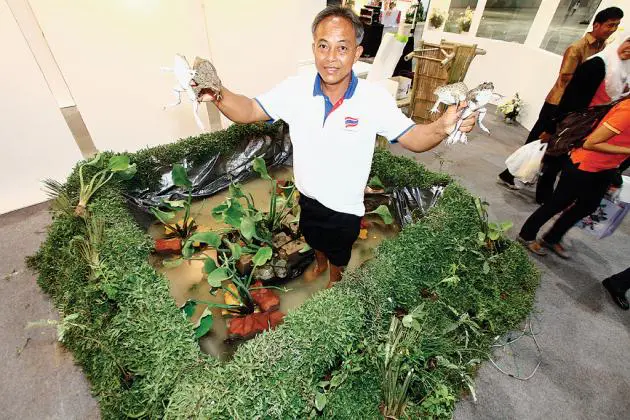
He divided his land into five parts allocated to rice and other wet-field crops; fish and frog raising; an area with a residence and bio-substance manufacturing facility; chicken and duck raising; and a herbal plant and vegetable patch. Nowadays he and his wife earn over Bt100,000 per year.
Prayuth said the Bt30,000 seed money created more income for his family. Each morning until 9am, they pick Tummy-wood plants to wholesale at Bt3 per handful, earning at least Bt9,000 a month or Bt108,000 a year, while they also sell eggs for Bt3,000 a month, he said.
The frog and fish ponds yield Bt30,000-40,000 a year, while other plants grown around the ponds yield an additional Bt10,000-12,000 a year, he said, so the family earns Bt185,500 a year totally, leaving Bt150,000 after expenses.
Prime Minister Yingluck Shinawatra presided over an event last Thursday marking the 10th anniversary of the Thailand Village and Urban Revolving Fund at Nonthaburi’s Impact Muang Thong Thani. It was announced that the fund, with 79,255 village funds under it covering 12.8 million members, had generated Bt160 billion so far, while 1,500 community funds had been elevated to financial institution status.
In the fund’s third phase next year the government would add Bt1 million to each of 21,624 qualified community funds, it was announced.
The village fund enabled villagers to invest in their vocations without borrowing from other money-lenders, while the approach of villages overseeing and managing the fund themselves promoted greater unity, said Chanon Nakprawit, a Chiang Krom Village Fund committee member from Udon Thani’s Prajak Silapakhom district.
His village has bought a 2-rai plot on which to build a village fund office, which will open in December. Chanon said that with the additional money brought in by the fund, it would be as if the village had its own investment bank.
Namchai Chokwat from Lamchang Village Fund in Trang’s Rassada district said villagers had learned to save and manage money systematically, although they struggled at first.
These days, they are able to stand on their feet because they have their own source of investment money in the village, he said, adding that the additional Bt1 million would boost liquidity and provide loans to members for use in expanding their activities.
