
Ammar slams rice 'blunders'
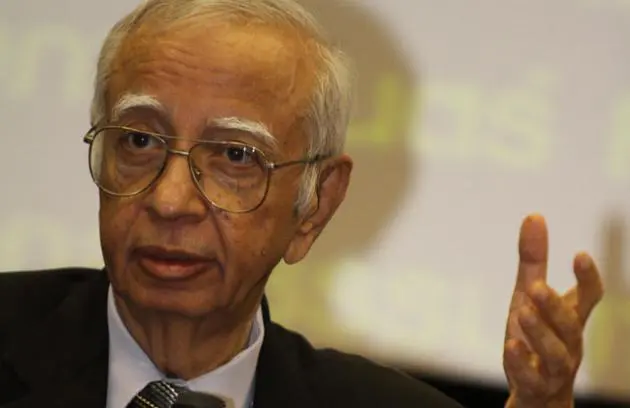


Thaksin should use own money - not country's - to speculate on crop, economist says
Outspoken economist Ammar Siamwalla on Friday lashed out at the government’s “disastrous” rice-pledging scheme and dared former prime minister Thaksin Shinawatra to use his own money to speculate in the rice market.
“The government has made many blunders with the rice policy,” Ammar, from the Thailand Development Research Institute, said in an exclusive interview with Krungthep Turakij TV.
He blamed the government and Thaksin, who is believed to wield influence over the Yingluck Shinawatra government’s policies, for the high cost of underpinning the price support scheme for rice while poor farmers barely see any benefit from it.
The government built up 10 million tonnes of rice stocks last year, but it could not push up world market prices, Ammar said.
The government bought rice from farmers at an average price of Bt15,000 per tonne, which was much higher than the market price, under the rice-pledging scheme, which was aimed at pulling world prices up, he said.
The government claims success in exporting seven million tonnes of rice via government-to-government contracts, but there was no evidence that the government shipped rice of out the country, he said.

Thaksin had recently urged the government led by his sister Yingluck to continue the rice subsidy scheme for two or three years, Amman said. Thaksin also urged the government to increase rice stocks by 20 million to 40 million tonnes over the next few years, as the global price would go up due to the possibility of some kind of natural disaster.
“Thaksin should buy rice from Thailand. As I have a stake in this country, I will fully support the government in selling rice at a loss to Thaksin,” Ammar said.
He did not mind if Thaksin uses his own money to speculate on rice trading, but it is unfair to gamble with taxpayers’ money.
“Why do we use tax money to fulfil Thaksin’s dream?”
He estimated losses of Bt100 billion a year from the rice pledging scheme against the Finance Ministry’s projection of about Bt40 billion in losses a year, at taxpayers’ expense.
The scheme in the short run benefits rich farmers, but poor farmers representing 47 per cent of the total of four million farmer families got only 18 per cent of the gains, he said. Rich and middle-income farmer groups get the same share of the benefits, about 40 per cent.
In the long run, Thais and other people in Asia will consume less rice as their incomes improve, he said.
The effort by Thailand and other rice exporters to form a rice cartel similar to Opec’s oil cartel would be an exercise in futility.
“It’s a stupid idea”, he said.
Rice is a perishable commodity. It cannot be stocked like crude oil, which can be kept underground, he said.
Opec is successful because Saudi Arabia, the largest oil exporter, sometimes cuts its production when others do not cut production as promised. But rice harvests flow to the market every year, he said.
The Thai and Vietnamese cabinets held a joint meeting in Hanoi on Saturday, but there was no solid agreement. They only decided to set up a committee to push for talks on rice trading.
As for how to stop the rice-pledging scheme, Ammar suggested it would self-destruct.
“When the fiscal [balloon] bursts, it may lead to the government’s collapse … the government is playing a high stakes game,” he added.
