
Urgent wake-up call for Koh Samui


Play
After worst blackout in its history, officials ponder how to deal with shortcomings on tourist paradise; Power shortage, garbage, drinking water and chronic floods high on agenda
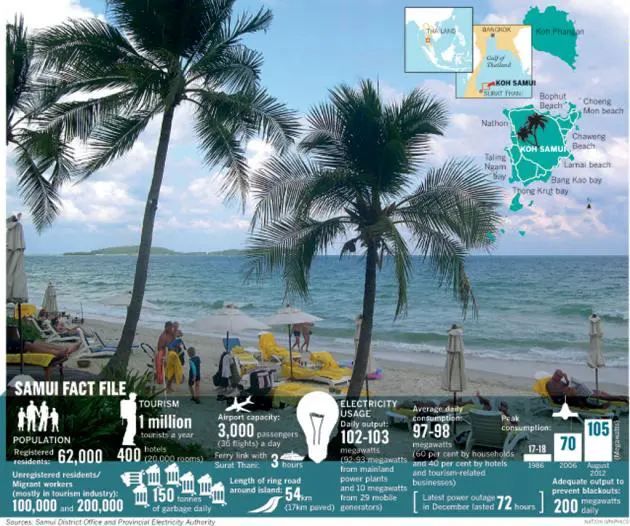
Apart from power-supply measures to augment electricity output following Koh Samui’s worst-ever blackout earlier this month, local authorities are planning to tackle persistent problems while also launching development projects to cater to the 1 million tourists who visit this island off Surat Thani each year.
Despite collecting taxes from local businesses worth more than Bt500 million each year, the Muang Samui municipality has only about Bt50 million left over – after deducting regular expenses – to spend on tourism-related projects, former mayor Ramnet Jaikwang said. Calling this amount meagre, he urged the government to provide subsidy so as to tap the tourism potential of this world-famous destination that brings in Bt10 billion revenue each year.
“The Bt50 million is enough for only regular maintenance and repairs of existing infrastructure,” he said. There is a 54km ring road around the island of which only 17km has been paved, while the daily garbage output of 150 tonnes is another problem that needs better handling. Freshwater supply is also a serious problem that would require better solutions by the government. The local municipality prefers creating small mires, in keeping with its green policy, rather than the construction of five dams.
He described the regular flooding on Samui Island as “a joke”, explaining that this was happening because owners of beachfront areas or coastal hotels refused to build sewers or drains on their properties due to fear that it would affect their businesses or become eyesores.
“Even roads located 20 metres away from the beach are flooded because drainage is not at full speed as the drain-free roads block the rainwater from flowing into the sea,” he added.
Ramnet said guidelines for the development of infrastructure must be worked out. In particular, electricity supply must be made available, considering the rapid increase in the number of tourists, he said.
There is another serious problem – foreign tourists and retirees owning land acquired through Thai nominees. This issue needs to be urgently addressed, and even a change in government policy might be required.
“Should this policy be altered to welcome more tourists to settle in Thailand, with a large amount of their money further spent?” he asked.
The long-term zoning of land use should also be addressed, and regulated eventually, he said. Areas should be divided into residential, financial and tourist-related to make them easier to manage and to designate the land prices. Infrastructure needs to accommodate a greater number of tourists – up to 2,000 daily now.
“Limiting the number of tourists is not an issue now but clear guidelines on how to accommodate many more of them must be worked out,” he added.
Samui district chief Prasert Jitmung said a second airport in mainland Don Sak district in Surat Thani was on the agenda, as the only airport on the island could handle only 3,000 passengers and 36 flights, while boat trips between Surat Thani and Samui island take three hours.
The 72-hour blackout earlier this month affected 30,000 tourists and resulted in lost revenue of about Bt10 billion.
