
Govt set for referendum on charter amendments


Play
Pheu Thai Party's strategic committee yesterday decided to go ahead with a public referendum on charter amendments, though the red-shirt leader warned that this might not be a good idea.
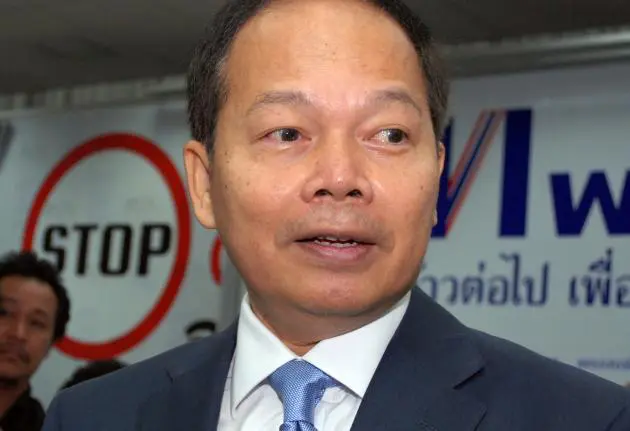
Former PM Thaksin Shinawatra’s legal adviser Noppadol Pattama, who chaired the meeting with the panel, said Pheu Thai was clear about holding a referendum in order to push for the writing of a new charter. He said the party would not focus on amending certain articles, because it would only confuse people.
“The party will step up its efforts to campaign for the public referendum. Although some members are worried that the voter turnout will be less than 24 million, I believe we still have three or four months to campaign for people to exercise their votes,” Noppadol said.
He added that the party had conducted an opinion survey and found that up to 60 per cent of eligible voters would turn out to vote for the referendum.
However, Thida Thavornseth, chairperson of the Democratic Alliance against Dictatorship (DAAD), warned that if the referendum somehow flopped, opponents might say that the public does not want the 2007 Constitution to be changed.
The government has said it will hold a public referendum before the Parliament deliberates on the bill, which seeks to amend Article 291, in its third and final reading.
The bill, which has been awaiting its third reading for months, will allow for a new constitution drafting assembly to be set up so an entirely new charter can be written.
Article 291 only allows some articles in the charter to be amended at a time, but does not have any provisions for an entirely new charter.
“If the referendum does not get a majority vote, the opponents will say the people do not want to see the Constitution amended and business-minded politicians might say ‘let’s amend certain articles’. But the repercussions will be far more complicated and the 2007 Constitution will become sacred,” Thida said.
She went on to say that though her red-shirt movement still backed the government wholeheartedly, it did not want the administration to “right a wrong”. She said the red shirts wanted the government to put the amendment bill through the third reading without holding a referendum.
The requirement of a simple majority of votes to validate the referendum is also becoming a major concern among leading members of Pheu Thai and coalition partners.
Prime Minister Yingluck Shinawatra and Deputy Prime Minister Chalerm Yoobamrung have voiced worries about the possibility of the referendum not getting the required votes. In fact, Chalerm has said that he would ask Pheu Thai to consider amending some articles instead.
Initially, the deputy PM had said that he had prepared a draft to amend the Constitution in nine areas, without touching Article 309, which endorses the actions of the 2006 coup-makers.
Meanwhile, PM’s Office Minister Varathep Rattanakorn said the panel in charge of studying the referendum in detail would be meeting on Monday at 3pm. He added that a second meeting might have to be held the following day because the panel was not likely to reach a conclusion on Monday.
Opposition Democrat Party leader Abhisit Vejjajiva said yesterday that the government should give up on its plans to write a new charter and eliminate Article 309 in order to help Thaksin. He added that if the government decided to amend just a few articles, it might reduce conflicts.
Election Commissioner Sodsri Sattayatham said the on-going dispute on charter referendum had caused confusion among the public, adding that if the government was going ahead with a plebiscite, then the questions posed should be clear.
In another development, Pheu Thai MP Korkaew Pikulthong was released from the Bangkok Remand Prison yesterday when the new parliamentary session started.
DAAD spokesman Thanawut Wichaidit said the red shirts were happy about Korkaew’s release, adding that the MP would speak at a rally at Khao Yai’s Bonanza Resort today. Thanawut went on to say that Thaksin would also be calling to address red-shirt supporters at the gathering at about 8.30pm.
