
Doctors call for probe into equipment


Play
The Rural Doctors Society will ask the National Anti-Corruption Commission (NACC) and the Office of the Auditor-General (OAG) to investigate alleged irregularities in the Public Health Ministry's Bt147-million procurement of portable medical devices.
The move comes after the society found that at least two provincial public health offices had completed the bidding process to buy the devices, which measure blood-glucose levels.
The society wanted the NACC and the office to look into possible irregularities in the purchasing and procurement processes.
“Most hospitals now no longer use the device because it requires them to also buy a test strip from the same manufacturer to read the measurement results,” said Dr Arak Wongworachart, a former president of the Rural Doctors Society.
According to Arak, the Public Health Ministry’s Department of Health Service Support has instructed provincial public health offices to purchase the portable medical devices, which would be used by volunteers nationwide to screen people with diabetes.
The ministry instructed 7,256 sub-districts to buy 81,685 of the equipment sets, at a total cost of Bt147 million. Each device costs Bt1,800.
The society also questioned the cost of test strips used to read blood-glucose measurements on the device.
The median price to purchase each test strip was about Bt11 – but the market price was Bt5 to Bt11. “There is no need to buy this medical equipment.
Moreover, health volunteers are not allowed to use it to draw blood for the test. Why does the ministry still order provincial public health offices to buy this device?” Arak said.
The Public Health Ministry’s permanent secretary, Dr Narong Sahamethapat, said the ministry had already ordered the Department of Health Service Support and provincial offices to suspend buying the portable devices after queries from provincial offices.
Narong added that he had instructed the ministry’s inspectors to investigate suspected irregularities in the procurement.
Meanwhile, Public Health Minister Dr Pradit Sinthawanarong said he welcomed questions raised by the Rural Doctors Society over possible irregularities in the procurement.
He wants the society to help the ministry monitor and investigate any irregularities.
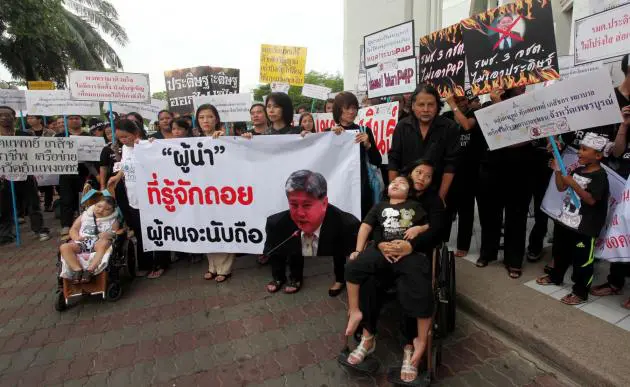
In a related development, over 500 medical workers, doctors, dentists, a network of people living with HIV/Aids, patients with cancer, people affected by medical errors, and labour unions of the Government Pharmaceutical Organisation (GPO) yesterday besieged the Public Health Ministry to demand that Pradit step down.
They were not satisfied with the minister’s attempt to introduce a new medical salary system based on performance, which had cut their allowances.
They were also unhappy with the ministry’s intention to ask the Department of Special Investigation to probe irregularities in the GPO’s purchasing and procurement of raw materials for the painkiller paracetamol, and the delay in the building of an influenza-vaccine plant.
