
Asean seeks China talks


Play
Calls for code of conduct in S China Sea; PM, Thein Sein agree on Japanese role in Dawei
Southeast Asian leaders yesterday called for urgent talks with China to ensure that increasingly tense territorial disputes over the South China Sea do not escalate into violence.
Asean wrapped up a two-day summit in Brunei with a chairman’s statement in which its 10 members emphasised the importance of “peace, stability and maritime security in the region”.
Brunei’s Sultan Hassanal Bolkiah, the host of the talks, said the leaders wanted to “urgently work on a code of conduct” with China aimed at defusing tensions in the strategically vital body of water.
The other key focus at the summit was pushing forward with plans to create the Asean Economic Community (AEC) by 2015. Bolkiah and other leaders said progress had been made on preparations for the AEC, and more than three-quarters of its framework had been agreed. But they also cautioned that the hardest phase of the negotiations had just begun.
However, the flashpoint South China Sea issue dominated the meeting, amid growing concern among some Southeast Asian countries over China’s increasing aggression in laying claim to the waters.
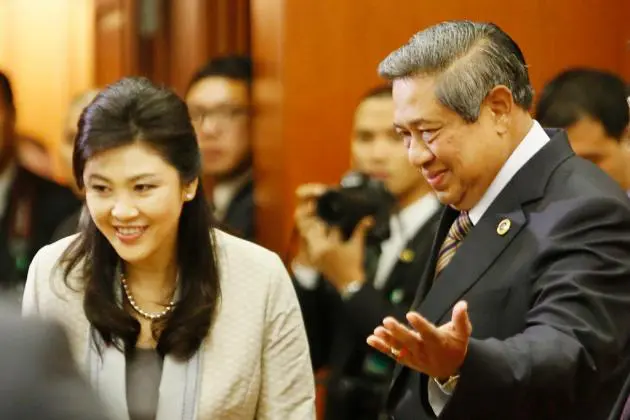
On the sidelines of the summit yesterday, Prime Minister Yingluck Shinawatra and Myanmar President Thein Sein agreed to promote the development of Myanmar’s Dawei port project through the establishment of special purpose vehicles (SPVs), which will see Japan as a major co-investor.
Thailand has drafted a shareholder agreement for the SPVs.
“Both leaders also agreed to set up a joint venture company to gather funds for the project. Most importantly, Thailand and Myanmar agreed to extend an invitation to Japan to join the project and it is hoped that Japan will respond to this invitation,” Thai Foreign Ministry permanent secretary Sihasak Phuangketkeow said.
The two sides will hold a discussion in May to finalise whether the baht will be used as a base currency in the special economic zone planned for Dawei.
Myanmar awarded the concession to develop Dawei to Ital-Thai Development (ITD). However, due to financial constraints, ITD has allowed the Thai government to take the lead and bring in Japanese partners. Thailand is eager to make use of Dawei in its regional infrastructure plans.
Two more meetings for the Joint High-Level Committee are planned in the near future, as well as a discussion on the details of the SPV agreement.
Apart from the Dawei deep seaport project, Thailand has also stated that it wants to see more development along the Thai-Myanmar border.
“We would like to see more investment from the Thai private sector in Myanmar, which will benefit Myanmar in terms of job creation. President Thein Sein has given his full support on this,” Sihasak said.
