
School closings pressure parents
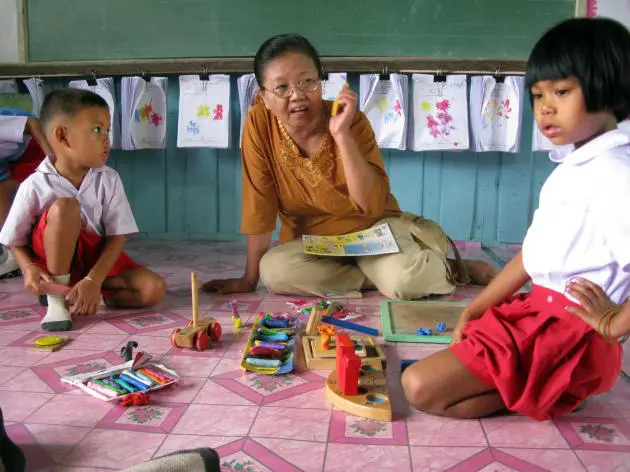


Enrolling students every other year at primary school level could be one solution to the government's controversial policy of closing small schools, a leading educator told a Bangkok seminar yesterday.
Other proposals included teaching three two-year classes, utilising self-centred teaching methods (dubbed constant curriculum) and transferring students to nearby larger schools, said Prof Theera Rooncharoen, chairman of the Career Development for Educational Management Association of Thailand.
“The quality of education does not always mean good grades. It also means happiness of students, their being good morally and academically,” he said.
Setbacks to the existing public school system were frequent transfers of teachers, lack of teachers’ professionalism and good academic backgrounds, poor management, lack of teachers’ development and underuse of technology in supporting education, he added.
One school hit by the government’s policy is Baan Khoke Mamuang School. With 10 students, it’s the smallest in Trang province.
With the start of the school term just two days away, acting director Somphorn Bunsongnak said a decision was made to send the students to Baan Khlong Teng School, 3km away. However, transportation for them has not been arranged. The school’s budget is Bt150 for daily transport, or Bt15 per student, is not enough for a motorcycle taxi. “I have to keep visiting the parents to convince them to take their children to the school,” said Somphorn, who is one of the school’s only two teachers.
In Ranong, 10 of the 86 schools have only students from migrants, said Phayab Osoth-charoen, an official with the provincial education office. “The office does not mind them studying in Thai-subsidised schools, but closing them or merging them with larger schools seems a better way to manage education,” he added.
At least five Ranong schools are slated for closure, regardless of the students’ nationalities.
