
Acting out crimes is necessary: police


Public has the right to know how the crime took place, officer says
The common practice of parading criminal suspects in front of the media to re-enact their alleged crimes before judges have found them guilty is seen as a questionable practice by the human rights community – but the police say they are doing what is best for Thai justice and the practice will continue.
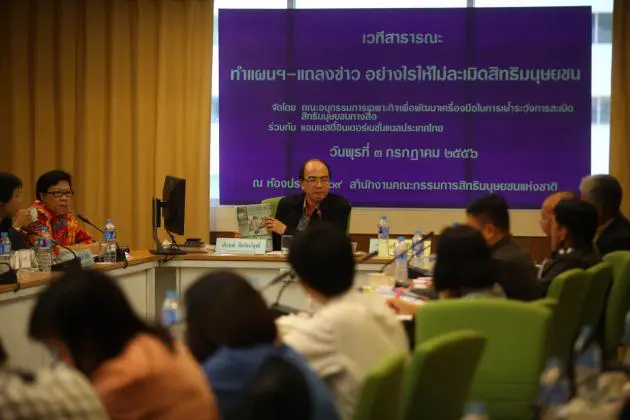
“Officers have the necessity,” said Pol Colonel Chalotorn Sitthipanya, who represented the National Police at a symposium on the topic set up by the National Human Rights Commission at the NHRC office yesterday.
Chalotorn said the public had the right to know, so a press conference and re-enactment of crime was necessary.
“People who watch it will also not fall prey to such crime. It will show others that doing such things is not good.
“It will also encourage others who have leads to contact us and provide us with more information. These are the reasons why it’s still needed. We stress that we conduct it in such a way that will not violate or demean suspects,” Chalotorn said.
VIOLATION OF SUSPECT’S RIGHTS
Top human rights lawyer and chairman of Amnesty International Thailand Somchai Hom-laor said criminal suspects should be treated as innocent until proven otherwise by the courts, adding that the re-enactment of crime, which often sees an angry mob attacking the suspect, is contradictory to the rule of law and the justice process.
“The re-enactment of crime is like reinforcing that the person has committed crime,” said Somchai, adding that going soft on angry mobs, who seek to physically attack suspects during the re-enactment, is tantamount to encouraging “private vendettas”, which contravene the justice system.
A middle-ranking police officer at the symposium, who spoke to The Nation on the condition of anonymity, said suspects have to first “confess” to investigators before they are taken to re-enact their crime.
The source admitted, however, that physical assaults while interrogating suspects whom police strongly believe to be guilty, are not uncommon.
As for the media, they were also partly to blame, the meeting was told, as they tend to dramatise alleged crimes even before judges make a ruling.
Another speaker, Sumitchai Hattasarn, a committee member of the Human Rights Lawyers Association, suggested that showing the faces of suspects and victims who are woman, members of minority, or youths was not necessary.
Uajit Virojtrairat, a media expert, said in some cases, police act as if they’re movie directors directing the re-enactment of alleged crime and questioned if it’s necessary to do this in public for the re-enactment.
