
Island needs to be cleaned up quickily, tourist chiefs say
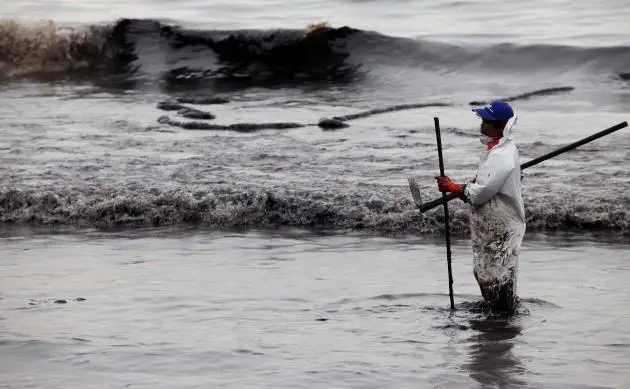


Tourism operators have asked the government and private sector groups to speed up work to try to contain and clean up the oil spill on Koh Samet in order to preserve their businesses.
At present, the oil spill has affected just the Ao Phrao area. But businesses are anxious to stop the oil spreading to other areas on the island over coming days. If this happens, tourism and the island’s image would be hurt, and tourists would most likely go to other destinations around the country.
Chairat Trirattanajarasporn, president of Rayong Tourists Association, said if there was little progress to counter the spill over the next week, the island may fail to meet its tourist target. This year, business operators aimed to draw 5.5 million tourists to visit the island and some 3 million enjoyed beaches there in the first half, higher than expected. Yesterday, no booking cancellations had been reported from travel agents, especially foreign firms, although the news was fresh. In general, bookings are inked a year in advance. Major foreign tourists are Chinese, Russian, Scandinavian, British, and Australian.
Foreigners generally spend Bt4,000-4,500 per day, while Thais usually spend about Bt2,000 a day. And many also come across from Pattaya for a one-day trip. There are about 3,000 rooms available to serve 7,000-8,000 tourists at present. Chirat said it was clear that people visiting the island want to enjoy swimming and sea activities. So, if the water was tainted, they would go to other places instead.
Hoping for the best
Chairat said closing Ao Phrao for three days would not result in immediate cancellations, if the clean-up was completed within a week, as PTT Global Chemical has estimated.
He said 40 per cent of tourism revenue in Rayong came from tourists visiting Koh Samet, which amounted to about Bt16 billion a year. Estimated growth this year is around 10 to 15 per cent, but this would be hit and reassessed following the oil leak.
He called for the government and the media to give people correct information. The problem was in a limited area, not the whole island. If this was not done, it would hurt the island because it was a sensitive issue.
For the long term, he called for the government to protect the island by launching a zoning policy. Industrial activity at a safe place like Map Ta Phut Industrial Estate should be run with care for the environment.
Tourism Authority of Thailand (TAT) governor Suraphon Svetasreni said the TAT had been watching the situation closely. There had been no report on an impact on tourism yet, but that was partly because it was a weekday.
It was also an accident. Tourism in Thailand was standardised, and included concern for the environment. But this situation could occur also in more developed nations. The oil leak near Samet also threatened the East and has raised concern among tourism business operators, who said fear it will affect those based in Rayong in particular.
Head of the Association of Domestic Travel (ADT), Yutthachai Soonthornrattanavate, said the third quarter was a high season for Samet, as tourists head there from attractions on the Andaman coast due to seasonal high seas. He said tourism in the East had enjoyed a 50 per cent jump in revenue last year.
