
Typhoon Utor's flood threat to border districts in North
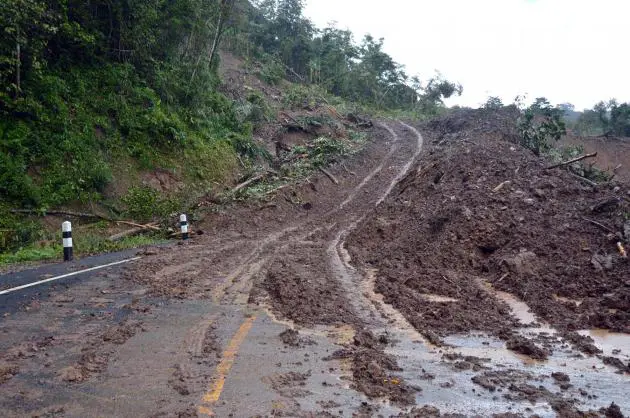


Northern Thailand is bracing for downpours influenced by Typhoon Utor moving inland from the South China Sea and due today.
Already Tak’s five border districts, including Mae Sot and Phop Phra, have suffered flash flooding, which made several sections of the Phop Phra-Umphang Road impassable for vehicles.
Several villages in tambon Chong Khaep of Phop Phra district have been inundated, and officials and volunteers are helping flood-hit residents move belongings to higher ground.
Some water levels receded rapidly in Mae Sot, but Mayor Terdkiat Chinsoranant has urged officials and locals to brace for more flooding as rainfall continues. The municipality has prepared and is giving sandbags to its residents free of charge.
In Uthai Thani, run-offs from Nakhon Sawan province’s Mae Wong Forest poured into waterways in Muang district’s tambon Thung Yai, prompting officials to monitor for overflows.
The Wang Rom Klao Dam’s three sluice gates were opened 60 centimetres to release excess water to the Sakae Krang River at a rate of 6 million cubic metres a day to prevent flooding in Muang, Thap Than and Sawang Arom districts.
Pipat Ruang-ngam, director of the National Water and Flood Management Policy Office, said Utor was expected to bring rainfall to all regions until next Sunday – Chiang Rai, Tak and Nan might have mudslides – but all dams were able to support the extra water pressure.
Weather officials reported Thailand’s accumulated rainfall so far this year was 878.5 millilitres – already 13.78 millimetres more than last year.
Royal Irrigation Department deputy director-general Suthep Noipairoj warned that Utor, the first typhoon to gather in the South China Sea this season, was as powerful as Typhoon Gay that wrecked southern Thailand in 1989. However Thailand would not be affected by heavy rain and brief flooding to the same extent this time, he said.
Wichan Tinnowet, director of Lamphun’s meteorological station, warned that Utor would lead to heavy rainfall and floods in the North. This could be a second blow to Lamphun’s Muang district, where 30 riverside homes in tambon Pratu Pa and Rimping are already under 30cm-deep flood water.
